
Last updated October 30, 2026
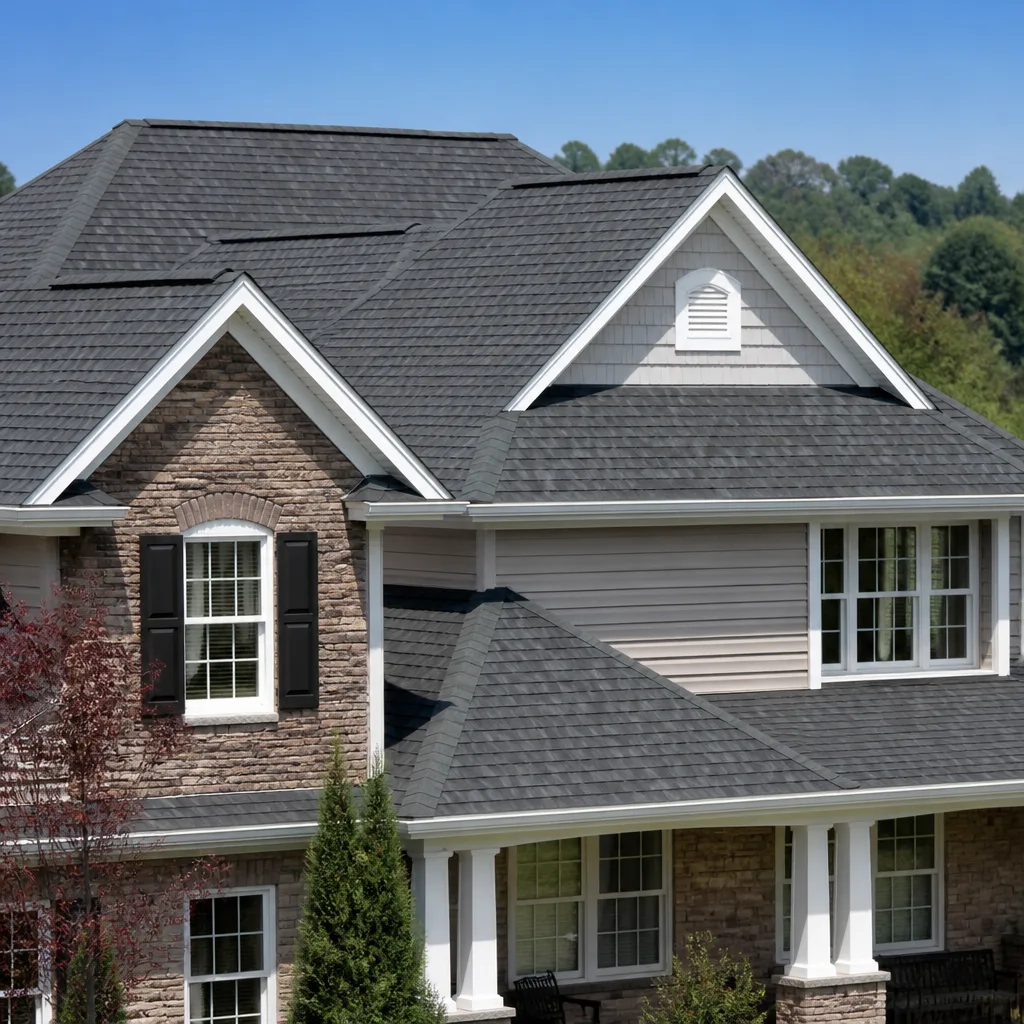 Architectural shingles
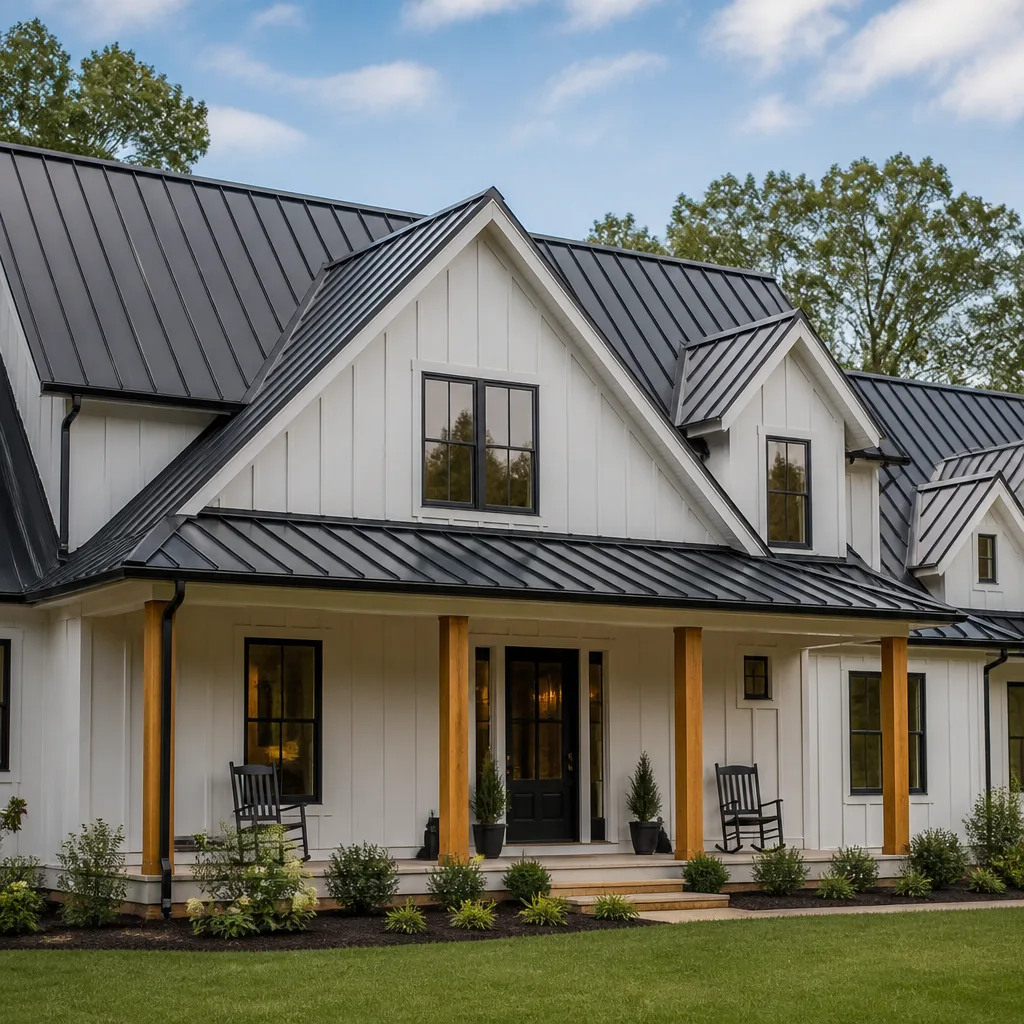 Metal roofing
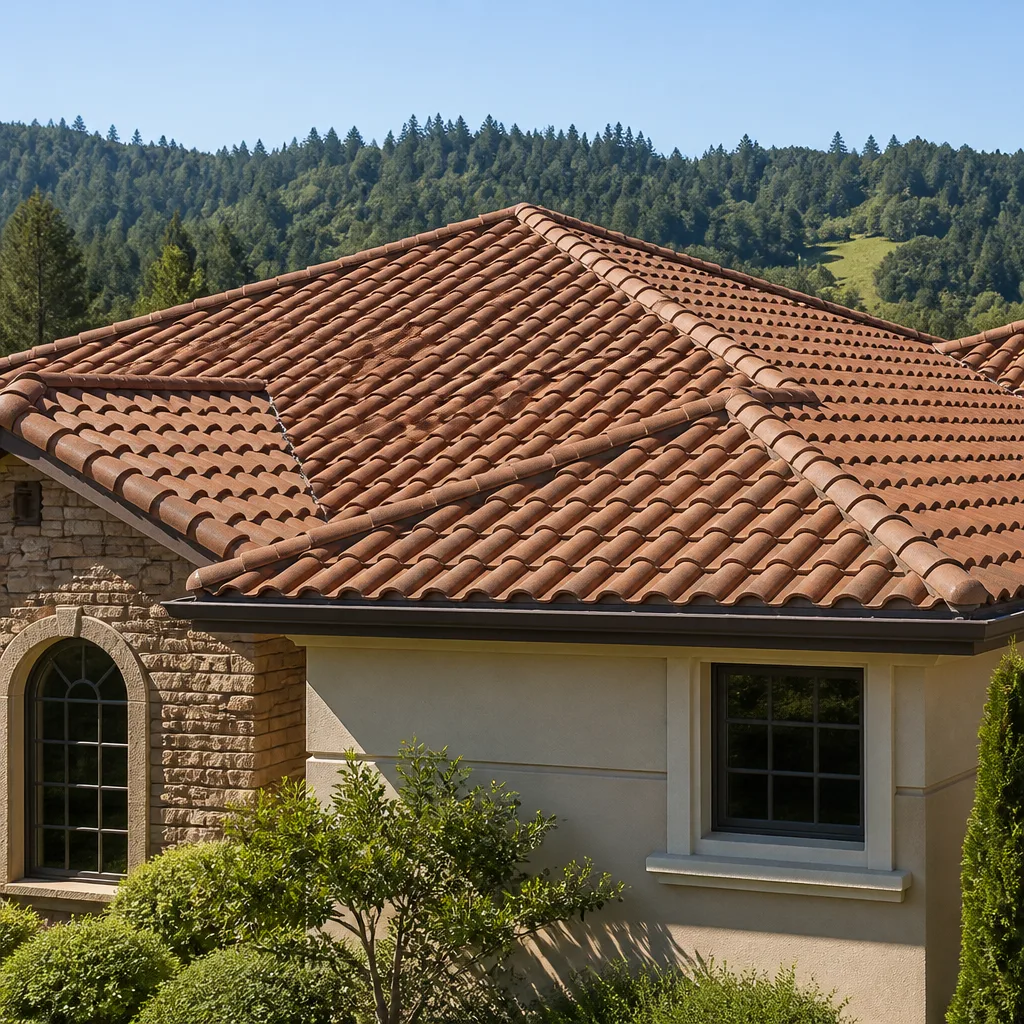 Tile roofing
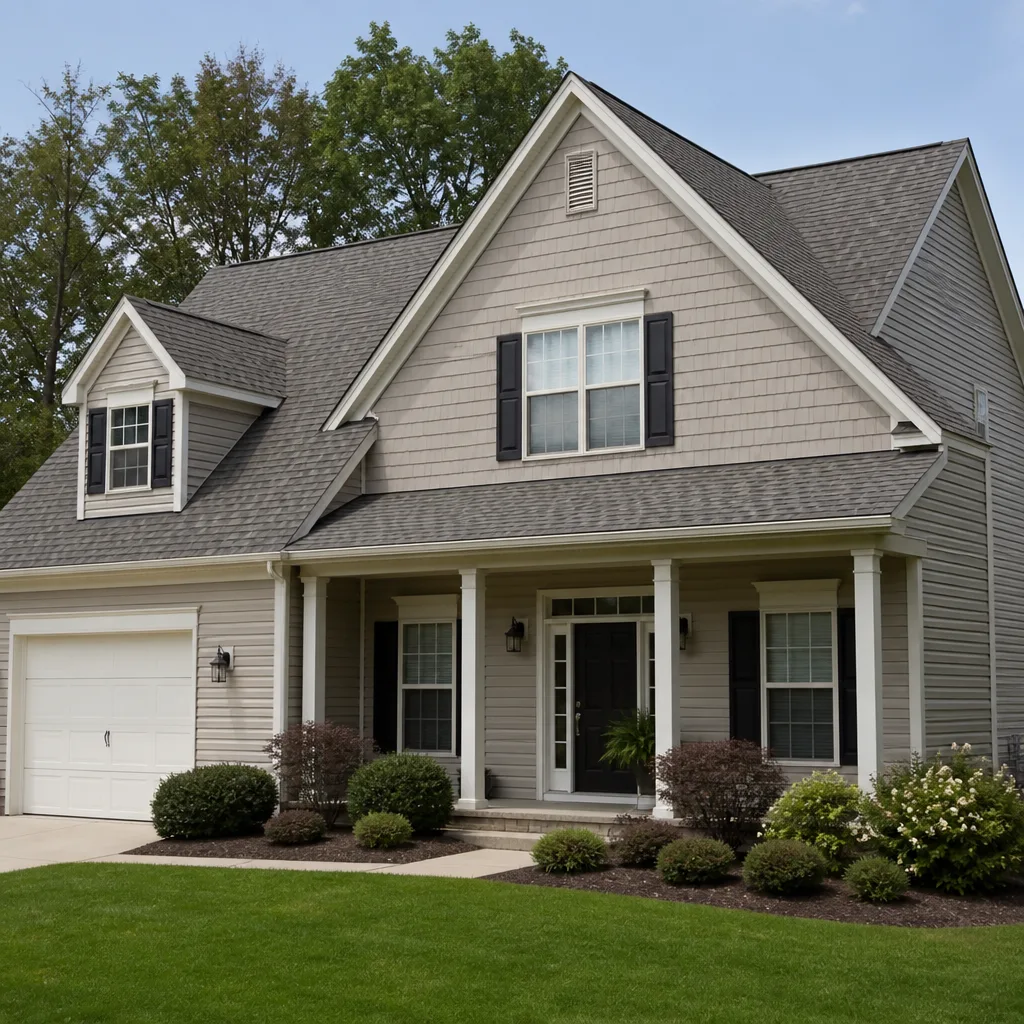 GAF
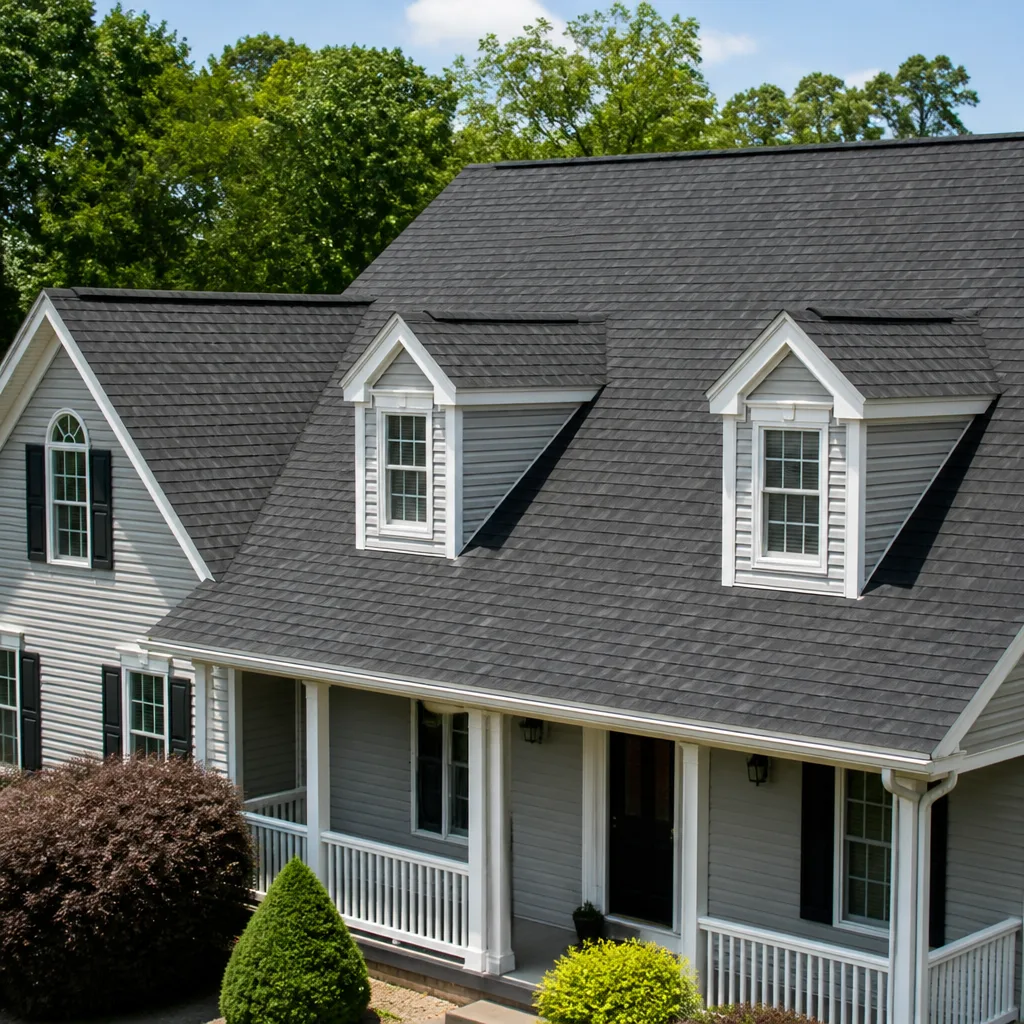 Owens Corning
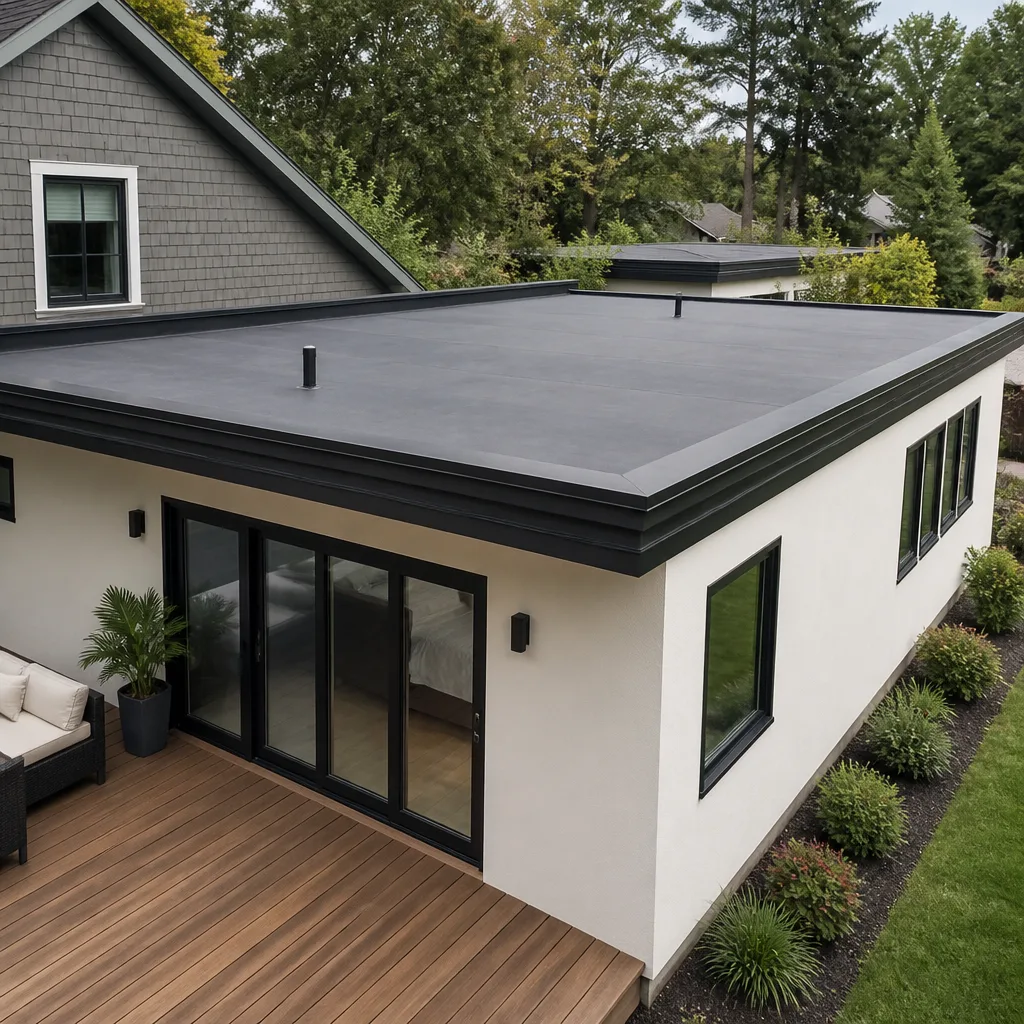 Flat & low-slope
Free roof inspection with deck photos before we talk money - GAF and Owens Corning certified installation
The Complete Roof Repair Guide for Anaheim Homeowners
Most roof leaks in Anaheim don’t happen during rain. They’re already in progress weeks before the first drop falls. UV-cracked field tiles, dried-out underlayment, and wind-lifted flashing sit quietly degrading through 280-plus days of Southern California sun, and the water only announces itself when the next storm finally arrives. By then, the damage behind the drywall has had weeks to get comfortable. This guide maps every common Anaheim roof failure back to the specific local condition that causes it: the marine layer, the Santa Anas, the Title 24 code requirements, and the UV index that eats underlayment faster here than four miles inland. By the end, you’ll know which problems justify a repair, which ones are delaying a replacement, and how to tell the difference before you spend serious money.
Quick Answer
Our Roof Repair services in Anaheim mean matching the fix to one of three local degradation mechanisms: Santa Ana wind stress on ridge caps and flashing, UV breakdown of underlayment and asphalt materials, or moisture intrusion from marine-layer condensation cycles. Most repairs in this climate fall into predictable categories: ridge cap re-bedding, flashing resealing around penetrations, tile replacement after wind events, and localized underlayment patches. A repair makes sense when the structural decking beneath the underlayment is intact and the remaining roof life exceeds five years. When decking is compromised or the roof system is past 75% of its lifespan, replacement is the honest answer, and we’ll say so.
Styles & brands we work with
Table of Contents
- How Anaheim’s Climate Actually Damages Roofs
- Santa Ana Wind Events: The Damage Most Guides Ignore
- Title 24 and Cool-Roof Requirements: What’s Code-Legal in Anaheim
- Underlayment Degradation: Why Anaheim’s UV Index Changes Everything
- Repair vs. Replace: The Structural Tipping Points
- The 5 Most Common Repairs We Perform in Anaheim
- Documenting Roof Condition for Insurance and Resale
- Common Mistakes to Avoid
- When to Call a Professional
- Frequently Asked Questions
How Anaheim’s Climate Actually Damages Roofs
Anaheim sits in a strange microclimate pocket. We’re far enough from the coast that the marine layer burns off by mid-morning most days, but close enough that overnight fog and condensation cycle through the roof system on a regular basis. That means roofs here experience thermal expansion and contraction every single day, not just seasonally. Asphalt shingles and underlayment expand in the afternoon sun, contract in the evening marine layer, and the repeated flexing creates micro-tears that accumulate over years.
Here’s what that means in practical terms:
- UV exposure is the primary aging agent. Anaheim averages over 280 days of meaningful sun per year. Underlayment and asphalt materials degrade through photo-oxidation, which is a fancy way of saying the sun literally bakes the oils out of them until they become brittle.
- Marine-layer condensation drives hidden moisture. Even without rain, nightly condensation seeps into vulnerable areas: exposed nail heads, cracked sealant around vents, and overlapping metal seams that have lost their flex.
- Temperature swings stress sealants. Anaheim can swing 30 degrees between night and afternoon. Sealants expand, contract, and eventually lose adhesion. Flashing pulls away from penetrations and creates the slow leaks that show up as ceiling stains months later.
We’ve inspected roof repair needs throughout Anaheim, from the older neighborhoods around the Packing District to newer developments in Platinum Triangle. The failure patterns are consistent: climate-driven, not defect-driven. The roofs that fail are almost always the ones where small cracks were allowed to sit through one too many sun cycles.
Santa Ana Wind Events: The Damage Most Guides Ignore
Generic roof repair guides talk about rain. Rain is straightforward. Water flows downhill, finds the breach, and you trace it. Santa Ana winds are different. They come out of the northeast at 40 to 60 miles per hour, sometimes stronger, and they attack roofs in ways that rain never will.
Santa Anas create three specific failure modes that Anaheim homeowners should know about:
- Ridge cap lift. Ridge caps are the rounded tiles or shingles that crown the peak of your roof. Santa Ana winds hit ridge lines at oblique angles. The sustained pressure can lift ridge caps that were mortared or adhered decades ago, cracking the mortar bed and creating gaps that water exploits later. After any significant wind event, walk around and look at your ridge line. If you can see gaps, daylight, or missing pieces, the caps need re-bedding before the next rain.
- Flashing fatigue at transitions. The angled force of Santa Anas works on flashing around chimneys, skylights, and pipe boots. Metal flexes, fasteners loosen, and sealant bonds break. We regularly see flashing that looks fine from the ground but is loose enough to slide a credit card under. Rain finds that gap and follows it down.
- Debris impact on tile and shingle systems. Anaheim’s tree coverage includes plenty of eucalyptus, palm, and jacaranda. Santa Anas turn branches and fronds into projectiles. Tile roofs lose individual tiles. Shingle roofs lose granules and occasionally whole tabs. The damage is often isolated but requires same-week attention, because one missing tile exposes underlayment to direct UV, and that exposure window starts the clock on a larger failure.
The sequence we recommend after every Santa Ana event is simple. Inspect the ridge line for gaps. Check flashing penetrations for movement. Walk the yard perimeter and look for displaced tiles or shingles. If you find anything suspicious, call for a professional Roof Inspection in Anaheim before the next rain cycle. The cost of inspection is always lower than the cost of a leak that’s been developing for three weeks.
Title 24 and Cool-Roof Requirements: What’s Code-Legal in Anaheim
California Title 24, Part 6, sets energy efficiency standards for building components, including roofing. If you’re replacing or repairing a significant portion of your roof in Anaheim, the materials you choose must comply with cool-roof reflectivity requirements. This isn’t optional, and it’s not a gray area. It’s code.
The specific requirement depends on your roof slope and the material type:
- Low-slope roofs require a minimum aged solar reflectance of 0.63 and thermal emittance of 0.75, or an SRI (Solar Reflectance Index) of 75 or higher.
- Steep-slope roofs require a minimum aged solar reflectance of 0.20 and thermal emittance of 0.75, or an SRI of 16 or higher.
- Exemptions exist for certain conditions, including roofs with existing building-integrated photovoltaic systems and certain historic designations. But Anaheim’s building department applies these exemptions narrowly.
What this means for repair decisions is important. If you’re patching a small section, matching existing materials is generally acceptable. If the repair involves replacing an entire slope or a significant percentage of the roof surface, the new materials need to meet current Title 24 standards. That’s where material brand selection becomes practical rather than cosmetic. At Bedrock Roof Repair, we work with GAF, CertainTeed, Owens Corning, and IKO, among others, specifically because each brand offers products that meet California cool-roof standards at different price points and aesthetic finishes. Some brands have stronger cool-roof product lines for low-slope applications. Others have better tile-compatible underlayment options for steep-slope Anaheim homes.
The wrong material choice isn’t just an aesthetic problem. It’s a compliance problem. If the products don’t meet Title 24 reflectivity thresholds, the permit won’t close, and that paperwork matters when you sell.
Underlayment Degradation: Why Anaheim’s UV Index Changes Everything
Here’s a fact that surprises most Anaheim homeowners: underlayment, not tile or shingle, is what actually waterproofs your roof. The visible surface layer is a wear surface. The underlayment beneath it is the waterproof membrane. And in Anaheim’s climate, underlayment has a real-world lifespan that’s often shorter than the visible materials above it.
Anaheim’s UV index regularly hits 8 to 11 during summer months. That’s extreme exposure, far higher than coastal cities like Huntington Beach or Newport Beach, where the marine layer provides a natural UV filter for much of the morning. Compare that to inland areas like Riverside or San Bernardino, where temperatures are higher but the degradation pattern is more thermal and less photo-oxidative. Anaheim sits in the worst of both worlds: enough sun to bake underlayment brittle, enough moisture to exploit the cracks once they form.
Here’s a rough degradation timeline based on what we’ve observed inspecting Anaheim-area roofs:
- 15-lb felt underlayment: 12 to 15 years in Anaheim before embrittlement becomes a leak risk. Coastal installations might get 20 years; inland IE installations degrade through heat damage instead. This is the original-recipe material on most pre-2000 Anaheim homes.
- 30-lb felt underlayment: 15 to 20 years in Anaheim. Marginal improvement over 15-lb, but the failure mode is identical: photo-oxidation turns it brittle, then micro-tears grow.
- Synthetic underlayment: 25 to 40 years depending on brand and installation. Modern synthetics resist UV degradation far better than felt. This is the material we recommend for any replacement scenario in Anaheim, and it’s available from all seven brands we source, including GAF, CertainTeed, Owens Corning, and IKO.
The takeaway: if your Anaheim home has a tile or shingle roof that’s 20-plus years old, the underlayment is likely near or past its useful life even if the visible surface looks fine. This is one of the primary reasons a repair sometimes becomes a replacement. The tile might have decades left. The membrane keeping water out might not.
Repair vs. Replace: The Structural Tipping Points
Our company name is Bedrock Roof Repair home. Repair is always the first thing we evaluate. It’s not a concession. It’s not a consolation prize. A properly executed repair on a sound roof is a full solution, not a band-aid. But there are tipping points where repair stops making sense, and we’ll tell you what they are:
- Decking condition. This is the hard line. If water has reached the plywood decking and caused delamination, rot, or sagging, a localized repair won’t fix the structural issue. The damaged deck section needs replacement, and in many cases, that expands the scope to a full roof system replacement. In our experience, Anaheim homes with 20-plus-year-old underlayment often have hidden deck damage around penetrations that never showed visible interior stains.
- Remaining roof life under five years. If the visible roof surface is at 75% of its lifespan, spending several thousand on a repair that adds three years is a poor capital decision. The repair will hold, but the roof will still need replacement in the near term. We’ll say that out loud.
- Underlayment failure across multiple slopes. When underlayment has failed in one location, the material is uniformly aged. Brittle underlayment doesn’t fail in one spot. If wind-driven rain found one breach, there are others forming. A complete re-roof with modern synthetic underlayment from brands like GAF or CertainTeed becomes the correct recommendation when we see this pattern.
- Multiple tile or shingle types no longer manufactured. Anaheim has many homes built in the 1970s and 1980s with tile profiles that are no longer in production. If we can’t match the profile, repairs look patchy and compromise the aesthetic. This isn’t a structural tipping point, but it’s a practical one.
When a repair makes sense, we perform it at the standard of a new installation. New flashing, proper sealant, matching fasteners, and re-bedding that will outlast the surrounding roof. The repair is a permanent fix to that specific failure, not a temporary patch. That’s the standard every Anaheim homeowner should expect; see How to Hire a Roofing Contractor in Anaheim: A Step-by-Step Guide for what else to look for.
The 5 Most Common Repairs We Perform in Anaheim
Most Anaheim roof repairs fall into five categories. Here’s what each one involves, in order of frequency:
1. Ridge Cap Re-Bedding
Over time, the mortar that holds ridge caps in place cracks from thermal cycling and Santa Ana vibration. The fix involves removing the old mortar, resetting the caps, and re-bedding with polymer-modified mortar that flexes with temperature changes. This is a contained repair that restores the ridge line’s structural integrity and typically runs several hours to a full day depending on ridge length.
2. Flashing Reseal and Replacement
Chimneys, skylights, pipe boots, and valley transitions all depend on flashing to keep water moving. Anaheim’s temperature swings break down sealant bonds within 10 to 15 years. The repair involves removing old flashing, inspecting the surrounding area for hidden water damage, and installing new flashing with proper sealant and correct fastener patterns. We use materials from manufacturers like Owens Corning and IKO when their flashing products are the best match for the roof type.
3. Tile Replacement After Wind or Impact
Missing or cracked tiles expose underlayment to direct UV. If caught early, this is a simple swap: remove the damaged tile, inspect the underlayment beneath, and install a matching tile. The challenge is finding matching tile profiles on older Anaheim homes. When an exact match isn’t available, we source the closest compatible profile from our brand network and document the substitution for future reference.
4. Underlayment Patch (Localized)
When a leak traces back to a single section of underlayment with sound decking beneath, a localized patch is viable. The repair involves removing the surface layer in that area, cutting out the damaged underlayment, installing new synthetic underlayment with proper overlap, and reinstalling the surface materials. This is the repair that buys years on a roof that’s otherwise performing well.
5. Gutter and Eave Repair
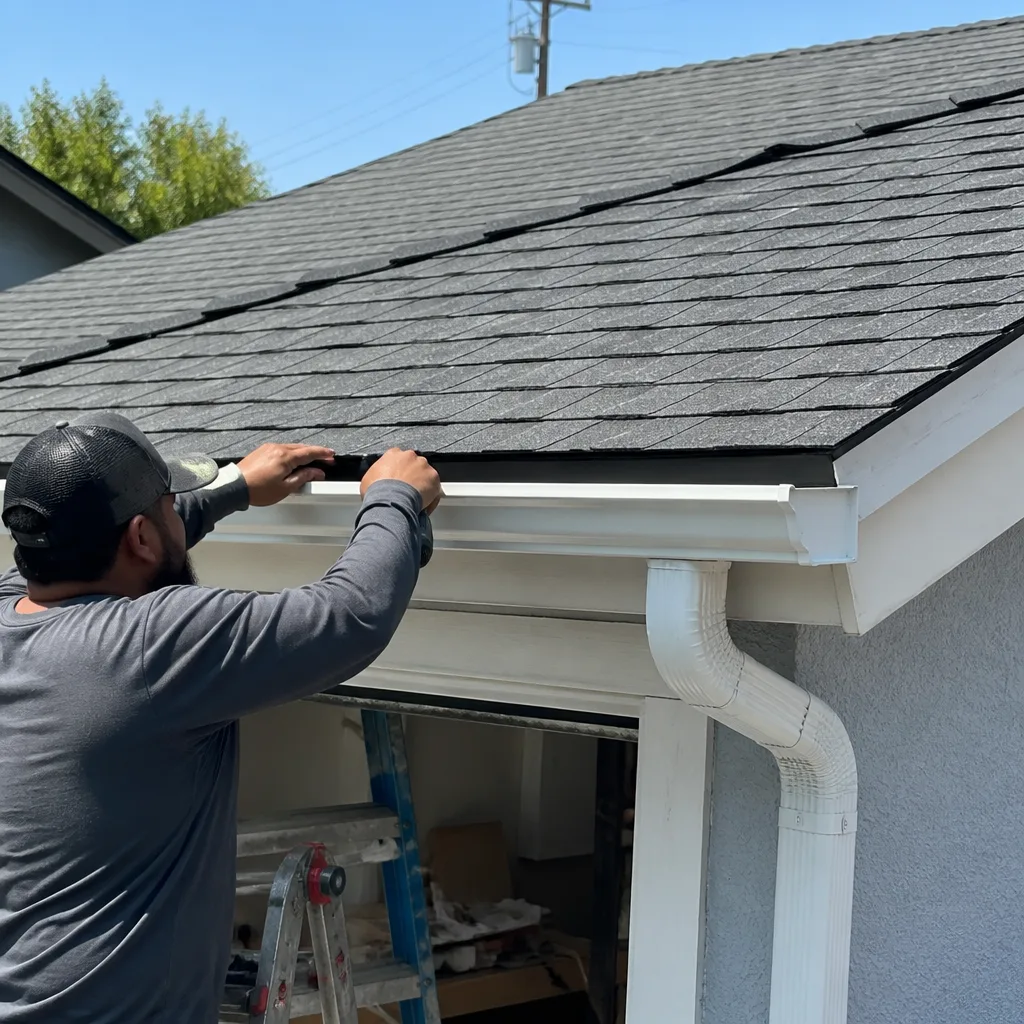
Anaheim’s eucalyptus and palm debris clogs gutters fast, and clogged gutters push water back into the eave line. Standing water at the eave rots fascia boards and creates the entry point for ceiling stains on the top floor. Repair typically involves clearing, re-sloping, sealing, and sometimes replacing damaged fascia or eave drip edge.
Each of these repairs has a defined scope, a clear price, and a predictable outcome. If you’re dealing with something outside these five categories, an honest inspection in Anaheim will identify what’s happening. We don’t charge for looking.
Documenting Roof Condition for Insurance and Resale
If you’re an Anaheim homeowner, your roof’s documented condition matters twice: when you file an insurance claim and when you sell. Orange County disclosure rules require sellers to disclose known material defects, and that includes roof condition. But there’s a difference between disclosing honestly and demonstrating value. Documentation fills that gap.
Here’s a documentation sequence that costs nothing and pays off later:
- Baseline photos now. Take date-stamped photos of the roof surface, ridge line, flashing penetrations, and any areas you’ve previously repaired. Store them in a folder you can access. This becomes your baseline.
- Document every repair. The contractor should provide before-and-after photos, a written description of work performed, and the materials used. If they don’t provide this, ask for it. This is the evidence trail that protects you in an insurance dispute.
- Keep inspection reports. A professional roof assessment in Anaheim gives you a written record of condition, remaining life, and recommendations. When you sell, this turns a vague disclosure into a credible maintenance history.
- For insurance claims: after a storm or wind event, photograph any visible damage before making temporary repairs. Insurance adjusters look for cause and timing. Photo evidence taken the day of the event is worth more than a verbal description weeks later.
We’ve seen Anaheim homeowners successfully use this documentation to support insurance claims for Santa Ana wind damage that might otherwise have been characterized as pre-existing wear. The documentation is the difference between a denied claim and a paid one. It also makes resale conversations straightforward: you answer every buyer question with a record, not a memory.
Common Mistakes to Avoid
- Waiting for a leak to appear before investigating. By the time water reaches your ceiling, it’s traveled through the roof system and likely into wall cavities. Anaheim’s long dry stretches mean damage can sit developing for weeks. The smart play is an annual inspection, not a reactive one.
- Ignoring missing granules on asphalt shingles. Granules aren’t cosmetic. They protect the asphalt from UV degradation. Once they’re gone, the shingles degrade fast in Anaheim’s sun, and the roof loses years of life. If your gutters have granule buildup, the clock is ticking.
- Using the wrong sealant for Anaheim’s temperature swings. Hardware-store silicone has a short life on roof penetrations. Roofing-grade sealants are formulated for thermal movement. The $4 tube becomes a $400 problem when it fails 18 months later.
- Replacing tiles without inspecting underlayment beneath. A broken tile exposes underlayment. The underlayment may be fine, or it may already have UV damage from the exposure window. Skipping that check means patching the symptom and leaving the cause.
- Assuming a new roof means no maintenance. Even a brand-new roof needs debris clearing and annual inspection in Anaheim. The climate works on everything from day one. Maintenance extends lifespan; it doesn’t eliminate the need for it.
- Choosing a contractor based on speed of response. The contractor who promises same-day repair before seeing the roof is guessing. The one who inspects first, documents, then quotes is the one who’ll still be answering the phone when the job is done. We’d rather be the second one.
When to Call a Professional
Some roof issues are visible and simple. Most are not. If you see daylight through your roof boards, water staining on ceilings or walls, loose or missing flashing, persistent granule loss, or tiles that have shifted after a wind event, you’re past the point of observation. Call a professional. Bedrock Roof Repair offers free estimates in Anaheim; call (833) 589-7850. We’ll inspect, we’ll document, and we’ll tell you whether you need a repair, a replacement, or nothing yet. The estimate is free and the opinion is honest.
Frequently Asked Questions
Minor repairs, like replacing a few tiles or resealing a pipe boot, typically run in the low hundreds. Ridge cap re-bedding on a standard Anaheim single-family home runs higher, often between $800 and $2,500 depending on ridge length and access. Flashing replacement around a chimney or skylight can land between $400 and $1,800 depending on the complexity. The only way to get an accurate number is an inspection; call (833) 589-7850 and we’ll give you a written estimate.
Yes, and that’s the default starting point for our evaluations. When the decking is sound and the roof has meaningful life left, a targeted repair is a complete, permanent fix. We recommend replacement only when the structure requires it: compromised decking, widespread underlayment failure, or a roof past 75% of its lifespan.
Most repairs complete in one day. Ridge cap re-bedding and flashing work typically run a single visit. Larger repairs or repairs that reveal hidden damage during the work may extend to two or three days. We’ll confirm the timeline with you before we start, and we’ll document what we find as the work progresses.
Title 24 compliance applies when you’re replacing part or all of the roofing system. Small repairs that match existing materials are generally not required to meet new cool-roof standards. But if the repair scope expands to a full slope or significant surface area, the new materials must comply. We navigate this for you and only recommend materials we know are code-legal for Anaheim.
Walk the property and look for visible damage: missing tiles, shifted ridge caps, lifted flashing around chimneys and vents, debris on the roof. If you see anything concerning, call for an inspection before the next rain. Wind damage that looks cosmetic often has hidden consequences, and early documentation helps if you need to file an insurance claim.
Annually, and after any significant wind event. Anaheim’s UV exposure and Santa Ana cycles mean roofs degrade steadily even without storms. An annual inspection catches small problems before they become interior damage. Most homeowners spend less on annual inspections over a decade than they do on one preventable leak repair.
The Bottom Line
Anaheim’s climate degrades roofs through specific, predictable mechanisms: UV stress, thermal cycling, marine-layer moisture, and Santa Ana wind forces. Understanding which mechanism is affecting your roof tells you whether you’re looking at a repair or a replacement, and it keeps you from paying for a full replacement when a targeted fix would restore years of life. The most valuable thing you can do is document: baseline photos, repair records, inspection reports, and check our more guides & resources for maintenance tips. Second to that is addressing problems early, before hidden damage spreads. If you have questions about what’s happening on your roof, we’ll answer them honestly. Repair when possible. Replace when necessary. Inspect before either.
Bedrock Roof Repair offers free estimates in Anaheim. Call (833) 589-7850 to schedule yours.
Written by the team at Bedrock Roof Repair, serving Anaheim since 2018.
See the difference
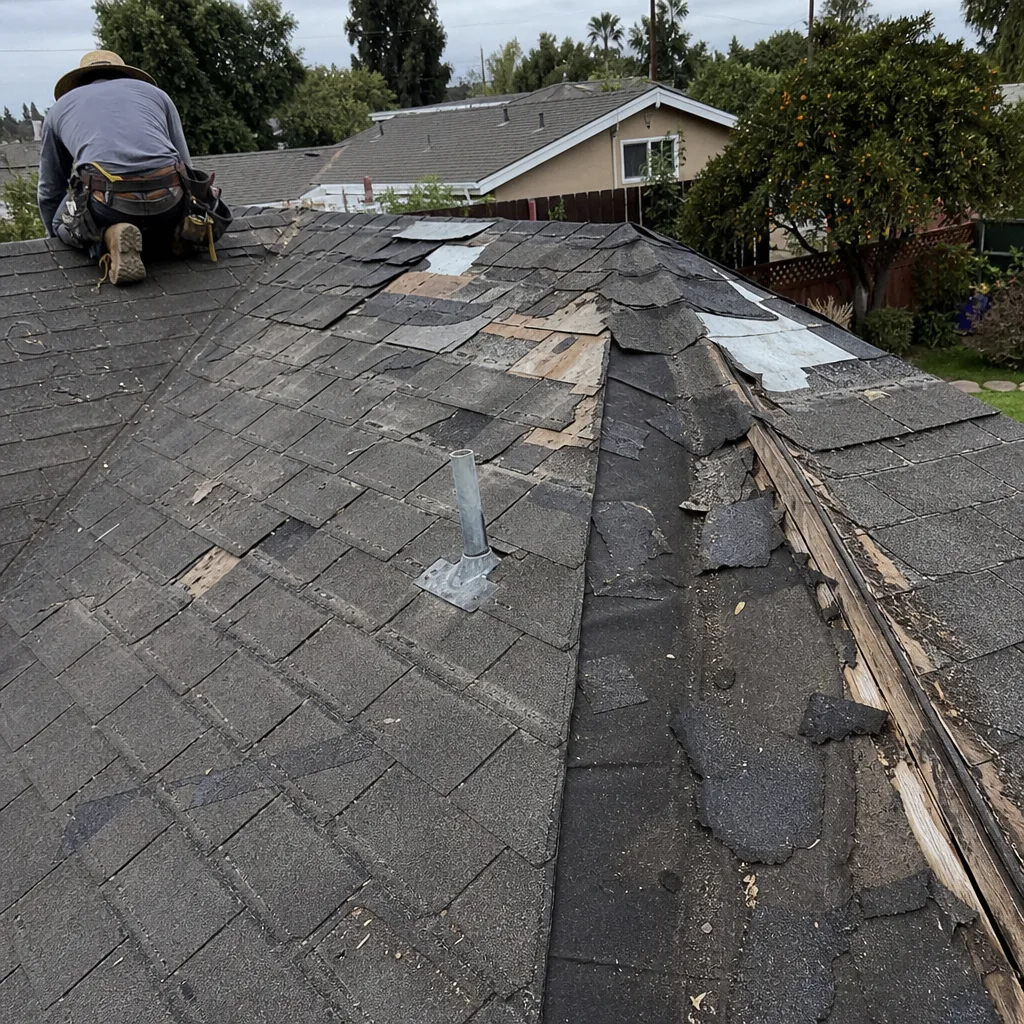 Before
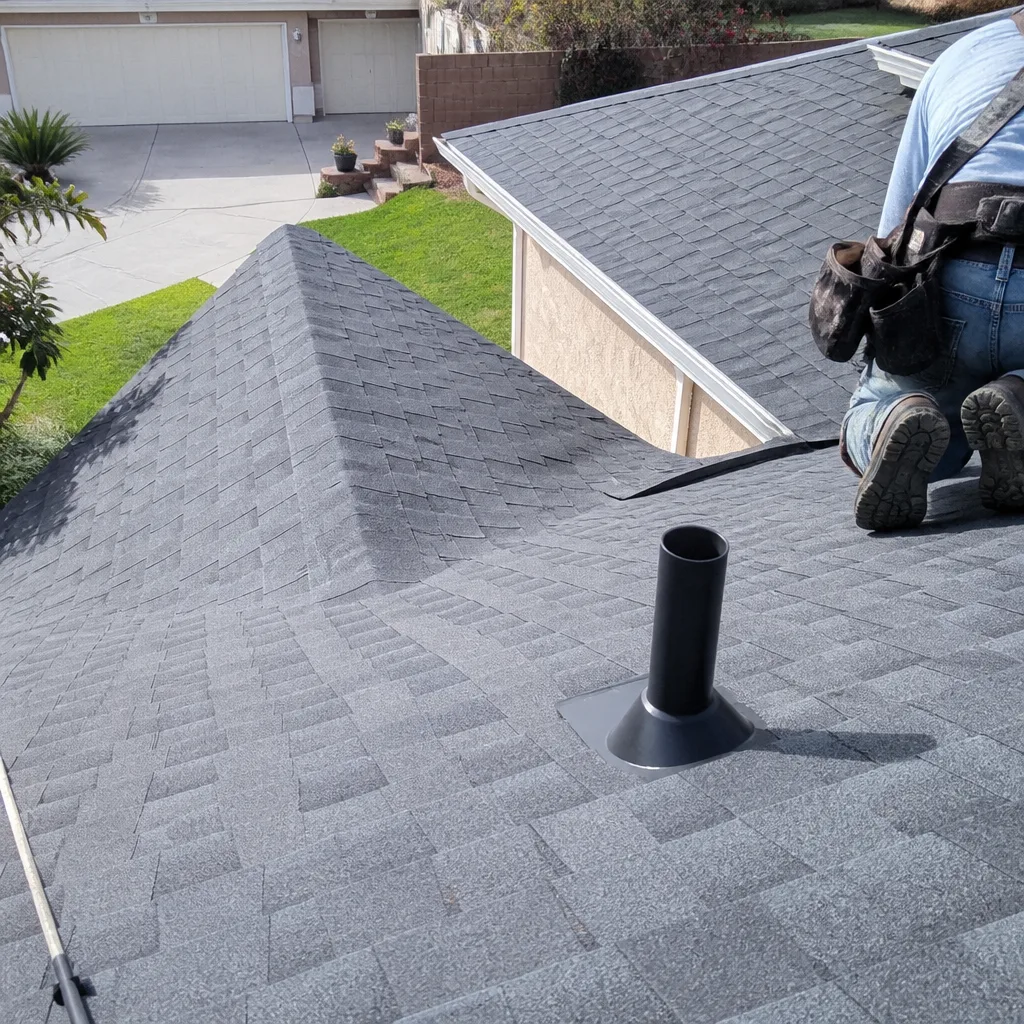 After
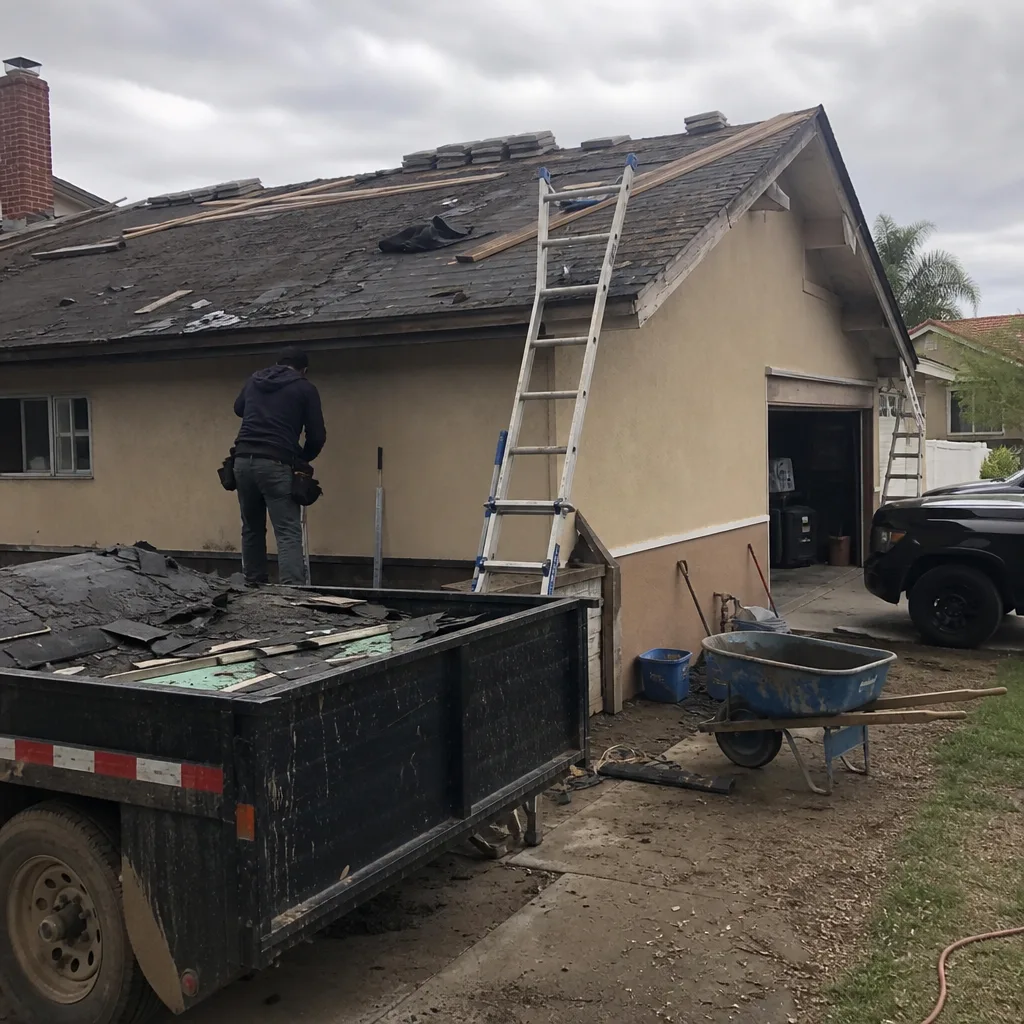 Before
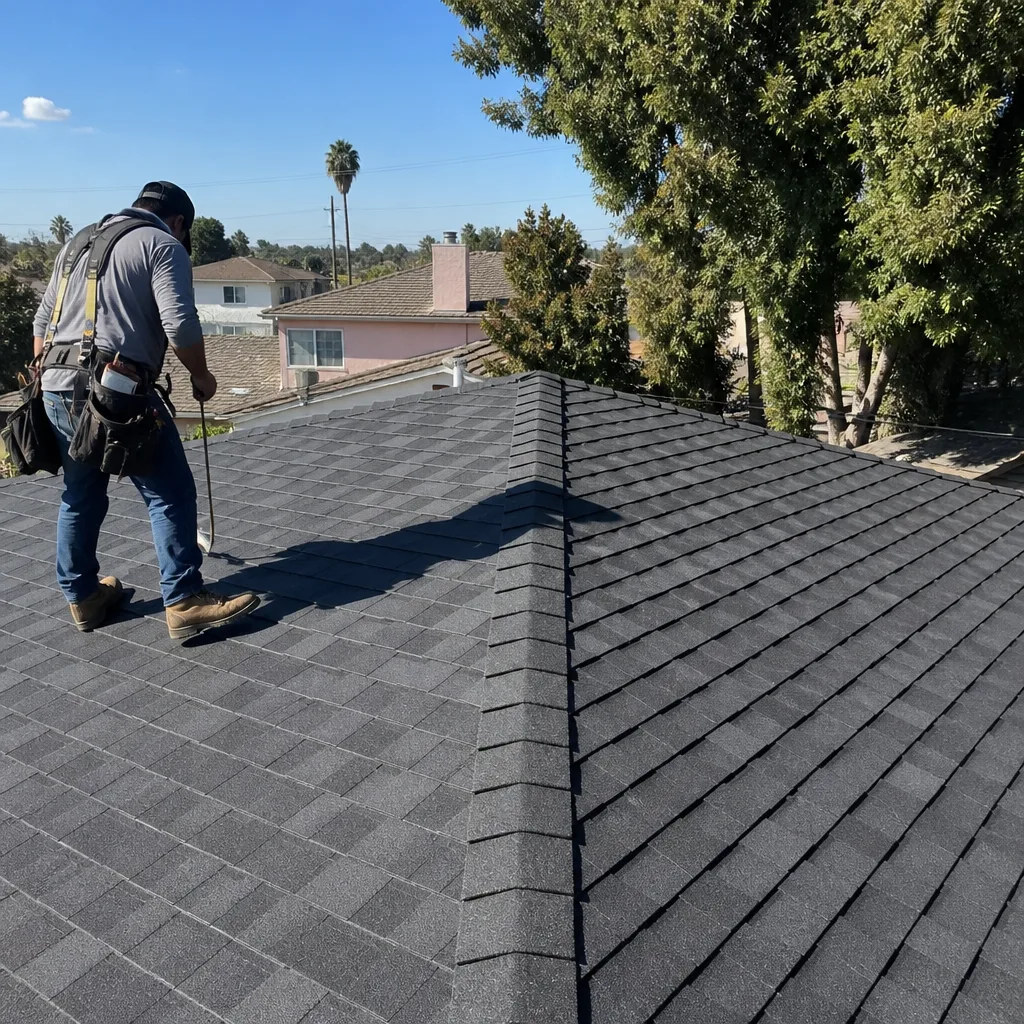 After
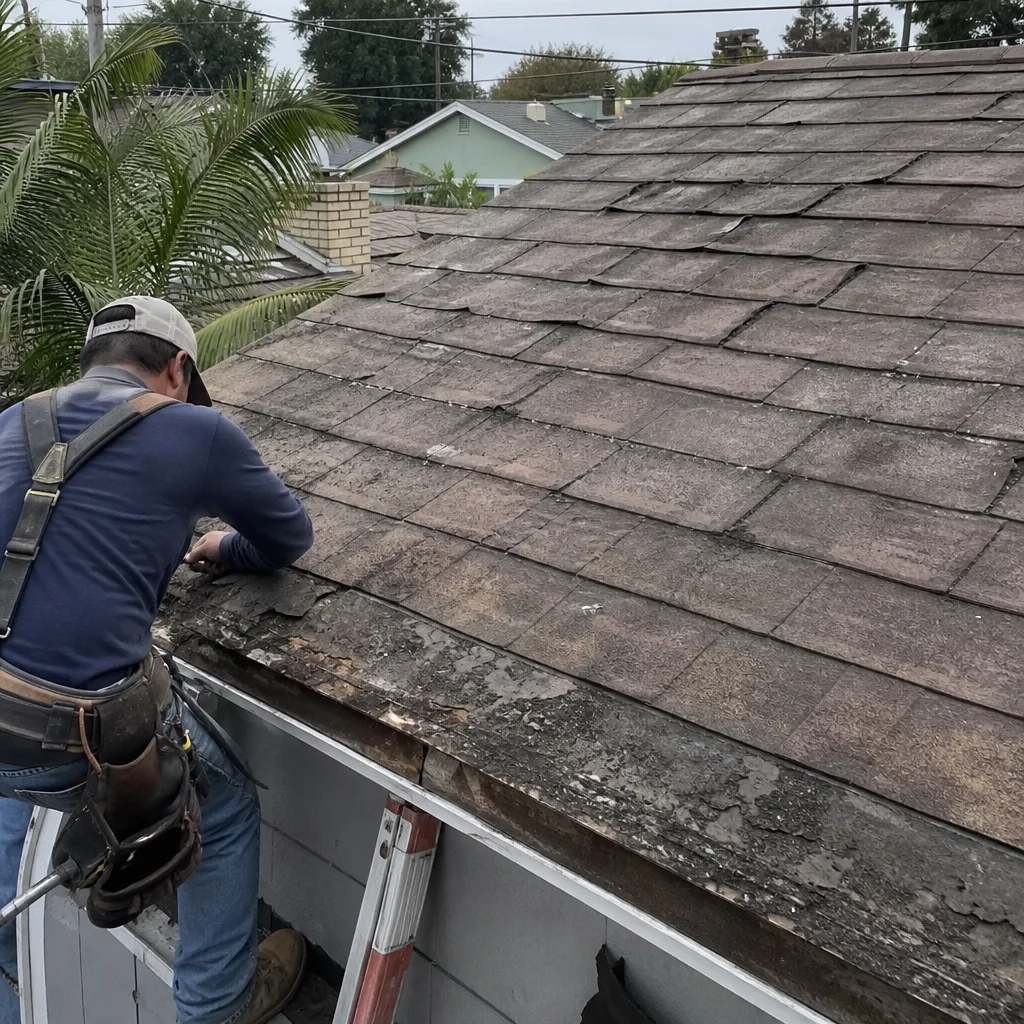 Before
 After