
Last updated October 30, 2026
 Metal roofing
 Architectural shingles
 Tile roofing
 GAF
 Owens Corning
 Flat & low-slope
Free roof inspection with deck photos before we talk money - GAF and Owens Corning certified installation
DIY vs Professional Roofing: The Anaheim Homeowner’s Decision Guide
Here’s a fact most Anaheim homeowners don’t learn until it’s too late: California’s C-39 licensing law says you can legally replace the roof on your own primary residence, but your insurance company can still deny a future claim because the work wasn’t done by a licensed contractor. That gap between legal permission and insurance reality is where thousands of dollars quietly disappear. This guide walks through what California law actually permits, which repairs make sense for a capable homeowner, which ones don’t, and how to decide without losing money or coverage. We’ll cover permits, Title 24 requirements, tile roof hazards, and an honest cost breakdown based on what we see across Anaheim’s flatlands and foothills.
Quick Answer
DIY roofing in Anaheim is legally permitted for owner-builders on their primary residence, but it makes financial sense only for narrow repair categories like single tile replacement or exposed flashing caulking. Full reroofs done without a licensed C-39 contractor carry permit, insurance, and resale risks that typically erase any labor savings, and the work must still pass the same Title 24 inspections a professional would face.
Styles & brands we work with
Table of Contents
- What California Law Actually Permits for Owner-Builders
- Where Insurance Policy Language Diverges From Legal Permission
- The Repair Categories Where DIY Is Genuinely Viable in Anaheim
- Why Anaheim Tile Roofs Are a Different Animal Than Shingle Work
- The Permit Reality: DIY Reroofs Still Face the Same Inspections
- An Honest Cost Comparison: What DIY Actually Saves in Anaheim
- Common Mistakes to Avoid
- When to Call a Professional
- Frequently Asked Questions
What California Law Actually Permits for Owner-Builders
California Business and Professions Code Section 7044 is the statute that matters here. It exempts homeowners from the C-39 roofing contractor license requirement when the work is on their own primary residence and they perform the work themselves or with unpaid help. You cannot hire unlicensed labor to do the work under your owner-builder banner. You cannot use the exemption on a rental property, a vacation home, or any structure you don’t live in as your principal dwelling.
The exemption covers inspection, repair, and full replacement. In Anaheim, a homeowner in the Colony Historic District can strip a roof to decking and reroof it without holding a C-39 license, provided they pull the permit and pass the same inspections a licensed contractor would face. The legal permission is real. What changes in practice is that the owner-builder assumes the role of general contractor, which means carrying the liability, scheduling the inspections, and standing behind the work if it fails.
There is a second layer most guides skip: Anaheim’s local amendments to the California Building Code add specific re-roofing provisions, including requirements for cool roof materials in certain zones, underlayment specs, and tile attachment standards designed for seismic loads. A homeowner who doesn’t read those amendments can complete a legal owner-builder reroof that still fails inspection on a code item a professional would know to address from day one.
What Owner-Builders Can Legally Do
- Perform any roof repair or replacement on their own primary Anaheim residence
- Pull their own permit through the City of Anaheim Building Division
- Work with unpaid family or friends on the project
- Hire specialty subcontractors (such as a crane operator for tile delivery)
What Requires a Licensed C-39 Contractor
- Any work on a rental property, second home, or commercial building
- Any work where the homeowner pays someone else to perform roofing labor
- Any reroof attached to a new addition or structural modification (this crosses into general contracting territory)
- Any insurance claim repair where the insurer requires licensed-contractor documentation
For homeowners wanting a professional inspection before deciding, our Roof Inspection in Anaheim service documents the current roof condition, remaining service life, and which repairs are genuinely urgent.
Where Insurance Policy Language Diverges From Legal Permission
Here is the line most Anaheim homeowners learn about the hard way. Your insurer’s policy language doesn’t care what California law allows. It cares about what the policy says about workmanship, negligence, and disclosure. Standard HO-3 policies in California typically include language stating that damage caused by faulty workmanship or inadequate maintenance is excluded from coverage. If you reroof your home yourself and a leak develops two years later that rots a section of decking and damages the ceiling below, your insurer can deny the claim on the grounds that the damage resulted from workmanship failures they never agreed to underwrite.
That same work performed by a licensed, insured C-39 contractor in Anaheim shifts the liability. The contractor’s workmanship warranty and general liability coverage sit between your insurer and the failure. The licensed contractor’s work creates a paper trail: the permit, the inspection sign-off, the material invoices, the warranty registration with the manufacturer. That documentation matters when a claim is filed.
There is also the disclosure issue at resale. California Civil Code Section 1102 requires sellers to disclose all work performed on the property, including permits pulled and whether the work was done by a licensed contractor. An unpermitted or owner-builder reroof becomes a negotiation point, a price concession, or a deal-killer. Buyers in Anaheim’s competitive market routinely request permit history as part of escrow, and a roof with no contractor record or warranty transfer is a red flag lenders can refuse to finance against in some cases.
One more point that’s easy to miss: if you finance your home with an FHA or VA loan, the appraiser and underwriter can flag unpermitted owner-builder roofing work as a property condition defect. That means the DIY reroof that saved you eight thousand dollars can block a refinance five years later.
Roof Repair in Anaheim performed by our licensed team always includes permit documentation and manufacturer warranty registration, which keeps the insurance and resale path clean.
The Repair Categories Where DIY Is Genuinely Viable in Anaheim
Some roofing tasks are genuinely doable for a careful homeowner with basic tools and a head for heights. The key word is careful, because even these small repairs happen on a roof surface, and falls from single-story Anaheim homes still send people to the emergency room every year. If you have any hesitation about working at height, even these small jobs are worth hiring out.
What makes a repair DIY-viable isn’t the technical difficulty alone. It’s the combination of low consequence-of-failure, no structural exposure, and no permit trigger. Here’s the honest list.
- Single tile replacement. Anaheim’s most common roof type is concrete or clay tile. If one tile has cracked from a branch impact or Santa Ana wind-driven debris, replacing it means lifting the overlapping tile above, removing the cracked piece, and sliding a new one into place. No structural work. No waterproofing changes. No permit. The risk is confined to walking on the tile surface without breaking more tiles, which requires knowing how to distribute your weight across multiple tiles.
- Exposed flashing caulking. Where a plumbing vent stack or gas flue penetrates the roof, the flashing boot has a rubber collar that dries out in Anaheim’s sun. If you can see daylight cracking in the rubber but the metal flashing itself is intact, applying a marine-grade sealant around the collar is a legitimate repair. It won’t last as long as a new boot, but it can buy two to three years.
- Gutter reseating and patch sealing. Loose downspout brackets, separated gutter seams, and small punctures in aluminum gutters are all fixable from a ladder with sealant and pop rivets. They’re roofing-adjacent rather than roof-surface work, which lowers the risk substantially. Just don’t lean a ladder against the gutter itself; use standoff arms.
- Debris clearing and valley inspection. Anaheim’s jacaranda season drops a remarkable amount of organic material into roof valleys, and the Santa Anas shove eucalyptus bark into every seam. Clearing debris with a leaf blower from a stable ladder position and visually inspecting valleys is a solid preventative habit. This is inspection, not repair, but it prevents the moisture trapping that degrades underlayment.
We have a repair-before-replacement philosophy at Bedrock Roof Repair home, which means we evaluate whether one of these targeted fixes resolves the problem before recommending anything larger. When a single cracked tile is the only issue, that’s what we’ll tell you.
Why Anaheim Tile Roofs Are a Different Animal Than Shingle Work
Anaheim’s roofscape is dominated by concrete and clay tile, and the physics of tile work change the DIY calculus entirely. A typical asphalt shingle roof in, say, the Midwest can be walked by a homeowner with reasonable safety precautions. A tile roof cannot. Concrete tiles in Anaheim are designed with a specific load capacity, and walking on them without the proper technique cracks them at a rate that surprises first-timers. We regularly see homeowner attempts that resulted in fifteen cracked tiles in exchange for one replacement.
The weight distribution knowledge matters. Professional tile walkers step on the lower third of each tile where the overlap creates a double layer of support. They never step on the tile edges, which are the cantilevered failure point. They use foam pads or walk boards to spread the load. Without that knowledge, a 180-pound homeowner produces point loads that exceed the tile’s flexural strength. Each crack is another water intrusion path into the underlayment.
There’s also the matter of installation mechanics. Removing a tile requires lifting two tiles above it because they interlock in a triple-overlap pattern. If you force it, you crack the adjacent tiles. Replacing the tile requires hooking the nibs over the batten correctly, and on older Anaheim homes where the battens have degraded or the tiles were originally installed without proper headlap, the new tile won’t seat the same way. A professional recognizes when a cracked tile is actually evidence of a batten problem rather than a surface issue.
And then there’s the height and slope factor. Many Anaheim homes built in the 1950s through 1970s have moderate slopes, but the foothill neighborhoods closer to the 91 like Anaheim Hills are a different story. Steep-slope tile work, particularly on two-story sections, is not a weekend project. It’s a fall risk that requires harnesses, ridge anchors, and scaffold staging in some cases.
For homeowners considering any tile work, we recommend reading through our Roof Repair in Anaheim guide to see how professional tile repairs are performed and what the finished result should look like.
The Permit Reality: DIY Reroofs Still Face the Same Inspections
There’s a persistent belief that pulling an owner-builder permit gives you a pass on code standards. It doesn’t. An Anaheim reroof permit, whether pulled by a homeowner or a C-39 contractor, requires the same inspections: sheathing inspection after tear-off, underlayment inspection before the finished roof surface goes on, and a final inspection after completion. The inspector doesn’t grade on a curve because the homeowner did the work.
This is where many DIY reroofs unravel. The homeowner pulls the permit, strips the roof, installs the underlayment, and calls for inspection. The inspector notes that the underlayment wasn’t installed with the required side laps, or that the fasteners aren’t to spec, or that the roof-to-wall flashing detail doesn’t meet current code. The homeowner now has an exposed roof deck and a correction list they don’t know how to fix. Meanwhile, Anaheim’s weather during the fall Santa Ana season or the occasional winter storm has a way of arriving at exactly the wrong moment.
Title 24 compliance adds another layer. California’s energy code requires cool roof materials in most re-roofing scenarios, and the specific product options vary by climate zone. Anaheim falls in climate zone 8, which has specific solar reflectance and thermal emittance requirements. A homeowner who buys the wrong underlayment or the wrong tile color and doesn’t verify its cool roof rating can fail final inspection and be forced to remove completed work. The material choices available from manufacturers like GAF, CertainTeed, and Owens Corning have specific Title 24-compliant product lines, and selecting the right one is part of what a professional brings to the job.
There’s also the practical permitting process itself. The City of Anaheim Building Division requires a completed permit application, plans or specifications for the reroof, and fees based on project valuation. A licensed contractor handles this as routine. A homeowner doing it the first time is navigating forms, valuation tables, and correction cycles that consume weekends and phone hold times.
If you’re at the stage of weighing a reroof, Roof Replacement in Anaheim explains the full process, including permitting and inspection sequencing, from the contractor’s side of the table.
An Honest Cost Comparison: What DIY Actually Saves in Anaheim
Let’s put numbers on the DIY savings question, because the advertised savings rarely survive contact with reality. The figures below reflect what we see in the Anaheim market for a typical 1,800-square-foot single-story home with a tile roof replacement.
The labor component of a tile reroof in Anaheim typically represents 50 to 60 percent of the total project cost. On a project in the $18,000 to $26,000 range, that’s a theoretical DIY savings of $9,000 to $15,600. But here’s what the homeowner actually spends before the first tile comes off:
- Material overage. Contractors buy tile at wholesale pricing and know their wastage factor. Homeowners pay retail and typically over-buy by 15 to 20 percent because they don’t know the exact wastage rate for their roof’s geometry. On tile alone, that’s often $1,500 to $3,000 in excess material.
- Tool and equipment rental. A tile roof replacement requires a dump trailer or roll-off for tear-off material (typically $400 to $700), a roofing nailer or tile fastening equipment, a compressor if not already owned, safety harnesses, toe boards, and scaffold or ladder rental for two-story sections. Total rental cost typically runs $800 to $2,000 depending on roof height and access.
- Permit fees. Anaheim’s reroof permit fees are based on valuation, but a typical residential reroof permit runs several hundred dollars. This cost exists for any reroof, DIY or professional, so it’s not a differentiator, but it’s a line item homeowners forget to include in their DIY budget.
- Disposal fees. Anaheim’s Republic Services doesn’t accept construction debris in curbside bins. The old tile and underlayment must go to a construction debris facility, and the tipping fees on a full tile tear-off run $300 to $600.
- Time cost. A professional crew of four can tear off and replace a tile roof on a single-story Anaheim home in three to five days. A homeowner working weekends typically needs six to eight weeks. During that time, the roof deck is exposed to the elements, and any rainfall event creates damage potential that isn’t covered by the unpermitted-work exclusion in most policies.
Add those costs and the realistic DIY savings on a tile reroof often shrink to $4,000 to $7,000. That’s still real money, but now it has to be weighed against: the loss of the contractor’s workmanship warranty, the loss of manufacturer warranty registration (most tile manufacturers only honor warranties on professional installation), the insurance liability exposure, the resale disclosure issue, and the very real risk that the job fails inspection or leaks within two years.
For smaller repairs, the math changes. Replacing one cracked tile costs about $15 to $40 in materials at an Anaheim building supply, versus $250 to $450 for a professional repair call that includes the inspection and proper installation. That’s a legitimate DIY win for a homeowner who’s comfortable with height and follows proper tile-walking technique.
Common Mistakes to Avoid
- Treating legal permission as insurance protection. California says you can DIY your own roof. Your insurer doesn’t have to cover the consequences. Always read your policy’s workmanship exclusion language before committing to a DIY reroof.
- Walking on tile like it’s shingle. Concrete and clay tile crack under point loads that asphalt shingles shrug off. Every cracked tile from improper walking technique is a new leak path and a new replacement cost.
- Skipping the permit on a reroof. Unpermitted reroofs in Anaheim surface during resale, refinancing, and any future insurance claim. The permit cost is trivial compared to what an unpermitted roof costs you later.
- Buying roofing materials before verifying Title 24 compliance. Anaheim is in climate zone 8, and the wrong tile color or underlayment can fail final inspection. Verify the cool roof rating before you buy.
- Using the wrong sealant on flashing. Anaheim’s temperature swings and UV exposure degrade ordinary silicone quickly. Use a marine-grade or roofing-specific sealant, not a general-purpose caulk from the hardware aisle.
- Piling debris in valleys while clearing. Debris blown into valleys and left there traps moisture against the underlayment, accelerating degradation exactly where the roof is most vulnerable.
- Assuming a small leak means a small repair. Water travels laterally across the underlayment before it finds a drip point inside the home. The visible stain on the ceiling is often several feet away from the actual roof penetration. A professional inspection traces the water path rather than patching the visible spot.
When to Call a Professional
Any work that involves the roof’s waterproofing layers, structural decking, or the tile surface across more than a handful of tiles should go to a licensed C-39 contractor. The trigger isn’t whether you’re physically capable of doing the work. It’s whether the consequence of getting it wrong justifies the savings. A failed flashing repair can rot decking. A failed tile installation can compromise the underlayment. A failed reroof can trigger insurance denial and resale problems. In our experience, the moment a repair involves lifting underlayment, exposing decking, or working on a steep section, the professional math flips decisively.
Bedrock Roof Repair offers free estimates in Anaheim. We’ll tell you what your roof actually needs – repair, replacement, or nothing yet. Call (833) 589-7850 to schedule an inspection, and we’ll walk you through what we find and what it costs to address.
Frequently Asked Questions
Yes, California Business and Professions Code Section 7044 exempts homeowners performing work on their own primary residence from the C-39 roofing license requirement. You must perform the work yourself or with unpaid help, and you must still pull a permit and pass the same inspections a licensed contractor would face in Anaheim.
In most cases, no. Standard homeowner’s policies exclude damage caused by faulty workmanship, and a leak from DIY roofing work is classified as a workmanship failure rather than a covered peril. Call (833) 589-7850 if you’re uncertain about your specific policy language, and we can help you assess the risk before you start.
Inspection pricing varies by roof size and access, but many Anaheim contractors offer inspection as part of a repair estimate at no charge. A standalone inspection with a written report typically runs a few hundred dollars. Bedrock Roof Repair provides inspection services as part of our free estimate process.
Yes. Anaheim adopts the California Building Code with local amendments that affect reroofing, including cool roof material requirements under Title 24 (Anaheim is climate zone 8), specific tile attachment standards for seismic loads, and underlayment specifications. A DIY project must meet all of these standards to pass inspection.
Single tile replacement, exposed flashing caulking, gutter reseating, and debris clearing are the repairs where DIY risk is lowest, provided you’re comfortable working at height and use proper tile-walking technique. Any work involving underlayment removal, decking exposure, or steep-slope access should go to a professional.
For genuinely small surface repairs on a single-story Anaheim roof, yes, we’ll tell you when a fix is within reach. Our name reflects a repair-first philosophy: repair when possible, replace when necessary, inspect before either. Call (833) 589-7850 and we’ll give you an honest assessment of which category your roof falls into.
The Bottom Line
Anaheim homeowners facing roof damage have three options: targeted DIY repair, professional repair, or replacement. The right answer depends less on skill than on consequence, liability, and documentation. Small surface repairs on a single-story roof are legitimate DIY territory. Underlayment work, decking exposure, steep-slope access, and any full reroof carry risks that make professional work the financially rational choice, even before you factor in insurance and resale implications. The smartest first move in every scenario is a professional inspection that tells you what your roof actually needs. Seven leading brands. One honest recommendation.
Written by the team at Bedrock Roof Repair, serving Anaheim since 2018.
Ready to find out whether your roof needs repair, replacement, or nothing yet? Schedule your roof inspection in Anaheim or call (833) 589-7850 for a free estimate.
See the difference
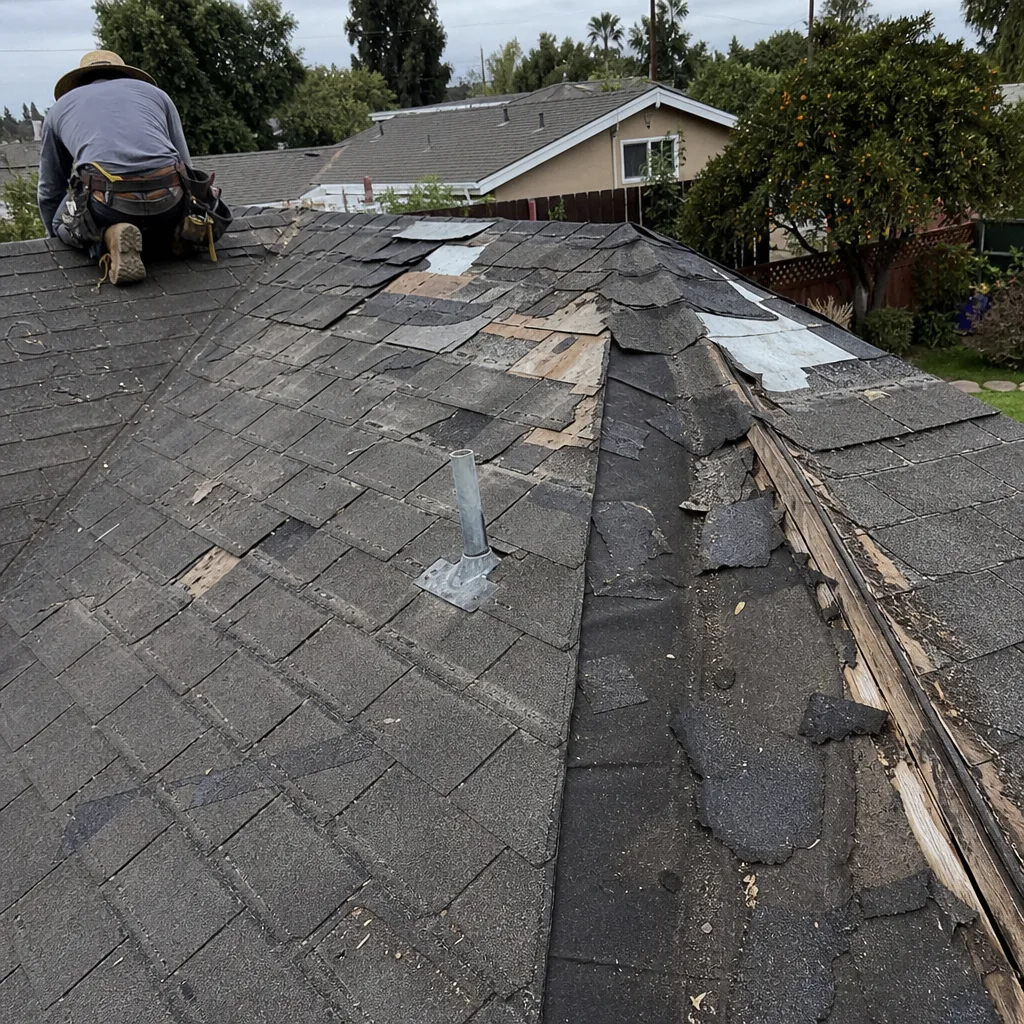 Before
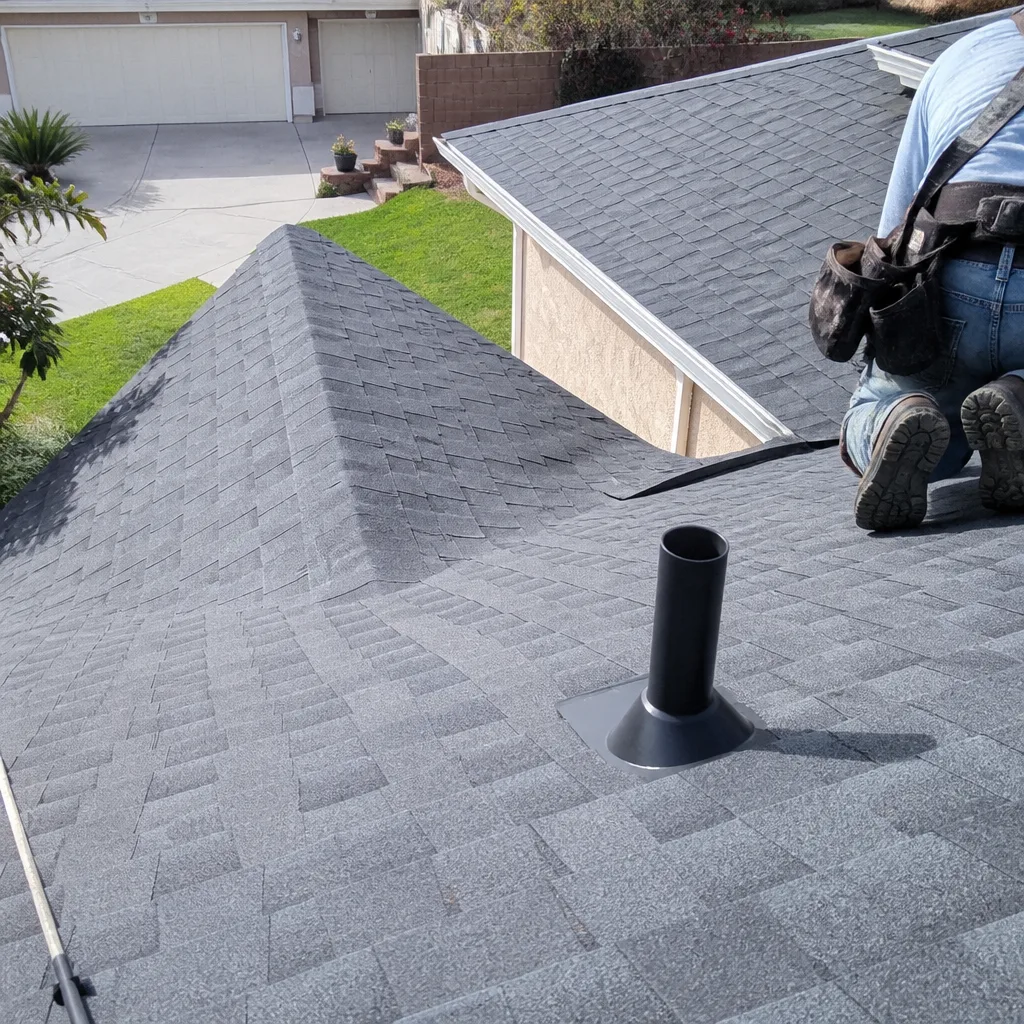 After
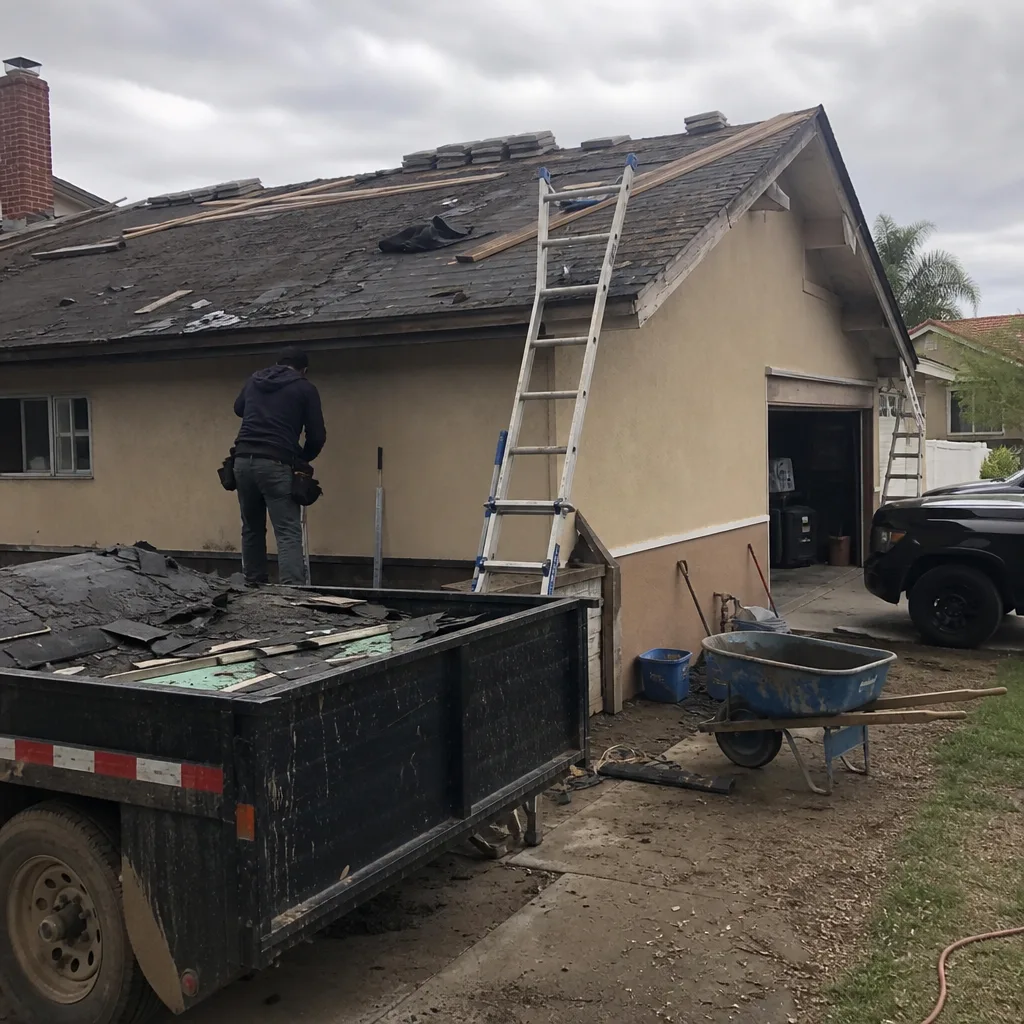 Before
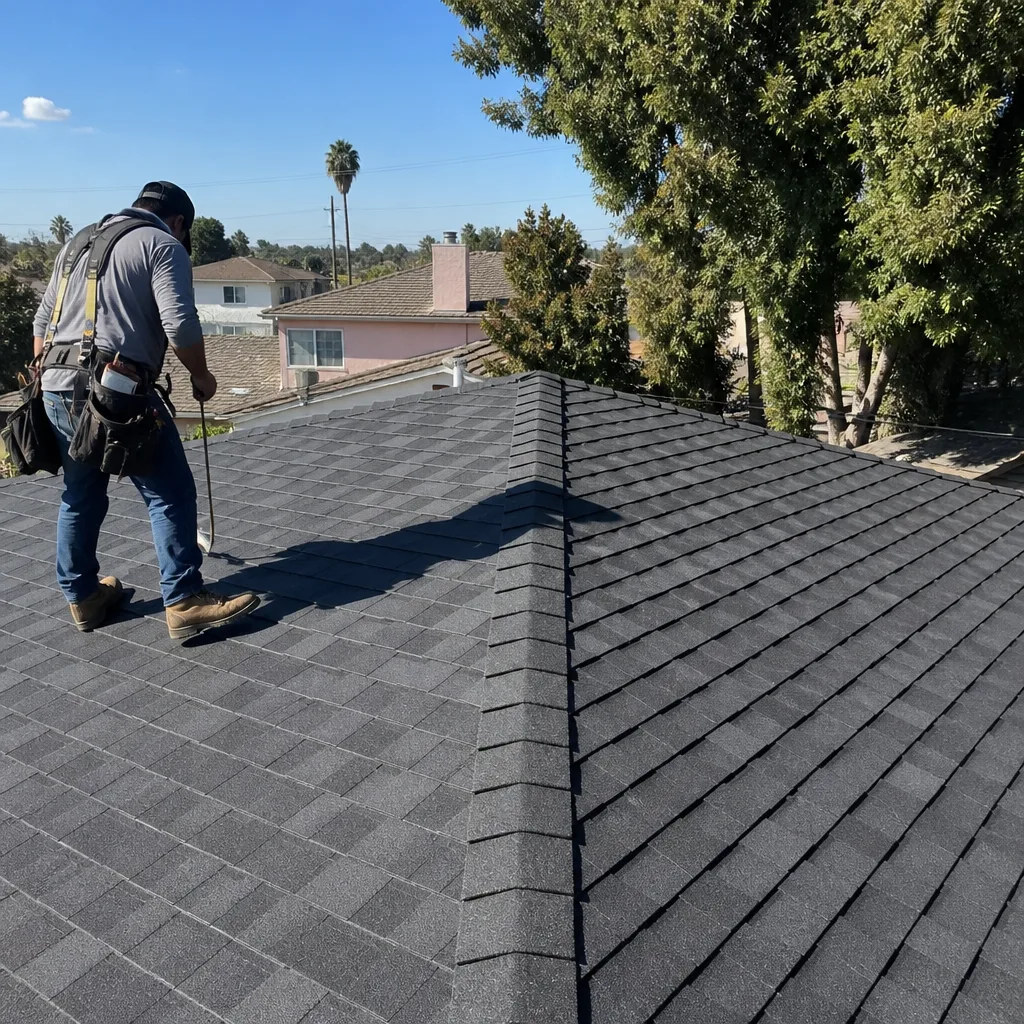 After
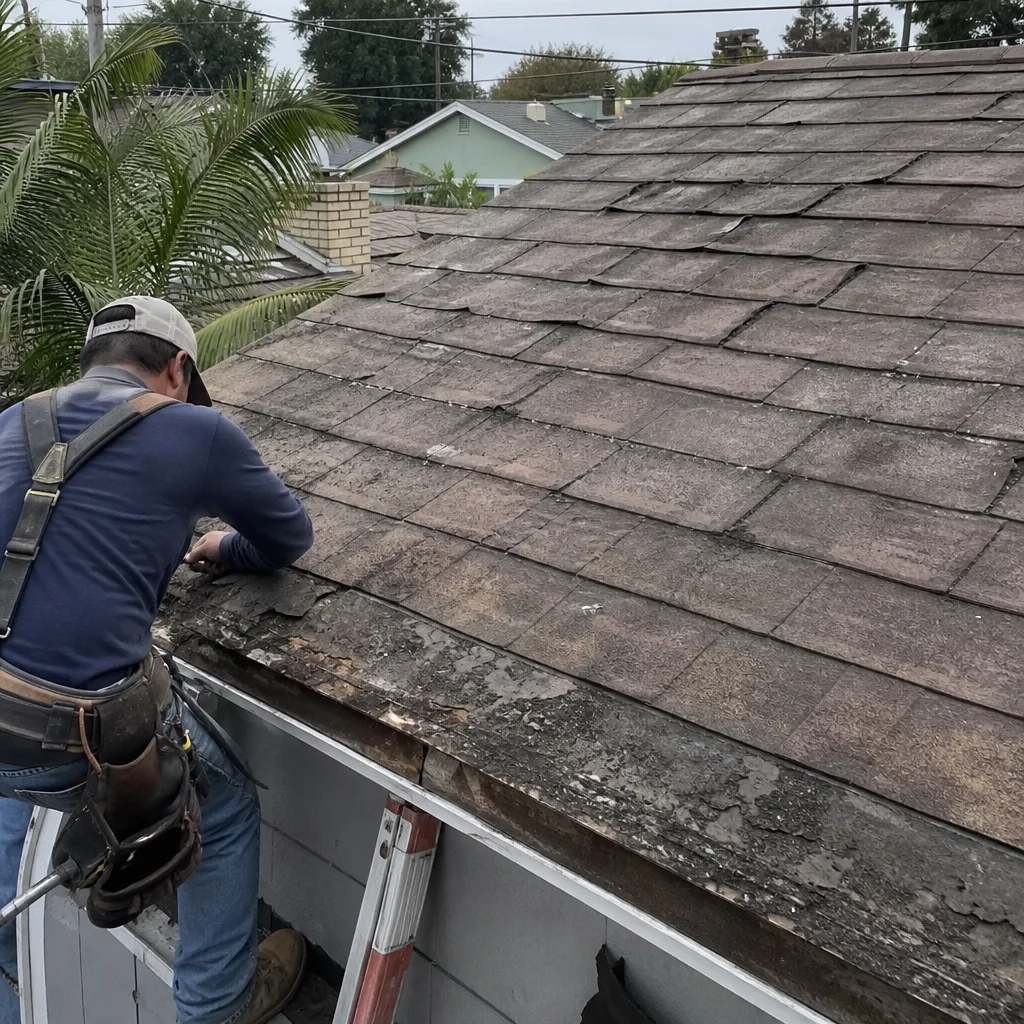 Before
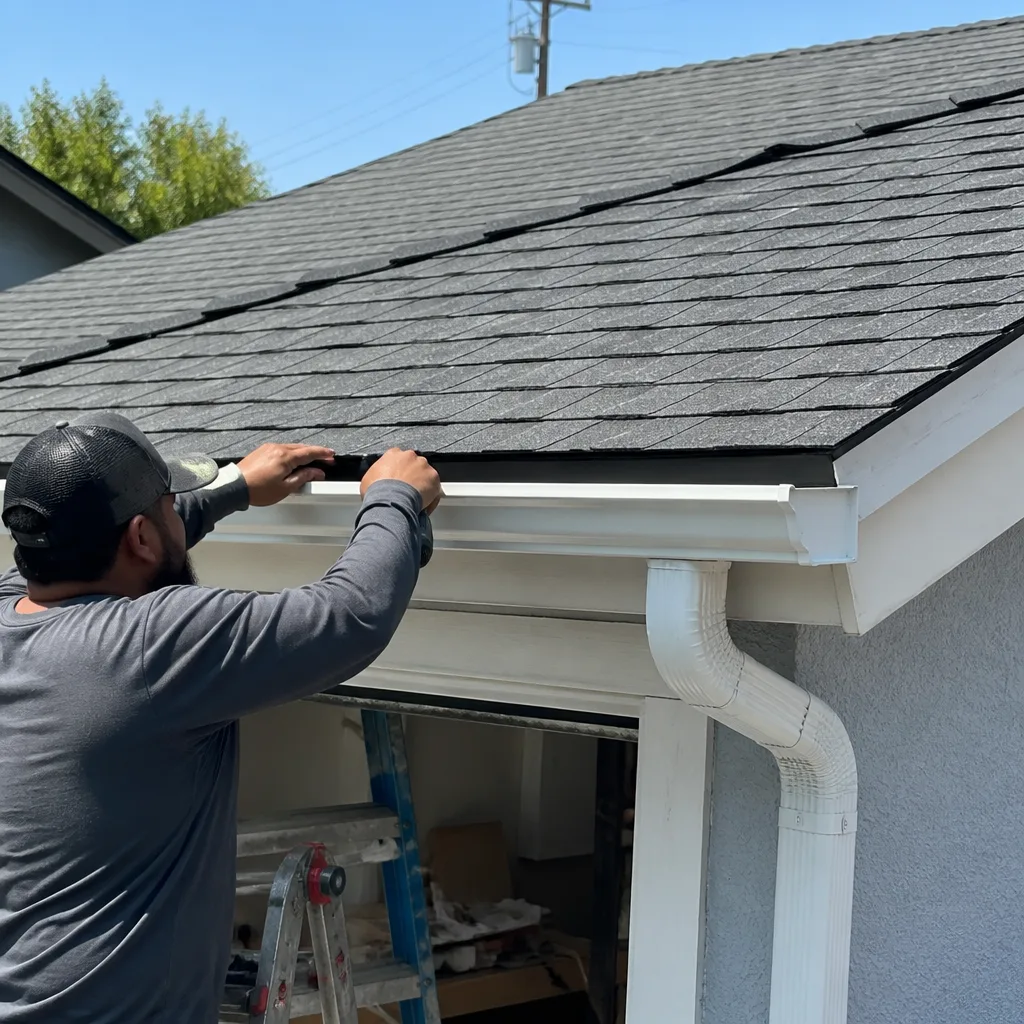 After