

Last updated October 30, 2026
 Architectural shingles
 Metal roofing
 Tile roofing
 GAF
 Owens Corning
 Flat & low-slope
Free roof inspection with deck photos before we talk money - GAF and Owens Corning certified installation
Roof Repair Maintenance Checklist for Anaheim Homeowners
The most expensive roof repair in Anaheim typically starts with a $40 problem: a cracked pipe boot or an open step-flashing seam that goes unnoticed through two dry summers before the first heavy rain turns it into $6,000 of wet decking. This guide is built around the three Anaheim-specific failure windows that precede visible damage, so you can intervene before water reaches the deck. You’ll learn which maintenance tasks genuinely extend roof life, which are contractor upsells, and exactly what to check after each local trigger event.
Quick Answer
A roof maintenance checklist for Anaheim homeowners should be sequenced around three local triggers: post-Santa Ana wind events, post-first-fall-rain, and post-summer heat peaks. At each trigger, inspect flashing points, pipe boots, valley metal, and gutter debris. Flat roofs need attention to seams and ponding water; pitched clay or concrete tile roofs need mortar and underlayment checks. Most of this takes under an hour and prevents the majority of Anaheim roof failures.
Styles & brands we work with
Table of Contents
- The Three Anaheim Failure Windows Most Checklists Miss
- Post-Santa Ana Wind Event: What to Check
- Post-First-Fall-Rain: Reading the Water
- Post-Summer Heat Peak: Tile and Flashing Deterioration
- Flat vs. Pitched Roofs: Two Completely Different Checklists
- Gutter Debris as a Diagnostic Proxy
- Which Maintenance Actually Extends Roof Life (and Which Doesn’t)
- Common Mistakes to Avoid
- When to Call a Professional
- Frequently Asked Questions
The Three Anaheim Failure Windows Most Checklists Miss
Anaheim’s climate does something specific to roofs. We get roughly 14 inches of rain per year, almost all of it between November and March. That means a roof can sit through six or seven months of completely dry weather while small problems compound silently. A lifted shingle tab doesn’t leak in August. A cracked pipe boot doesn’t leak in September. But when the first real storm arrives in late November, every small opening becomes a water entry point at the same time.
Generic maintenance checklists tell you to inspect your roof in spring and fall. That’s fine advice for Minneapolis. For Anaheim, it misses the three events that actually cause or expose roof damage here:
- Post-Santa Ana wind event. Santa Ana winds blow from the northeast at 40 to 60 mph, with gusts that can hit 70 mph in the foothills. These winds don’t just lift shingles; they drive debris across roof surfaces, loosen tile, and stress every flashing point. The day after a Santa Ana event is the most important inspection day of the year for an Anaheim roof.
- Post-first-fall-rain. The first heavy rain of the season, usually November, reveals every small leak that developed during the dry months. It’s the moment when a $40 pipe boot crack announces itself, and the moment when catching it still means a $250 repair instead of a $6,000 deck replacement.
- Post-summer heat peak. Anaheim regularly sees 90-plus-degree days from July through September, with roof surface temperatures reaching 150 to 170 degrees on tile and asphalt. That heat breaks down sealants, accelerates mortar erosion, and embrittles rubber boots. The September inspection catches heat damage before rain turns it into water damage.
Between these three windows, most Anaheim roof problems get caught early. Skip them, and you’re gambling that this winter’s rain won’t find what last summer’s heat already weakened.
Post-Santa Ana Wind Event: What to Check
Santa Ana winds are the single most destructive weather event for Anaheim roofs. They arrive warm, dry, and sustained, and they hit roof edges, hips, and ridges from an unusual direction: northeast. Most roofs in Anaheim have their primary water-shedding orientation set for southwesterly ocean weather. Santa Ana winds attack the opposite slope, which is often the less-reinforced side.
Here’s the post-wind inspection sequence, in order of priority:
- Walk the perimeter at ground level first. Look for displaced tiles, lifted shingle tabs, or metal flashing that’s bent or pulled away. Binoculars help. Don’t climb the roof until you’ve identified a specific concern from the ground.
- Check ridge caps and hip tiles. These are the most commonly displaced pieces during Santa Ana events. A single cracked ridge cap can let driven rain into the attic during the first winter storm.
- Inspect the flashing at every roof penetration. Vents, plumbing stacks, and chimney flashing all take direct wind pressure. Look for gaps, lifted edges, or missing sealant.
- Examine the drip edge and fascia. Wind-driven debris often catches the drip edge and pries it away. If the drip edge is loose, water wicks up into the deck edge during rain.
- Check the gutters for wind-blown debris. Santa Anas fill gutters with leaves, palm fronds, and roofing granules. Clogged gutters during the first rain creates overflow that runs down the fascia and behind the gutter, often mistaken for a roof leak.
One thing we’ve seen repeatedly in Anaheim neighborhoods like West Anaheim and the Colony: after a strong Santa Ana, homeowners notice a tile in the yard or on the driveway and assume the roof is severely damaged. Often, it’s a single displaced tile with no deck damage. But if left unfixed, wind-driven rain enters that gap and the insulation holds moisture for months. The repair is simple; the neglect pattern is expensive.
If you find any of these conditions, roof repair in Anaheim is usually a half-day job when addressed before rain. Waiting turns a tile reset into a deck section replacement.
Post-First-Fall-Rain: Reading the Water
The first heavy rain of the season is nature’s roof inspection. You don’t need to climb anything to learn where your roof is failing. You need to be inside the house, and you need to know where to look.
Start in the attic during or immediately after the first sustained rain, typically a storm that delivers a half-inch or more over several hours. Bring a flashlight. The sequence matters:
- Scan the underside of the roof deck for dark spots or staining. Active leaks show as wet patches. Old leaks show as water stains with mineral rings. The location of the stain on the deck tells you where the water entered, not necessarily where it dripped.
- Trace plumbing vent penetrations. In Anaheim homes built between 1960 and 1985, the original pipe boots are often still in place and well past their 15-year service life. Look for water trails running down the vent pipe or moisture staining the deck around the penetration.
- Inspect the attic insulation near the eaves. Wind-driven rain often enters through soffit gaps or poor drip-edge sealing. Wet insulation at the eaves is a signature of this failure.
- Check the ceiling for any new stains. In homes where the attic isn’t accessible, ceiling stains are the primary diagnostic tool. Note the location and shape: a stain that grows after rain and shrinks during dry weather is an active leak. A stain that never changes is usually old damage.
One Anaheim-specific detail: many homes here have cathedral ceilings or no attic at all, particularly mid-century homes in neighborhoods like Anaheim Shores. In those cases, you’re monitoring ceiling surfaces directly. The first fall rain is the time to walk every room and look at every ceiling corner, especially near the perimeter walls.
If the first rain reveals a leak, don’t wait for storm season to end. The second, third, and fourth rains will push water deeper into the deck and insulation, expanding the repair scope each time. A leak caught in November is often a flashing repair. That same leak in February is often deck replacement.
For a detailed look at what repairs typically involve, see our guide to roof repair in Anaheim. If the damage is extensive enough that replacement is on the table, read about roof replacement in Anaheim before you decide.
Post-Summer Heat Peak: Tile and Flashing Deterioration
Anaheim’s summer heat is a slow-moving roof destroyer. It doesn’t displace tiles like Santa Ana winds do, and it doesn’t reveal leaks like the first rain does. It works quietly: breaking down sealants, eroding mortar, and embrittling rubber until the roofing system is primed for failure.
The heat peak in Anaheim arrives in August and September. Roof surfaces on a 95-degree day reach temperatures that will burn bare skin. That thermal load cycles daily: expansion in the afternoon sun, contraction at night. Over years, those cycles do specific things to specific materials.
Clay and concrete tile. Anaheim has one of the highest concentrations of tile roofs in Southern California, and tile roofs fail differently than shingle roofs. The tile itself doesn’t wear out from heat. The mortar that holds ridge caps and hip tiles in place does. After several heat cycles, mortar dries, cracks, and crumbles. Once the mortar fails, the ridge cap tile is held only by gravity and friction. It becomes loose enough that a moderate Santa Ana wind can lift it. The heat doesn’t cause the visible damage; it creates the condition that the next wind event exploits.
Rubber pipe boots and gaskets. The neoprene boots that seal plumbing vents are rated for roughly 15 to 20 years, depending on exposure. Anaheim’s heat accelerates that schedule. By year 12 or 13, many boots are cracked. By year 15, they’re failing. The crack lets water run down the vent pipe into the attic, a leak that is often misattributed to a “roof leak” when the actual fix is a $40 boot and 20 minutes of work.
Asphalt shingle sealant. Shingle tabs are held down by heat-activated adhesive strips. Under normal conditions, the sun activates the adhesive and the tabs seal to the shingle below. But prolonged, repeated heat exposure eventually degrades the adhesive, and the tabs start to release. This is why some Anaheim shingle roofs show “flapping” tabs even without wind events. The glue is gone; the shingle is just resting in place.
The September heat-peak inspection is simple: check mortar joints on ridge caps and hips for crumbling, inspect pipe boots for visible cracks, and look for shingle tabs that aren’t lying flat. If you need a professional set of eyes before the rain arrives, roof inspection in Anaheim costs far less than the damage an uncaught failure will cause.
Flat vs. Pitched Roofs: Two Completely Different Checklists
Anaheim has a significant inventory of flat-roof homes, mostly built between 1960 and 1985 as part of the city’s tract housing expansion. These roofs don’t behave like pitched roofs, don’t fail like pitched roofs, and shouldn’t be maintained like pitched roofs. A checklist that treats them the same is worse than no checklist at all, because it inspects the wrong things and misses the right ones.
Flat Roof Maintenance (Built-Up, Modified Bitumen, or Single-Ply)
- Check for ponding water. After any rain, walk the roof (if safe) or inspect from a second-story window. Any water that remains 48 hours after rain stops is a ponding condition. Ponding on a flat roof accelerates membrane deterioration at that spot, and it’s the most common precursor to flat-roof failure in Anaheim.
- Inspect all seams and flashings visually. Flat roof membranes fail at seams, penetrations, and transitions before they fail in the field. Look for lifted edges, cracking, or exposed felt in these areas.
- Check the scuppers and drains. Flat roofs drain through scuppers (openings in the parapet wall) or internal drains. If they’re clogged with debris, the roof holds water longer than designed. This is a 15-minute maintenance item that prevents most flat-roof leaks.
- Examine the parapet wall and its cap flashing. On Anaheim flat-roof homes, water intrusion frequently occurs at the parapet. The cap flashing on top of the parapet loosens, and water runs down inside the wall. This shows up as wall stains below the parapet, not ceiling stains.
- Test the roof surface for wear. On built-up roofs, look for areas where the gravel or cap sheet is worn thin. On single-ply roofs, look for punctures, cracks, or areas where the membrane feels brittle underfoot (if you’re walking it).
Pitched Roof Maintenance (Tile, Shingle, or Composition)
- Check ridge caps and hip tiles for mortar condition. As noted above, mortar failure is the primary tile roof failure mode in Anaheim. Walk the ground perimeter and look for crumbling mortar at every ridge and hip line.
- Inspect valley metal. Valleys concentrate water flow, and they’re a common failure point on Anaheim tile roofs. Look for rust, lifting, or debris accumulation in the valley.
- Check step flashing along walls and chimneys. Step flashing is the most labor-intensive flashing to install correctly and the most common to fail on pitched roofs. Look for gaps between the flashing and the wall, or for flashing that’s pulled away from the roof surface.
- Verify shingle or tile alignment. Anaheim’s heat cycles can cause tiles to shift slightly and shingles to cup or curl. Any shingle with visible curling at the edges is past its useful life.
If you own a flat-roof Anaheim home and you’re using a generic shingle-roof checklist, you’re inspecting the wrong roof. The roof inspection in Anaheim page explains what a professional inspection covers for both roof types.
Gutter Debris as a Diagnostic Proxy
Your gutters tell you more about your roof’s condition than almost anything you can see from the ground. Before you climb a ladder or walk a roof, read what’s collecting in the gutters. It’s the safest diagnostic tool you have.
Granule accumulation. Asphalt shingles shed granules as they age. A light, even dusting of granules in the gutters is normal on a healthy roof. But when gutters fill with a thick slurry of granules, especially if it’s concentrated below certain roof fields, the shingles in that area are losing their protective surface. Granule loss is the primary indicator of shingle aging, and it accelerates after the shingle reaches roughly 15 years in Anaheim’s heat. If you see granule-heavy gutter sludge, the shingles are entering their failure window, even if they still look okay from the street.
Tile fragments. On tile roofs, gutter debris can include small pieces of broken tile. A few small chips after a Santa Ana wind is not alarming. Repeated accumulation of tile fragments after every rain suggests tiles are cracking from thermal stress or foot traffic, and you should find the source.
Mortar grit. On tile roofs with mortar-set ridge caps, a line of gritty, sand-like material in the gutter directly below the ridge is the earliest sign of mortar erosion. You’ll see the grit before you see the cracks from the ground. This is the cheapest moment to re-point the mortar.
Biological material. Palm fronds, eucalyptus leaves, and other Southern California plant material in gutters create dams. In Anaheim, the first fall rain often arrives before homeowners have cleaned summer’s accumulated gutter debris. A clogged gutter during that first storm backs water up under the eave, and the resulting leak at the fascia line gets misdiagnosed as a roof leak.
Gutter maintenance is one of the few proven life-extending activities on any roof. Clean gutters move water away from the deck edge, the fascia, and the foundation. They also preserve drip-edge integrity, which protects the deck’s most vulnerable edge from rot.
Which Maintenance Actually Extends Roof Life (and Which Doesn’t)
Not all maintenance is equal. Some tasks genuinely extend the life of an Anaheim roof. Others are sold as maintenance but deliver little or no structural benefit. Here’s the honest division, based on what we’ve seen across hundreds of Anaheim roofs.
Maintenance That Actually Extends Roof Life
- Re-pointing tile ridge mortar. This is the single highest-leverage maintenance task on a tile roof. It costs a few hundred dollars, takes a few hours, and prevents the cascade that starts with a loose ridge cap and ends with a wet attic. Do it every 5 to 7 years, or when you see grit in the gutters below the ridge.
- Replacing pipe boots at the 15-year mark. A pipe boot costs under $50 and takes under an hour to replace. Letting it fail costs thousands in deck and insulation repair. If your Anaheim home is over 15 years old and the boots haven’t been replaced, replace them this year.
- Cleaning gutters before the first fall rain. This is preventative maintenance in the truest sense. It costs nothing but time and prevents fascia rot, drip-edge damage, and a class of “leak” that isn’t actually a roof problem at all.
- Resealing roof penetrations on flat roofs. Flat-roof seams and flashings need periodic reapplication of sealant. It’s an hour of work and a tube of quality sealant, and it prevents the majority of flat-roof membrane failures in Anaheim.
- Inspecting after every major wind event. This takes 15 minutes with binoculars from the ground. It catches displaced tiles and lifted flashing before the next rain turns the opening into a leak.
Maintenance That’s Often an Upsell
- Roof “tune-ups” that consist of inspecting and tightening a few fasteners. The inspection is legitimate; the “tune-up” label often isn’t. Ask what exactly is being done. If the answer is vague, skip it.
- Applying sealant or coating to a shingle roof. Shingle roofs are not designed to be coated. The coating traps heat and moisture, accelerates granule loss, and voids manufacturer warranties. No legitimate roofer will recommend this on an asphalt shingle roof.
- Annual “preventative” replacement of flashing. Flashing should be inspected annually but replaced only when damaged or deteriorated. Replacing sound flashing is not maintenance; it’s unnecessary work.
- Pressure washing roofs. Pressure washing damages shingle granules, tile surfaces, and mortar joints. If someone proposes pressure washing your roof as maintenance, decline.
When we recommend a maintenance task, it’s because that task addresses a real failure mode on a specific Anaheim roof. When we recommend against one, it’s because the task either does nothing or actively shortens roof life. That’s the standard from Bedrock Roof Repair home, and it applies to every roof we inspect.
Common Mistakes to Avoid
- Inspecting on a fixed seasonal schedule instead of after trigger events. Anaheim’s roof damage doesn’t arrive with the spring equinox; it arrives with the first Santa Ana and the first heavy rain. Inspect after those events, not on a calendar.
- Climbing onto a tile roof without proper technique. Tile breaks under foot traffic, especially in heat when the tile is brittle. If you must walk the roof, step on the lower third of each tile and avoid the edges. Better: inspect from the ground with binoculars and leave the walking to a professional.
- Ignoring gutter debris as a diagnostic signal. If your gutters are filling with granules, your shingles are failing. Clean the gutters and then address the shingle condition, not just the symptom.
- Treating a ceiling stain with paint before finding the water source. Painting over a leak doesn’t stop the leak. It hides the evidence while the deck continues to absorb water. Find the source first; paint last.
- Assuming a flat roof drains like a pitched roof and needs no drain maintenance. Flat roofs fail most often at drains and scuppers, not in the field. Clogged drains create ponding water, which is the primary flat-roof killer in Anaheim.
- Waiting until storm season to address a known issue. The worst time to schedule roof repair in Anaheim is during the first heavy rain, when every contractor is booked and every roof is leaking. The best time is September, after the heat peak and before the rain.
When to Call a Professional
Some findings on this checklist are DIY-addressable: cleaning gutters, inspecting from the ground, even monitoring a small stain through the next rain. But some conditions require a professional eye and professional liability:
- Any sign of deck damage or water staining in the attic
- Displaced tile or damaged flashing after a wind event, especially if multiple tiles are involved
- Visible sagging, deflection, or unevenness in the roofline
- Flat-roof cracking, ponding, or seam separation
- Ceiling stains that grow after rain
- Any roof condition you don’t understand well enough to explain to someone else
When you call, expect a roofer to explain the problem in specifics, not vague assurances. Bedrock Roof Repair offers free estimates in Anaheim. Call (833) 589-7850 and we’ll tell you what your roof actually needs – repair, replacement, or nothing yet.
Frequently Asked Questions
Inspect after three events: every Santa Ana wind event, the first heavy fall rain, and the late-summer heat peak. That’s typically three to four inspections per year, each focused on different failure modes. If you’d rather someone else do it, schedule a professional roof inspection in Anaheim annually in September.
On tile roofs, it’s mortar deterioration at ridge caps and hip tiles. On shingle roofs, it’s granule loss and seal failure from heat exposure. On flat roofs, it’s ponding water and seam failure at penetrations. Each failure mode has a different inspection focus and repair cost. Call (833) 589-7850 for an exact assessment of your roof type.
Basic DIY maintenance – gutter cleaning, ground-level inspection, debris removal – costs nothing but time. Professional maintenance like ridge mortar re-pointing typically runs a few hundred dollars on most Anaheim homes. Pipe boot replacement is under $100 in most cases. The alternative cost – a deck replacement from ignored maintenance – runs into the thousands. Call (833) 589-7850 for a line-item estimate on any maintenance task.
Concrete or clay tile roofs in Anaheim typically last 50 years or more with proper maintenance, but the underlayment beneath them needs replacement every 20 to 30 years. Asphalt shingle roofs last 15 to 25 years depending on manufacturer, with GAF, CertainTeed, and Owens Corning all offering different durability tiers. Flat roofs last 15 to 25 years depending on membrane type. Anaheim’s heat and UV exposure shorten all of these timelines compared to coastal climates.
Maintenance work – replacing pipe boots, re-pointing mortar, cleaning gutters, resealing penetrations – does not require a permit. Repairs that replace a section of roof do not typically require a permit if the deck structure is untouched. Full roof replacement in Anaheim does require a permit and inspection. When in doubt, ask your contractor to confirm before work starts.
A thorough inspection covers the roof surface, flashing points, penetrations, gutter and downspout condition, attic deck condition (where accessible), and drainage patterns. On tile roofs, it includes mortar joint evaluation at every ridge and hip line. On flat roofs, it includes seam and flashing inspection plus ponding assessment. The goal is a specific list of conditions with specific recommendations, not a generic pass-fail. Call (833) 589-7850 to schedule one in Anaheim.
The Bottom Line
Roof maintenance in Anaheim is not about following a generic seasonal checklist. It’s about knowing which local events stress your roof, what to look for after each, and which interventions actually matter. The three failure windows – Santa Ana winds, first fall rain, and summer heat peaks – map directly to the three most common Anaheim roof failures. Inspect at those moments, address the findings before water reaches the deck, and your roof will outlast its expected lifespan. If you’re unsure what you’re looking at, call (833) 589-7850 and get a straight answer from someone who has seen every roof problem Anaheim can produce.
Written by the team at Bedrock Roof Repair, serving Anaheim since 2018.
See the difference
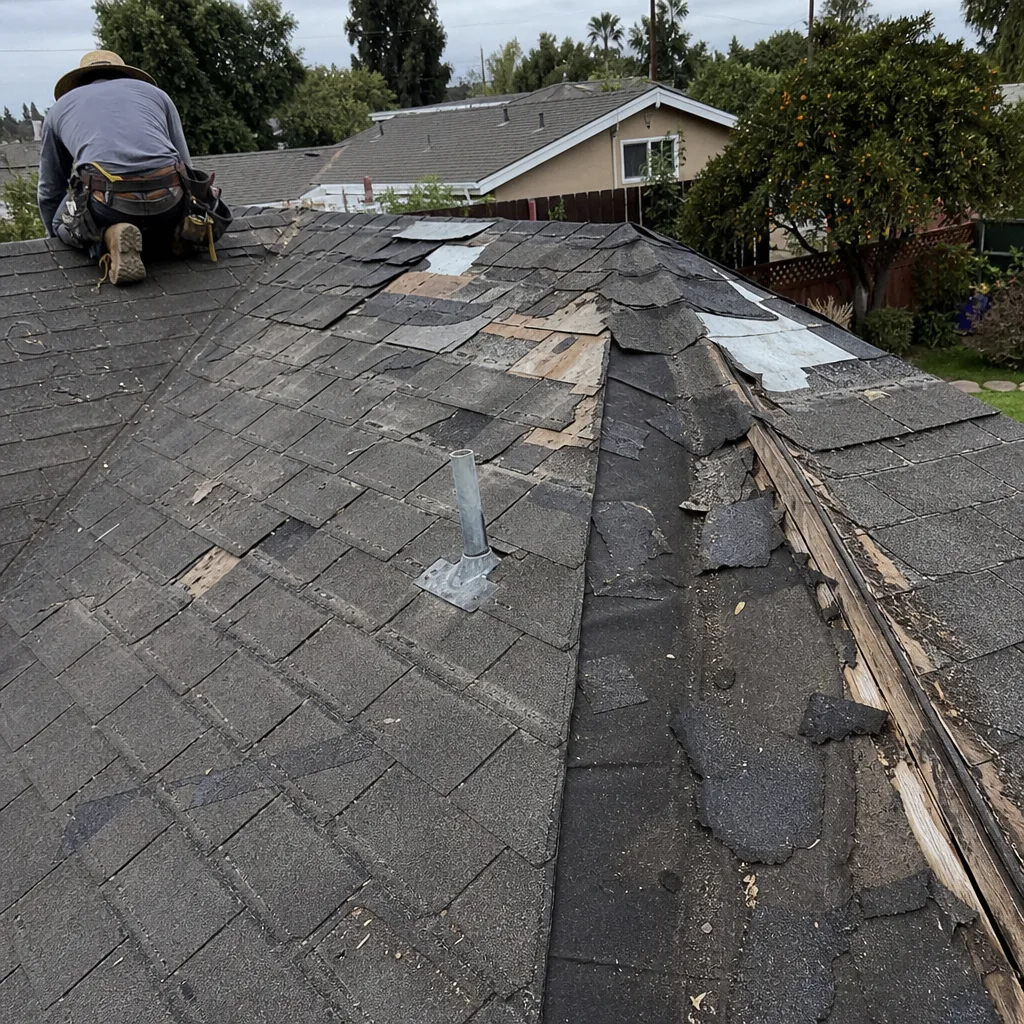 Before
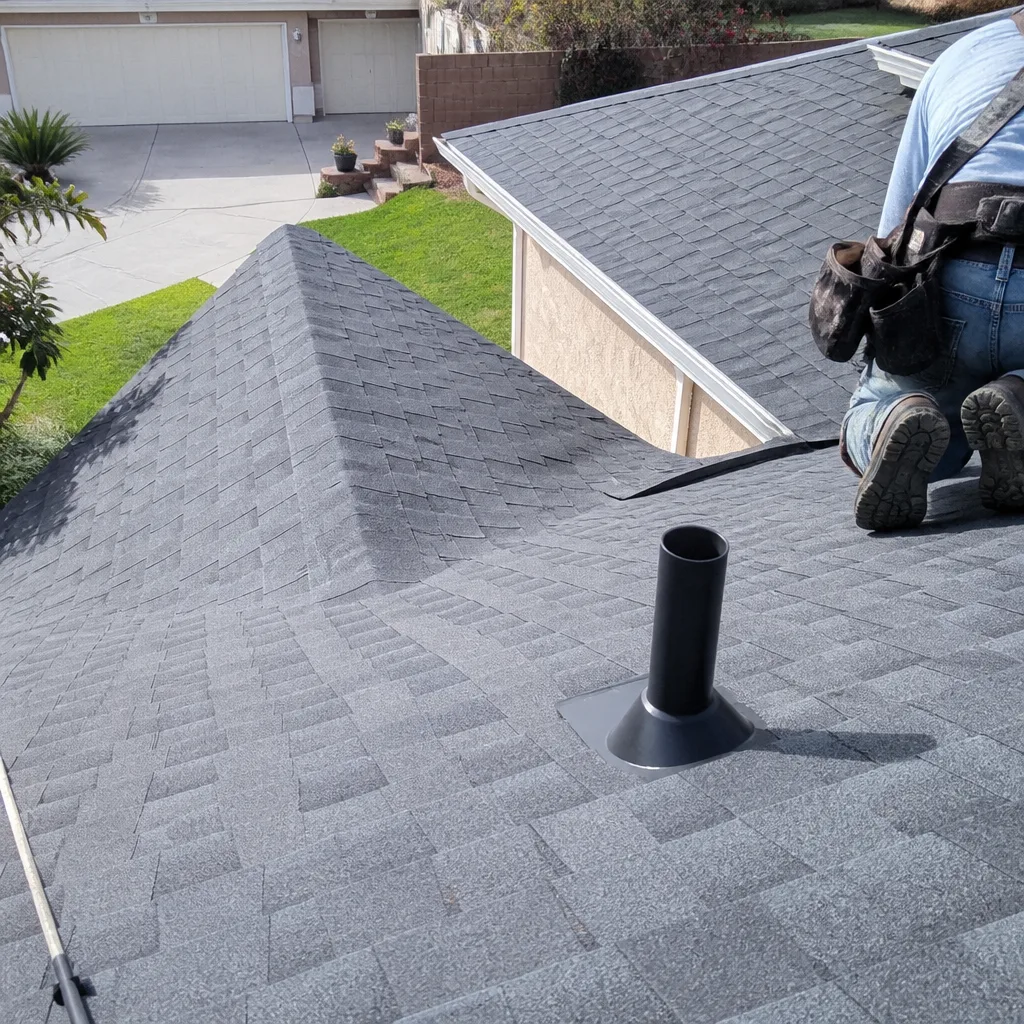 After
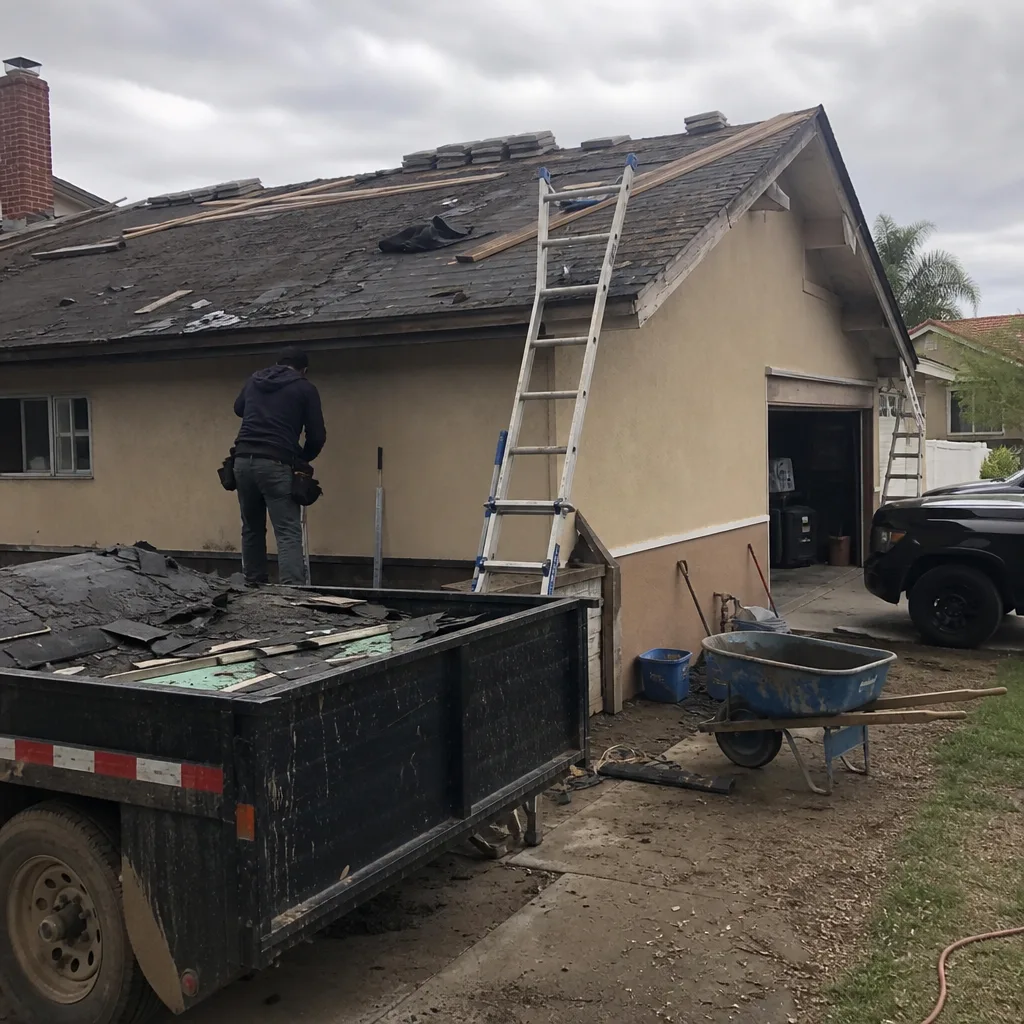 Before
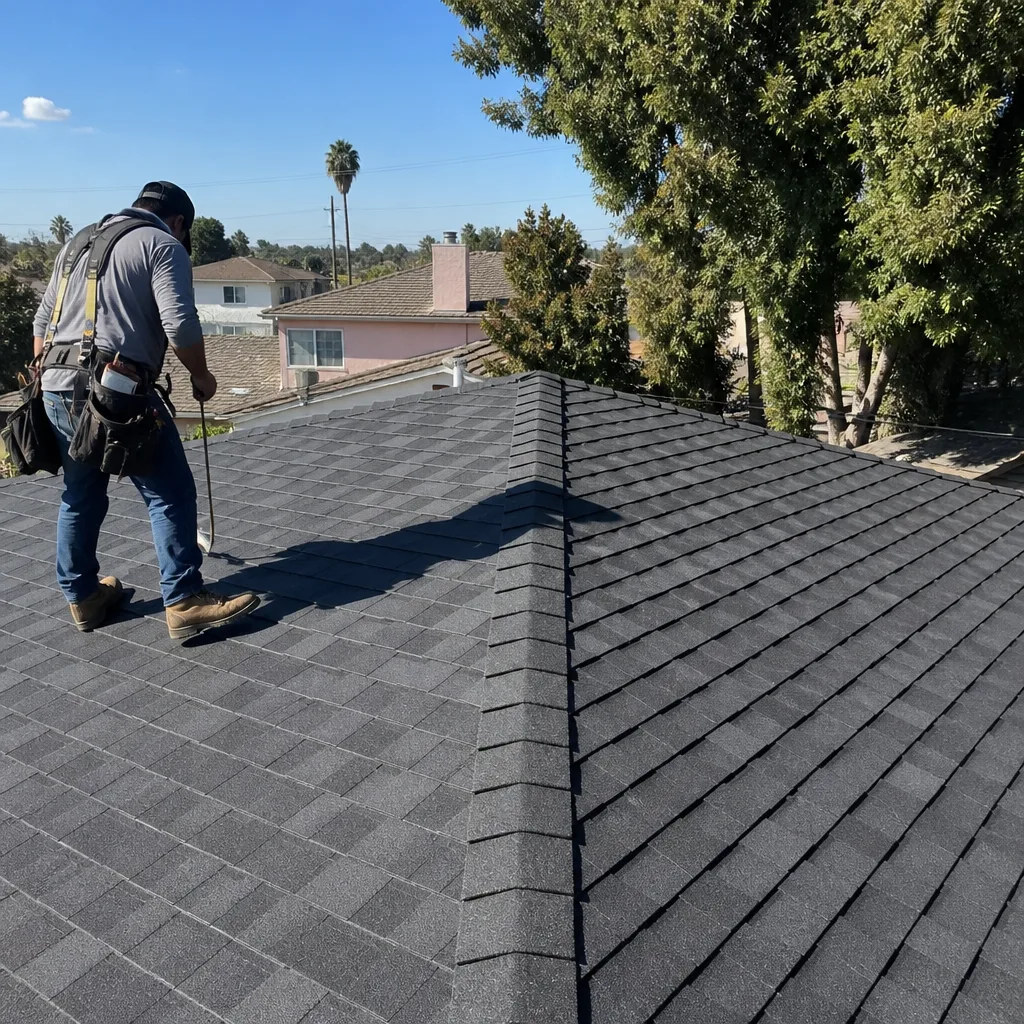 After
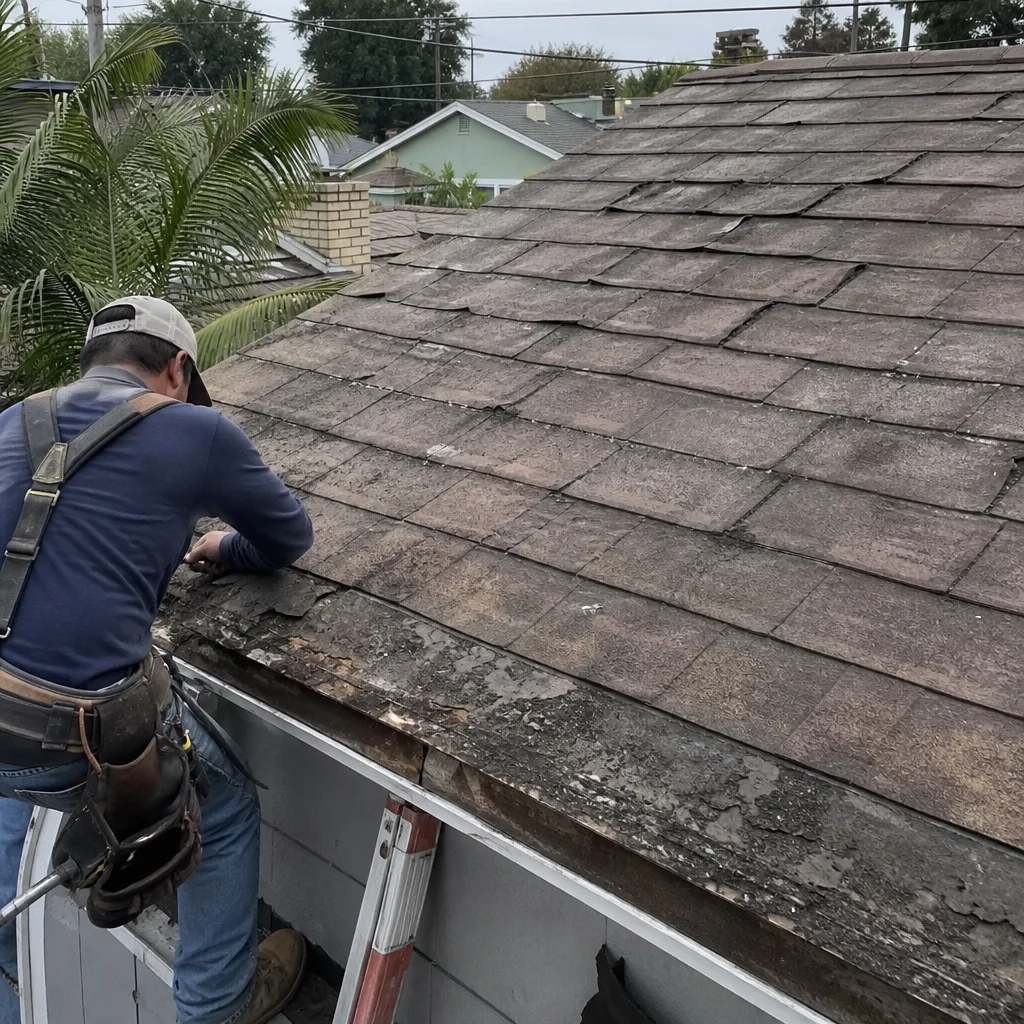 Before
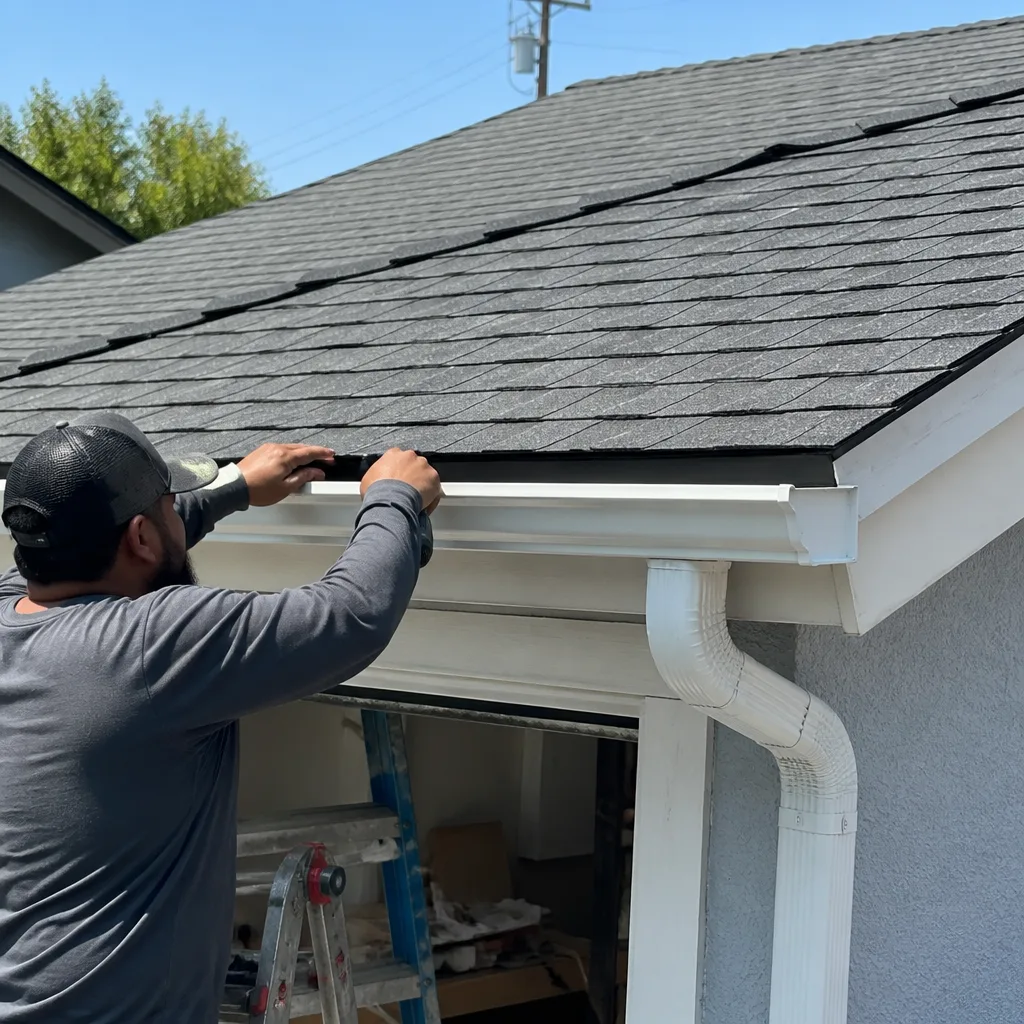 After