

Last updated October 30, 2026
 Metal roofing
 Architectural shingles
 Tile roofing
 GAF
 Owens Corning
 Flat & low-slope
Free roof inspection with deck photos before we talk money - GAF and Owens Corning certified installation
Roofing Permits, Codes & Inspections in CA: What You Need to Know
An unpermitted roof replacement in Anaheim doesn’t disappear after the roofing crew packs up. It sits quietly in county records, waiting for the day you refinance, file an insurance claim, or sell the house. In California, a reroof without a permit is one of the most common title defects discovered during escrow, and it’s also one of the most expensive to cure. This guide walks you through the layered system that governs roofing in Anaheim: state energy codes, local amendments, the inspection sequence, insurance implications, and HOA requirements. By the end, you’ll know exactly what triggers a permit, what inspectors look for, and how to keep a $15,000 roof from becoming a $40,000 escrow problem.
Styles & brands we work with
Quick Answer
In Anaheim, any roof replacement or structural roof repair requires a building permit through the Anaheim Building Division, while minor non-structural repairs under 100 square feet may fall under the “minor repair” exemption. California also layers Title 24 energy requirements on top of local codes, meaning your new roof must meet specific cool-roof reflectivity and emittance standards for Climate Zone 10. Permitted reroofs pass through a two-stage inspection sequence: nailing inspection before shingles go down, then a final inspection after.
Table of Contents
- When a Permit Is Required in Anaheim vs. Minor Repair Exemption
- Title 24 Cool-Roof Compliance for Anaheim’s Climate Zone 10
- The Anaheim Building Division Inspection Sequence for a Permitted Reroof
- How Unpermitted Roofing Work Affects Homeowner’s Insurance Claims
- HOA Architectural Review: The Parallel Approval Process
- What Roofing Permits Cost in Anaheim and How Long They Take
- Retroactive Permits for Existing Unpermitted Roofs
- Common Mistakes to Avoid
- When to Call a Professional
- Frequently Asked Questions
- The Bottom Line
When a Permit Is Required in Anaheim vs. Minor Repair Exemption
Anaheim follows the California Building Code (CBC) with local amendments adopted into the Anaheim Municipal Code. The rule that matters most to homeowners is straightforward: a building permit is required for any roofing work that involves removal and replacement of the roof covering, structural repair of the roof deck or framing, or reconfiguration of the roof assembly.
What does not require a permit is narrower than most homeowners assume. Under Anaheim’s administrative code, the minor repair exemption applies to non-structural repair of a roof covering on a limited area. In practice, this means repairing or replacing shingles, tiles, or membranes on an area of roughly 100 square feet or less, provided the underlying decking and framing are intact and you’re not altering the roof’s structural system.
Here’s the breakdown in plain terms:
- Full reroof (tear-off and replacement): Permit required. No exceptions.
- Roof-over (new layer over existing shingles): Permit required, and Anaheim limits roof-overs to one additional layer over a single existing layer under most conditions.
- Structural repair (replacing rotted decking, repairing rafters, adding collar ties): Permit required. Structural work is never minor.
- Valley, flashing, or chimney boot replacement: Generally exempt if under 100 square feet and non-structural, but borderline cases are common. If in doubt, call the Building Division.
- Gutter replacement: No permit required.
- Skylight installation or replacement: Permit required because it modifies the roof assembly.
We’ve seen homeowners in Anaheim’s Colony Historic District and West Anaheim get surprised because the threshold isn’t about the size of the repair but whether the repair touches structure, changes the assembly, or exceeds the exemption limit. One more thing: solar panel installations on the roof carry their own permit requirements through both the Building Division and, in some cases, Anaheim Public Utilities review. If the roof work is being done in conjunction with solar, both permits need to be coordinated.
If you’re uncertain whether your specific repair qualifies as minor, call the Anaheim Building Division directly before work starts. We’ve also seen inspectors flag work that was originally thought to be exempt, and the correction process is far more expensive than a phone call. For a Roof Inspection in Anaheim that documents the condition of your roof before you decide on repair versus replacement, we can provide a written report that helps clarify scope.
Title 24 Cool-Roof Compliance for Anaheim’s Climate Zone 10
Anaheim sits in California Climate Zone 10, which means Title 24 Part 6 energy standards apply to any permitted reroof. The core requirement is that the roof covering meet a minimum aged solar reflectance and thermal emittance, unless you qualify for a specific exception like an attic radiant barrier or increased insulation. The goal is to reduce cooling load, and Anaheim’s hot inland summers make this one of the most heavily enforced parts of the roofing code.
Aged solar reflectance (ASR) and thermal emittance (TE) are the two numbers that matter. For most low-slope residential applications, Title 24 requires an ASR of 0.63 and a TE of 0.75. For steep-slope roofs (which is what most Anaheim homes have), the prescriptive requirement is an ASR of 0.20 and a TE of 0.75. Different material types hit these numbers differently:
- Asphalt shingles: Standard dark shingles typically fall below the steep-slope ASR requirement. Manufacturers including GAF, CertainTeed, Owens Corning, and IKO all produce CRRC-listed “cool” shingle lines that meet or exceed the 0.20 ASR threshold. These are what you’ll need for a compliant reroof in Anaheim unless you take the insulation tradeoff path.
- Clay or concrete tile: Natural terra cotta generally meets cool-roof requirements due to its natural reflectance. A Boral concrete tile in lighter colors typically earns a compliant rating.
- Metal roofing: Standing seam and metal shingle systems with appropriate coatings easily meet both ASR and TE requirements.
- Built-up or modified bitumen (low-slope): These require reflective cap sheets or coatings to meet the 0.63 ASR for low-slope applications.
One path many Anaheim homeowners take is the performance compliance option, which allows a lower-reflectance roof if the attic insulation is upgraded to compensate. For example, a dark architectural shingle that doesn’t meet the cool-roof standard can still pass Title 24 if the home has or receives additional ceiling insulation. This tradeoff comes from the California Energy Commission’s compliance software, and your roofer should be able to run this calculation before you commit to materials.
We recommend homeowners ask their contractor for the CRRC (Cool Roof Rating Council) certificate for any product being installed. Every shingle we install from GAF, CertainTeed, Owens Corning, and IKO carries a CRRC rating, and we provide that documentation as part of the permit package. See Choosing the Right Roofing Brand: A Buyer’s Guide for Anaheim for how these manufacturers compare on compliance and performance. It’s not optional paperwork. The Anaheim Building Division checks it during plan review.
The Anaheim Building Division Inspection Sequence for a Permitted Reroof
Once your permit is issued, the Anaheim Building Division requires inspections at specific points in the reroof process. Missing an inspection or covering work before it’s approved means tearing the work back to expose the unexamined layer. Here’s the sequence, in order:
- Roof deck / nailing inspection (mid-install): After the old roofing is removed and any decking repairs are made, but before the new underlayment and roofing are installed, the inspector verifies the deck is sound, the fastening is correct, and any structural repairs match the approved plans. This is the inspection most DIYers and unpermitted contractors skip because it requires stopping work at a specific point.
- Underlayment inspection (if required by the permit): For certain roofing systems, especially tile and low-slope membranes, the inspector may require a separate check after underlayment installation. Anaheim enforces this based on the roofing type and the project conditions.
- Final inspection: After the roof system is fully installed, including flashing, valleys, vents, and any required cool-roof documentation, the inspector returns to verify the finished product matches the approved plans and the applicable code. This is where the Title 24 compliance documentation is often confirmed.
A failed inspection in Anaheim typically costs you 24 to 72 hours of schedule delay, plus the cost of corrections. Common failure points we’ve seen include missing drip edge at the eaves, improper nailing pattern on the deck, and lack of documentation for the cool-roof rating of the installed material. The fix is usually straightforward, but only if the contractor is still on site and hasn’t moved to the next job.
This is one reason we structure our own Roof Replacement in Anaheim projects around the inspection calendar, not just our crew’s availability. A roofer who treats inspections as an afterthought ends up with a homeowner waiting three extra weeks for a final sign-off.
How Unpermitted Roofing Work Affects Homeowner’s Insurance Claims
Here’s the part most roofing guides skip, and it’s the expensive part. Most California homeowner’s insurance policies contain language that either excludes coverage or limits payout for damage to work performed without required permits. The exact wording varies by carrier, but the standard forms share a common pattern: if a loss is caused by, or made worse by, construction or repair work that required a permit and no permit was obtained, the carrier can deny the claim or reduce the payout to what it would have cost had the work been done correctly and legally.
In practice, this plays out in Anaheim after storm events. A homeowner with an unpermitted reroof files a water damage claim. The adjuster pulls the permit history, finds no reroof permit, and then determines whether the lack of permit contributed to the failure. If the unpermitted work is found to be part of the causal chain, the claim can be denied. If the denial is too aggressive, the reduced payout route is more common: the carrier pays for what a proper reroof would have cost minus the actual value of the unpermitted work, which frequently nets the homeowner far less than the repair bill.
The same logic applies to unpermitted structural roof repairs. If an unpermitted roof repair fails and causes interior damage, the carrier has a legitimate basis to argue the homeowner’s negligence contributed to the loss. California’s insurance regulations permit this kind of exculpatory exclusion, and courts have generally upheld it when the policy language is clear.
The practical advice is simple: if you’re doing anything to your roof in Anaheim that touches structure or replaces the covering, pull the permit. The permit fee is a few hundred dollars. An insurance denial can be tens of thousands. And if you bought a home with an unpermitted roof, talk to your carrier before renewing; some will require a retrofit permit and inspection before they’ll extend coverage.
HOA Architectural Review: The Parallel Approval Process
If you live in an Anaheim community governed by a homeowner’s association, you have two separate approvals to obtain before reroofing: the city permit and the HOA architectural review. These are independent processes with different timelines and different criteria, which means sequencing them properly is the difference between a two-week project and a two-month stall.
The HOA review typically covers aesthetics: material type, color, finish, and sometimes even the manufacturer. Many Anaheim HOAs have pre-approved palettes that may not automatically include the Title 24-compliant cool-roof options. This creates a conflict point: the city requires a certain reflectivity, and the HOA may reject the lighter colors that typically achieve it. When this collision occurs, the HOA’s architectural committee usually has a process for exceptions based on legal compliance, but the homeowner has to know to ask.
The recommended sequence:
- Check HOA governing documents first (CC&Rs and architectural guidelines). Identify the approval deadline: California law generally gives HOAs 45 days to respond to an architectural request, but some associations move faster.
- Select materials that satisfy both the HOA palette and Title 24. Most major manufacturers, including GAF, CertainTeed, and Owens Corning, produce cool-roof shingles in the color ranges that HOAs commonly approve.
- Submit the city permit application in parallel. Anaheim’s permit review won’t wait on the HOA, and the HOA won’t speed up for the city. Running both tracks concurrently saves weeks.
- Do not start work until both approvals are in writing. Starting with only one approval risks a stop-work order from either authority.
For homeowners in Anaheim neighborhoods like Anaheim Hills or the Platinum Triangle’s condo associations, the HOA process is often the longer of the two paths. Starting it early is the single highest-leverage scheduling move you can make.
If you need help choosing a material that satisfies both the HOA and the city, a Roof Repair in Anaheim consultation starts with the roof, not the product. We work with seven leading roofing brands, so the recommendation is dictated by your roof conditions and your association’s rules, not by a manufacturer relationship.
What Roofing Permits Cost in Anaheim and How Long They Take
Anaheim calculates roofing permit fees based on the valuation of the work, which means a full reroof permit costs more than a structural repair permit. The Building Division’s fee schedule uses a sliding scale, and for a typical single-family reroof, the permit fee generally lands in the $300 to $800 range. That number is small compared to the cost of the roof itself, and it’s the cheapest insurance against title and claims problems down the road.
For planning purposes, here’s what to expect in Anaheim:
- Over-the-counter plan review for simple reroofs: Most straightforward reroof permits are issued the same day or within a few days if the scope is simple and the plans are clear.
- Plan review for complex projects: Roofs with structural changes, skylights, or solar coordination typically take one to three weeks depending on current volume.
- Inspection scheduling: Anaheim generally offers next-day inspection scheduling when requested by the contractor, though the exact availability shifts seasonally.
- Total permit-to-final timeline for a standard reroof: One to four weeks, with most of that time being the work itself plus the two required inspections.
The permit fee is paid at issuance, and the inspection fees are included in the permit. If a contractor quotes you a price that excludes the permit and tells you to “handle it yourself,” run. Legitimate contractors in Anaheim pull the permit under their own license and include it in the contract. A homeowner-pulled permit for a contractor’s work is a common pattern in unlicensed work, and it exposes you to all the liability described in this guide.
Retroactive Permits for Existing Unpermitted Roofs
If you discover that a previous owner reroofed without a permit, Anaheim has a path to bring the roof into compliance, though it’s not always a quick one. The process is called a retroactive or “after-the-fact” permit, and it requires the same plan review and inspection steps as a normal permit, with one significant difference: the inspector may require opening up portions of the roof assembly to verify what’s underneath.
The inspection focus for a retroactive permit is on the parts of the roof that would have been visible at the original nailing inspection: deck condition, fastening pattern, underlayment presence and type, and structural integrity of the framing below. If the inspector can’t verify these through visual inspection from the attic or at the eaves, they can request a test cut or a partial tear-off.
The realistic cost of a retroactive permit in Anaheim is the permit fee plus the cost of whatever invasive inspection is required, plus any repairs that the inspection reveals. None of that is optional if you want the permit issued. In many escrow situations, the buyer simply asks the seller to complete the retroactive permit before close, or to credit the buyer for its estimated cost.
For homeowners in Anaheim who are planning to sell in the next few years and who suspect their roof may be unpermitted, addressing it now is far cheaper than addressing it under escrow deadline pressure. Most buyers’ inspectors will flag missing permits in their report, and the negotiation never favors the seller who’s been caught.
Common Mistakes to Avoid
- Skipping the permit to save $400 on a $15,000 roof. The escrow problem, the insurance denial risk, and the retroactive inspection cost are each many multiples of the permit fee. This is the most expensive cheap decision in residential roofing.
- Assuming the contractor’s word is enough. “We’ll handle the permit” isn’t the same as showing you the issued permit number. Ask for the permit number before work starts, and verify it on Anaheim’s online permit portal.
- Installing a dark shingle without checking Title 24 compliance. A beautiful dark shingle from any brand can fail the cool-roof requirement in Anaheim’s Climate Zone 10, requiring either a documented energy tradeoff or a tear-off and replacement. Verify the CRRC rating before installation.
- Covering the nailing inspection. If the new shingles go down before the deck is inspected, the inspector can require a partial removal. Homeowners who schedule work without understanding the inspection sequence learn this the hard way.
- Treating the HOA approval as optional or trivial. An HOA can require removal of a non-approved reroof, and California courts have generally upheld this authority when the CC&Rs are clear. Run both approval tracks in parallel from day one.
- Filing an insurance claim for a leak on an unpermitted roof. The claim can trigger a broader policy review, and the unpermitted work becomes a reason to deny or reduce the claim. Know your roof’s permit status before you file.
- Accepting a bid that’s dramatically lower because it excludes permits, inspections, and proper materials. In Anaheim, a reroof priced 40% below the market consistently is cutting something structural. Usually, it’s the permit.
When to Call a Professional
A roofing professional is warranted whenever the work touches structure, replaces the covering, or modifies the assembly. In Anaheim, those are the same triggers that require a permit. If you’re looking at more than a minor repair, call a licensed contractor before you call the Building Division. A good roofer will tell you in the first 15 minutes whether you need a permit, what the Title 24 implications are for your material choice, and what the inspection sequence will cost you in calendar time.
Specific situations that demand professional involvement include: any tear-off and replacement, structural repair of the deck or framing, skylight work, roof-overs, solar coordination, any reroof that needs to pass an HOA palette review, and any retroactive permit scenario. Bedrock Roof Repair home works the full lifecycle: we inspect, we repair, and we replace, and the recommendation always follows the roof’s actual condition. We’ll tell you what your roof actually needs, repair, replacement, or nothing yet. Call (833) 589-7850 for a free estimate in Anaheim.
Frequently Asked Questions
Roofing permits in Anaheim typically cost between $300 and $800 for a standard single-family reroof, calculated from the valuation of the work. Simple reroofs are often issued over the counter; complex projects with structural changes or solar coordination take one to three weeks in plan review.
No, if the repair is non-structural and under roughly 100 square feet, it typically falls under the minor repair exemption in Anaheim. If the repair touches the deck, framing, or covers a larger area, you need a permit. When in doubt, call the Anaheim Building Division before work begins.
The unpermitted work will likely surface during escrow through the buyer’s inspection or the title company’s permit history pull, and it becomes a negotiating point. The seller may be required to obtain a retroactive permit, pay for invasive inspections, or credit the buyer for the estimated cost of compliance. Call (833) 589-7850 if you need a roof permit review before listing.
Yes, Title 24 cool-roof standards apply to any permitted reroof in Anaheim’s Climate Zone 10, though the exact requirement depends on slope and roofing type. Steep-slope roofs need an aged solar reflectance of at least 0.20, and low-slope roofs need 0.63. A performance compliance path using attic insulation upgrades can allow darker colors.
Yes, an HOA architectural review is a separate approval from the Anaheim building permit, and the HOA can require you to stop work or change materials if the reroof violates the CC&Rs. Run both approvals in parallel from the start to avoid a stop-work order on a partially stripped roof.
Possibly not. Most California policies include language that allows the carrier to deny or reduce claims when unpermitted work contributed to the loss. If your roof has an unclear permit status, verify it before filing a claim. Call (833) 589-7850 for a professional evaluation of your roof’s condition first.
The Bottom Line
California’s roofing code structure is a three-layer system: state Title 24 energy requirements, local Anaheim amendments, and, where applicable, HOA architectural rules. A permit is required for any reroof or structural work, and skipping it creates a trailing liability that surfaces at insurance claims time or at escrow. The permit fee is a few hundred dollars. The inspection sequence is two steps. The cool-roof requirements are solvable with the right material choice from any of the seven major manufacturers we work with. But the cost of getting any of this wrong compounds, and it compounds in the direction of the homeowner. The sensible path is to inspect first, repair when it’s enough, replace only when the roof actually requires it, and pull the permit no matter what. Bedrock Roof Repair offers free estimates in Anaheim, call (833) 589-7850.
Written by the team at Bedrock Roof Repair, serving Anaheim since 2018.
See the difference
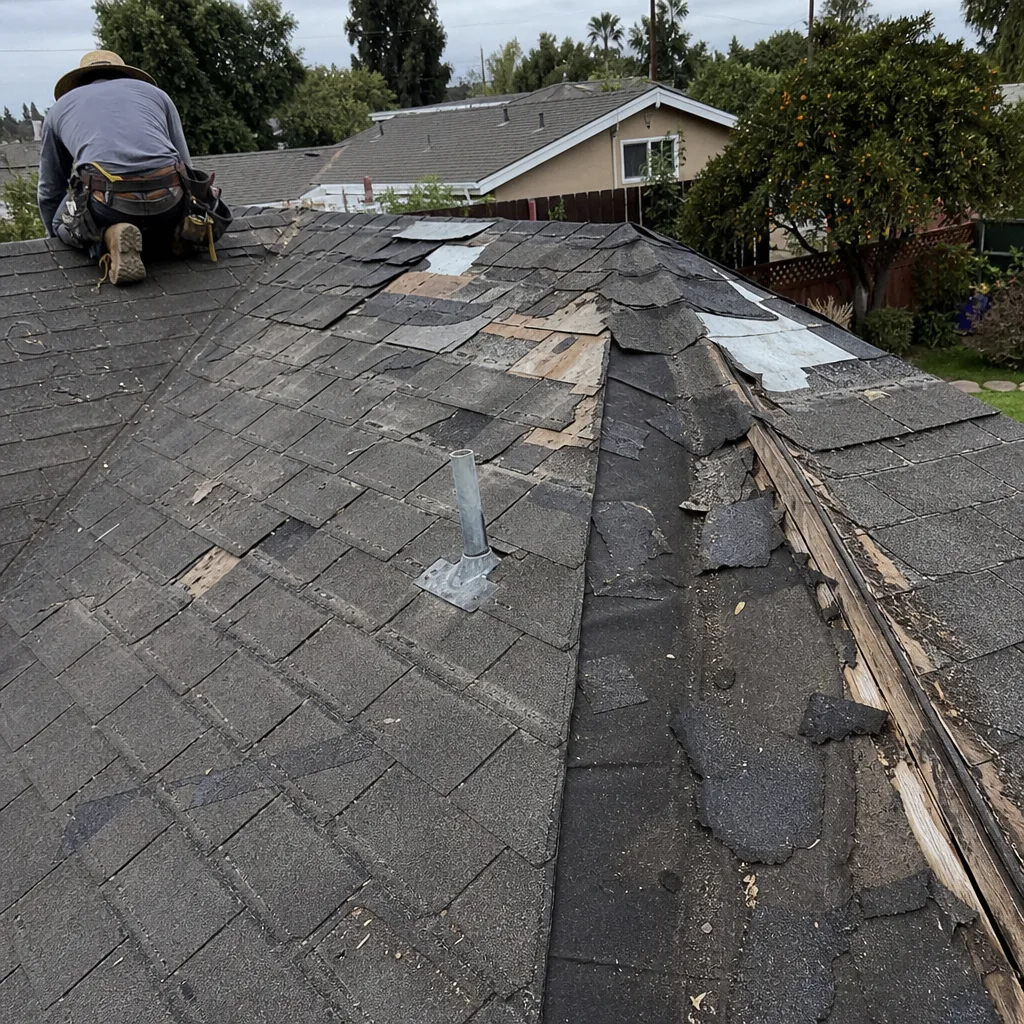 Before
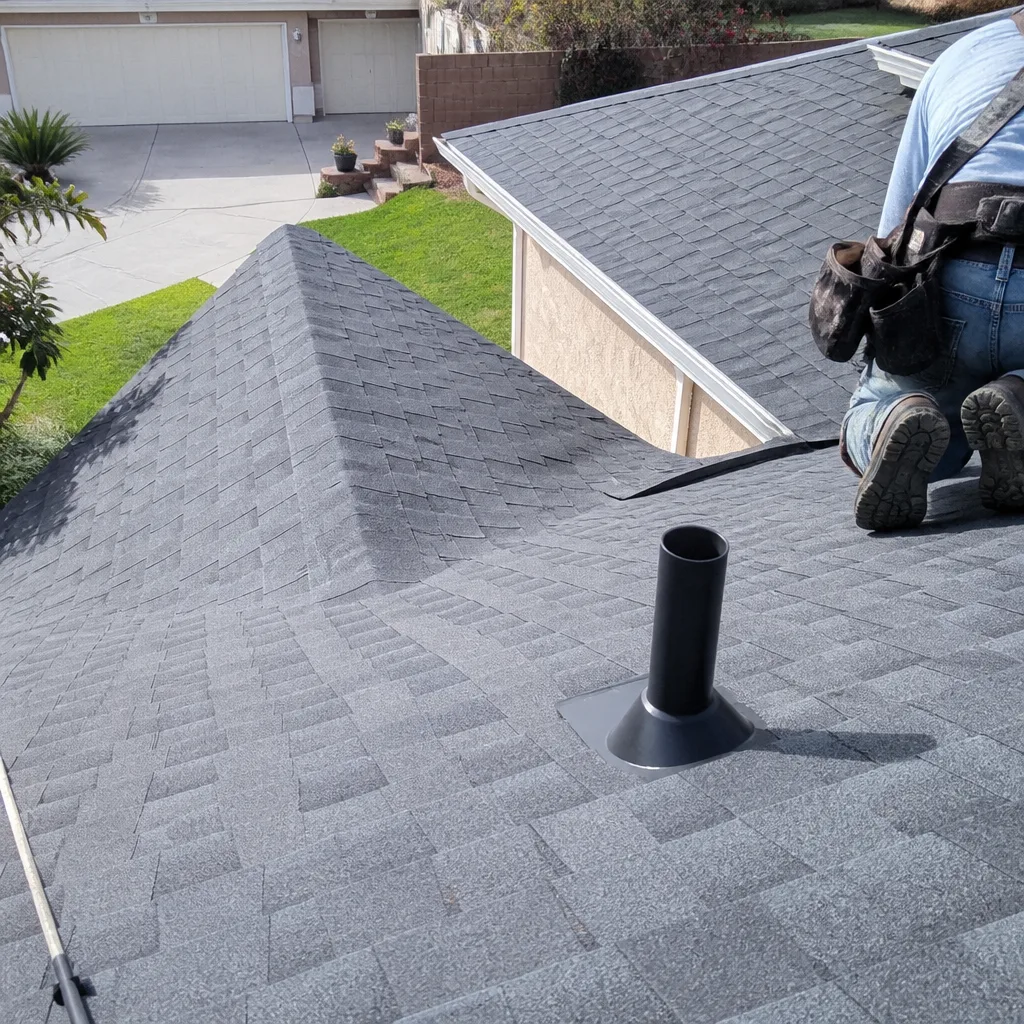 After
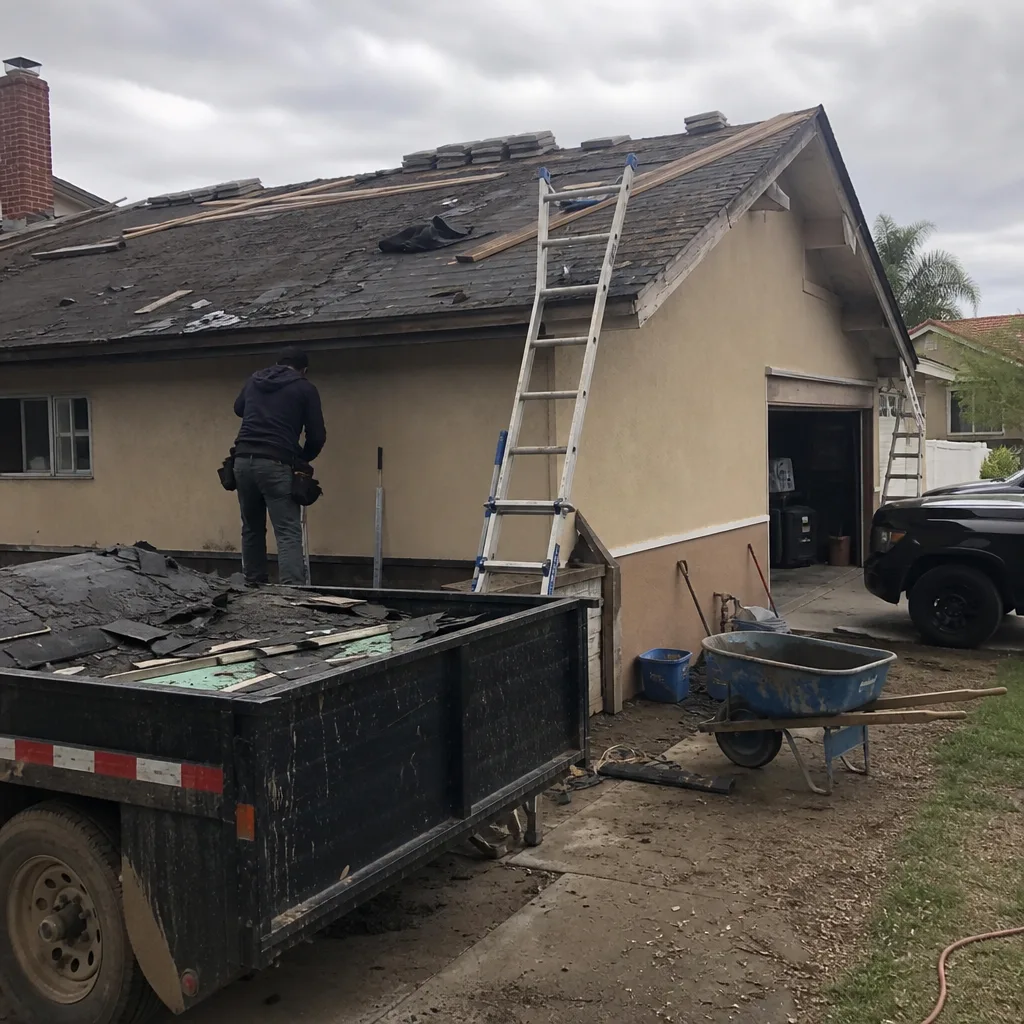 Before
 After
 Before
 After