

Last updated October 30, 2026
 Metal roofing
 Architectural shingles
 Tile roofing
 GAF
 Owens Corning
 Flat & low-slope
Free roof inspection with deck photos before we talk money - GAF and Owens Corning certified installation
Seasonal Roofing Care for Anaheim: Year-Round Homeowner’s Guide
Most seasonal roofing guides read like they were written for Minneapolis. Freeze-thaw cycles, ice dams, snow load. None of that applies here. Anaheim has its own stress calendar, and it’s built around four events: Santa Ana wind season from October through March, marine layer humidity that settles in overnight during late spring and early summer, sustained UV saturation from July through September, and the first real rains that hit a roof already fatigued by all three. If you maintain your roof against those four cycles instead of a generic spring/fall template, you’ll catch problems when they cost hundreds, not thousands. Our complete guide to roofing in Anaheim walks through each cycle, what it does to your roof, and exactly what to check.
Quick Answer
Seasonal roof care in Anaheim means inspecting and maintaining your roof against four local stress cycles: Santa Ana winds (October – March), marine layer moisture (May – July), summer UV and thermal fatigue (July – September), and first-fall-rain readiness (September – October). The essential tasks are clearing wind-blown debris from valleys and drains, checking flashing seals after Santa Ana events, addressing north-side moss and algae during marine layer season, verifying attic ventilation before peak summer heat, and sealing penetrations before the first rains.
Styles & brands we work with
Table of Contents
- Santa Ana Wind Season: The October – March Stress Cycle
- Marine Layer Season: Moisture Without Rain
- Summer Thermal Cycling: What 105°F Does to a Roof
- Pre-Rainy Season Prep: The September – October Checklist
- Why Drought Years Create a False Sense of Roof Security
- How Different Roofing Materials Handle Anaheim’s Climate
- A Practical Year-Round Maintenance Schedule
- Common Mistakes to Avoid
- When to Call a Professional
- Frequently Asked Questions
Santa Ana Wind Season: The October – March Stress Cycle
Santa Ana winds are Anaheim’s most aggressive roofing event. These are hot, dry, sustained winds that routinely hit 40 – 60 mph with gusts higher, and they can blow for two or three days straight. The temperatures involved often spike into the 90s even in January. For a roof, that combination means two things: wind-driven debris and rapid surface drying.
What makes Santa Anas uniquely damaging in Anaheim is the direction and duration. Winds come out of the northeast and get funneled through mountain passes, so they hit homes with a sustained abrasion that normal coastal breezes never produce. Roofing tiles, especially concrete tile common across Anaheim neighborhoods, don’t crack from the wind itself. What fails first is the mortar at hips and ridges. Mortar loses its bond over years of thermal expansion, and Santa Ana wind pressures finish the job, loosening chunks and exposing the underlayment seams underneath.
Flashing is the second casualty. Pipe boots, chimney flashing, and valley metal all have seals that dry out under hot wind. Once a seal loses flexibility, sustained wind vibration works it loose. On flat or low-slope sections, the wind can peel back membrane edges that were never properly secured.
The third issue is debris. Palm fronds, eucalyptus bark, and neighbor’s tree limbs end up on your roof, and they don’t just sit there. They scour the surface, block drains, and wedge into penetrations. In college-area neighborhoods and older Anaheim districts with mature landscaping, this is one of the most common sources of roof leaks we see during and immediately after wind events.
Here’s the inspection protocol we recommend within 48 hours after any Santa Ana wind event with gusts over 40 mph:
- Check the ridge and hip lines first. Look for missing or shifted mortar, exposed underlayment, or tile that’s sitting crooked. Use binoculars from the ground if you don’t want to climb a ladder.
- Walk the perimeter and look up at flashing. Pipe boots, chimney caps, and any vent penetrations. Look for lifting at the edges.
- Clear drains and gutters. Anaheim’s homes with low-slope sections depend heavily on scuppers and internal drains. A plugged drain turns a minor wind event into a standing water problem.
- Check for impact points. Look for dents in metal flashing, shifted shingles, or cracked tiles where something hit. Branches leave clear signs.
- Check inside. Attic and ceiling check for any new stained drywall or musty smell. Wind-driven rain can enter around flashing even when the roof surface looks intact.
If you spot displaced tile or lifted flashing after a wind event, a targeted repair addresses it before the next rain arrives. Our approach at Roof Repair in Anaheim starts with a visual assessment of whether the damage is isolated or part of a broader material failure. In our experience, most post-Santa-Ana damage is isolated and repairable without replacement.
Marine Layer Season: Moisture Without Rain
From May through early July, Anaheim gets overnight marine layer that rolls in off the coast, and in many neighborhoods it doesn’t burn off until 10 or 11 in the morning. That creates a specific roof condition that surprises homeowners in a supposedly dry climate: persistent surface dampness on north-facing and shaded roof sections, with warm daytime drying. It doesn’t rain, but it might as well for the moss and algae that thrive in that exact pattern.
The north-facing slope is almost always the problem area. It gets the least direct sun, the marine layer lingers longest there, and if you have tree canopy shading it further, you have the recipe for biological growth even in Anaheim’s semi-arid climate. Concrete tile and asphalt shingles are both vulnerable. Moss roots into the pores of concrete tile and the granule surface of asphalt shingles. Algae – the black-streaked staining you see on roofs across Orange County – doesn’t immediately damage shingles but shortens reflective life and looks terrible. Over time, moss holds moisture against the surface and accelerates material degradation.
What homeowners often miss is that the damage isn’t limited to the shingle or tile surface. Moss growing at tile overlaps can block the water channels that make tile roofs work. Water needs to flow off the tile surface and through the channels between tiles. Moss disrupts that flow path and can force water sideways into the underlayment. On shingles, heavy moss growth lifts the shingle edges and exposes the seal strip.
Checking for marine layer damage is straightforward:
- Look at north-facing slopes in the late afternoon. If you see green patches or black streaking, note how far it extends.
- Check shaded valleys and roof-wall intersections. These are the first places moss establishes because debris accumulates there and moisture lingers.
- Inspect around roof penetrations on the north side. Moss grows first where water flows around pipes and vents.
- Check attic ventilation. A properly vented attic dries the roof system from below and reduces the surface moisture that moss needs.
If moss is present, the sequence matters. Address ventilation first if it’s inadequate, because moss removal on a roof that stays damp just grows back. Then mechanical removal with a soft brush or low-pressure wash, followed by preventive zinc or copper strips at the ridge where practical. The goal is to remove what’s there and make the surface less hospitable going forward. In Anaheim’s older neighborhoods with mature trees, this is an annual conversation. It’s also part of what we cover in a full Roof Inspection in Anaheim, because marine layer damage on the north slope is rarely visible from the street.
Summer Thermal Cycling: What 105°F Does to a Roof
Anaheim’s summer heat does most of its damage invisibly, and it does it every single year, whether or not the roof ever leaks. On a July afternoon, the surface temperature of an asphalt shingle roof in Anaheim can reach 150°F or higher. Concrete tile runs cooler but still sits above 120°F. At night, the surface cools by 60 to 80 degrees. That daily swing, repeated for months, is the primary aging mechanism for most roofing materials. It’s called thermal cycling, and it’s the reason a 15-year-old roof in Anaheim can look fine from the street while its functional life is already half gone.
Asphalt shingles age through oxidation, and oxidation rate is directly related to temperature. Heat accelerates it. Every 18°F increase in surface temperature roughly doubles the chemical reaction rate. The practical result for Anaheim homeowners is that shingles here age faster than the same shingle in a cooler coastal community, even though they may look identical. The granules stay on the surface, but the asphalt beneath loses flexibility, and eventually the shingle can’t expand and contract without developing micro-cracks that propagate into splits.
Ventilation is the multiplier. An under-ventilated attic in Anaheim can hit 140°F or higher by mid-afternoon. That heat radiates down into the home and up into the roof deck. The shingles can’t dissipate heat downward, so they run hotter, oxidize faster, and the adhesive strips that hold them down lose tack. On tile roofs, the underlayment bears the thermal load. Underlayment exposed to sustained high heat becomes brittle and loses its waterproofing integrity years before the tile above it shows any wear.
Concrete tile also has a specific failure mode worth noting. The thermal expansion rate of concrete tile differs from the metal flashing and fasteners used with it. Over thousands of cycles, the holes in tile where fasteners pass through can widen slightly, and the tiles begin to shift. This is why tile roofs in Anaheim sometimes show shifted or slipped tiles after no visible weather event. The movement is cumulative and thermal.
Here’s what to check before and during the peak summer months:
- Verify attic ventilation. You want intake at the eaves and exhaust near the ridge. If you can feel heat building in the attic on a hot afternoon, ventilation is insufficient.
- Look for cracking at the ridge sealant. Ridge boards and sealant lines expand and contract, and opened hairline cracks let wind-driven rain in later.
- Check shingle edges for curling. This is the signature of heat fatigue on asphalt roofs. It happens first on south- and west-facing slopes.
- Inspect tile for shifted position. Tiles that were perfectly aligned in spring and have moved a quarter-inch by September are signaling thermal fastener wear.
- Note interior heat patterns. Rooms under vaulted ceilings or above the garage running 10 – 15 degrees hotter than the rest of the house often indicate a roof assembly with insufficient ventilation.
This is the season where a roof inspection earns its cost. Most of the damage is happening where you can’t see it, and the window to address it cheaply is before the fall rains arrive. If you’re seeing curling or shifted tile, Roof Replacement in Anaheim might be on the table eventually, but in many cases a repair that addresses the ventilation issue and replaces the fatigued sections is the right first step.
Pre-Rainy Season Prep: The September – October Checklist
The first significant rain in Anaheim typically arrives in November or December, but the prep window is September and October. The logic is simple: after a full summer of thermal fatigue, your roof’s seals and surfaces are at their most brittle point of the year, and the first rain is when that brittleness becomes a leak. This is the season when small, targeted work done in October prevents ceiling stains in December.
Here’s the five-task checklist we walk through with Anaheim homeowners every fall:
- Clear all debris from valleys, drains, and gutters. In Anaheim’s older neighborhoods with large trees, fall leaf drop is significant, and it coincides with the exact time drains need to be clear. Blocked drains on low-slope roofs are one of the most common causes of first-rain interior leaks.
- Seal or replace cracked pipe boots and deteriorated flashing. Pipe boots are rubber, and rubber degrades in Anaheim’s UV and heat exposure faster than in cooler climates. A cracked boot leaks on the first rain. Check every pipe penetration.
- Inspect and reseal chimney flashing. Masonry chimneys expand and contract at different rates than the roof, and the junction is a chronic leak point. Check the counterflashing and reapply sealant where gaps have opened.
- Check attic for signs of past water intrusion. Staining, mold spots, or musty smells that you didn’t notice before. If it leaked last year, it will leak again this year unless the opening was fixed.
- Test the roof’s drainage during a light early rain if possible. Watch where water flows off the roof. If it’s ponding anywhere on a low-slope section, that’s a structural concern and needs assessment before the heavy rains.
The materials you use for pre-rain sealing matter in Anaheim’s climate. Sealants need to remain flexible at the high end of the temperature range, because they’ll be applied when surface temps are still 90+ degrees. A thermoplastic sealant rated for our UV exposure will outlast a generic caulk by years. Same with any flashing repair: materials that rust in marine-adjacent air fail sooner than you think.
If you’ve been meaning to have your roof inspected, this is the highest-value time to do it. The stakes are concentrated: everything the inspection finds can be addressed before water tests it. We’ve had Anaheim homeowners call us after their first-rain leak in December, and the inspection in October would have found the issue for a $400 repair instead of a $4,000 interior and roof repair.
Why Drought Years Create a False Sense of Roof Security
Southern California’s drought cycles quietly do more roof damage than wet years, because the damage happens without any visible evidence. Homeowners look at their roof during a dry year, see no leaks, and assume the roof is fine. The roof is not fine. It’s being accelerated into old age by heat and UV, and the first wet winter after a drought exposes everything at once.
Consider what a drought year actually puts a roof through in Anaheim: more clear-sky days, which means more direct UV exposure. Higher peak summer temperatures, which accelerate oxidation and thermal cycling. Drier air, which pulls moisture out of roof sealants and speeds their hardening and cracking. And no rain, which means debris accumulates on the roof indefinitely with no natural flushing. A roof can sit through a five-year drought and look identical from the street while its functional waterproofing capacity has declined substantially.
Then the rains return. The first sustained wet period after a drought is when roofing companies across Orange County see the spike in leak calls. It’s not coincidence. Seals that dried out during the drought fail under water pressure, debris that built up blocks drainage and forces water into openings, and the thermal damage that accumulated invisibly becomes a visible ceiling stain.
Here’s the story we hear repeatedly: homeowner bought their home in a dry year, had a roof inspection done then, the inspector said the roof looked fine, and three years later the roof leaked during the first heavy rain. The roof was never “fine.” It was just not leaking yet. The deterioration was happening the whole time, invisible from the ground and invisible from inside until water entry made it obvious.
The protection against this is regular inspection and honest reporting about remaining roof life. Not every inspection needs to end in a repair. Sometimes the roof has service life left and the inspection just establishes a baseline. The key is not letting five or six years pass without anyone looking at the roof, because that’s the timeline on which drought damage quietly accumulates. If it’s been a while since your roof was inspected – especially if you bought your home during the drought years – an Roof Inspection in Anaheim gives you the current condition and the remaining life estimate, not just a pass/fail.
How Different Roofing Materials Handle Anaheim’s Climate
Not all roofing materials age the same way in Anaheim’s specific climate, so choosing the right roofing brand matters for Anaheim homeowners. When we evaluate a roof, we’re thinking about how the material interacts with our four stress cycles, because a material that works well in Seattle can fail differently here. Since we install and maintain products from GAF, CertainTeed, and Tamko among other major manufacturers, we’re able to match material to conditions rather than pushing one line.
Asphalt shingles – the most common roof covering in Anaheim – handle Santa Ana winds well when installed correctly, but they’re the most vulnerable to summer thermal cycling. The oxidation rate is the concern. High-quality architectural shingles from a manufacturer like GAF or CertainTeed include UV stabilizers that extend their life, but the thermal cycling still takes its toll. We generally see shingle roofs in Anaheim perform well for 20 – 25 years with proper ventilation, and significantly less without it.
Concrete tile – very common in Anaheim, especially on older homes and in certain neighborhoods – performs beautifully against UV and heat. The tile itself can last 50 years or more. But tile roofs have two localized failure points: the underlayment underneath, which ages thermally even though it’s protected from direct sun, and the ridge mortar, which Santa Ana winds exploit. A tile roof with failed underlayment can leak without a single tile being broken.
Metal roofing – growing in popularity for its heat reflectivity – handles UV well but has specific expansion behavior. It moves more than other materials under thermal cycling, so fasteners and panel connections need proper slots and expansion joints. In Anaheim’s temperature range, a metal roof that’s not detailed for thermal movement will develop oil-canning and fastener fatigue.
Flat and low-slope systems – common on mid-century Anaheim homes – face the full force of both UV exposure and ponding risk. The membrane is directly exposed to Anaheim’s sun, and if drainage isn’t perfect, the standing water accelerates membrane breakdown. These roofs need more frequent inspection than sloped roofs simply because the margin for error is smaller.
The brand question comes up often. Homeowners sometimes ask which manufacturer is “best,” and the honest answer is that it depends on the specific roof, the slope, the exposure, and the budget. That’s why we work across seven manufacturers including Tamko and Boral. The recommendation follows the roof’s conditions, not a supplier contract.
A Practical Year-Round Maintenance Schedule
Instead of trying to remember separate tasks for each season, here’s the schedule we use as a working framework for Anaheim roofs. It maps directly to the four stress cycles and keeps the work manageable.
October – March (Santa Ana Season)
- After any wind event with gusts over 40 mph, do the 48-hour inspection protocol outlined above
- Clear debris from roof, valleys, and gutters monthly – more often if you have overhanging trees
- Check ridge mortar and flashing monthly for new displacement
- Watch for shifted tiles after sustained wind patterns
April – June (Marine Layer Season)
- Inspect north-facing and shaded slopes for moss and algae growth
- Check attic ventilation to confirm it’s still functioning after winter debris buildup
- Clear any debris that accumulated at roof-wall intersections
- If moss is present, schedule removal before it establishes
July – September (Peak Thermal Season)
- Verify attic temperatures aren’t running excessively hot – check vents are unblocked
- Inspect shingle edges for curling, especially on south and west slopes
- Check sealants at penetrations for hardening and cracking
- Begin the pre-rain checklist in September
September – October (Pre-Rain Window)
- Complete the five-task pre-rain checklist from above
- Address any issues found during the summer thermal checks
- Test drainage with a hose if no early rain
- Schedule a professional inspection if the roof hasn’t been inspected in two or more years
This schedule is built around how Anaheim roofs actually fail – not around a calendar-based generic template. Following it doesn’t guarantee zero problems, but it catches the vast majority of preventable issues while they’re still in the repair range rather than the replacement range.
Common Mistakes to Avoid
- Skipping inspection during drought years. The most costly mistake Anaheim homeowners make. Roofs decline fastest in heat and UV, and drought years concentrate that exposure. If you wait until there’s a visible leak to look at the roof, you’ve missed the window for cheap intervention.
- Ignoring the north slope after marine layer season. Moss doesn’t go away on its own, and it doesn’t just sit there looking green. It holds moisture against the surface and damages the material. North slopes need active monitoring every year, not just when you happen to notice green from the backyard.
- Pressure washing tile roofs. This is a common “maintenance” approach that does more harm than good. High-pressure washing strips the surface and drives water into the roof system. If moss needs removal, it should be done with a soft brush and low-pressure rinse, not a pressure washer.
- Ignoring gutter and drain maintenance until it rains. Anaheim’s low-slope roofs depend on functioning drains. By the time the first rain reveals a blocked drain, the water has already backed up and found its way under the membrane or into a seam. Drains need to be clear before the rain, not discovered during it.
- Sealing over problems without diagnosing them. Applying sealant to a roof penetration that’s leaking without understanding why it’s leaking is a temporary bandage. The sealant will fail again in the same spot. Find the cause first, then the fix follows.
- Assuming new means problem-free. A five-year-old Anaheim roof can have significant ventilation deficiencies or installation-related defects. New roofs need inspection too, because early intervention on an installation error is inexpensive compared to replacing a failed roof section later.
- Letting multiple contractors work on the roof over time. Every new contractor who touches your roof doesn’t know the history. They don’t know what was repaired, what was sealed, or what was flagged for future attention. Using the same contractor for inspection and any needed work means the full history stays with the roof.
When to Call a Professional
Some roof maintenance tasks are safe and sensible for a homeowner to do: clearing gutters you can reach from a stable ladder, using binoculars to inspect ridge lines from the ground, noting interior stains or attic smells. Other situations call for a professional, and the line is drawn where risk and diagnosis complexity increase. If you see multiple shifted tiles after a Santa Ana event, call. If you smell musty attic air and can’t locate the source, call. If you’re seeing ceiling stains that spread after rain, call. If your roof is over 15 years old and hasn’t been inspected in more than two years, schedule an inspection. If you’re considering any work on a single-story roof that requires you to walk on tiles or shingles, leave that to someone with the right equipment, or check our complete roof repair guide for Anaheim homeowners for guidance on what’s safe to DIY. Bedrock Roof Repair offers free estimates in Anaheim – call (833) 589-7850 and we’ll assess what’s actually going on, repair what needs repairing, and tell you honestly if nothing needs doing yet.
Frequently Asked Questions
We recommend a professional inspection every two years for most Anaheim roofs, and annually for roofs over 15 years old, flat or low-slope roofs, and any roof that has already had a leak or repair history. The two-year interval catches seasonal damage before it compounds, while the annual interval is appropriate for roofs approaching the end of their expected service life. Call (833) 589-7850 to schedule an inspection – estimates are free.
Seasonal roof maintenance in Anaheim typically falls into a few categories: gutter and drain clearing runs $100 – $300 per visit depending on roof size and access, targeted sealant and flashing repairs typically run $300 – $800, and moss removal on a north slope runs $400 – $1,200 depending on extent. Full professional inspections are often free as part of a quote, and the value comes from catching a $400 repair before it becomes a $4,000 problem. Call (833) 589-7850 for an exact quote based on your roof.
Yes. Anaheim’s maintenance calendar runs on Santa Ana wind events, marine layer moisture, and summer thermal cycling rather than freeze-thaw and snow load. The specific tasks – checking ridge mortar after wind events, monitoring north slopes for moss during marine layer season, verifying ventilation before peak heat, and sealing penetrations before first rain – only apply in this climate pattern. A generic spring/fall maintenance plan misses the actual damage mechanisms.
Start with an honest assessment of the roof’s age, the extent of visible damage, and the condition of multiple components. Isolated damage – one pipe boot, a few shifted tiles, a single flashing point – is repair territory. Widespread shingle curling, multiple seal failures, or underlayment that’s reached the end of its life suggests replacement. Our philosophy at Bedrock Roof Repair is to evaluate the repair option first and recommend replacement only when repair won’t restore reliable performance.
The window is September through October. That’s when summer thermal damage has reached its peak and before the first meaningful rains typically arrive in November or December. Doing the prep work in September gives you time to address any issues found, schedule repairs, and test drainage before water is in play.
Santa Ana winds damage roofs in three ways: they vibrate and loosen dried-out flashing seals and ridge mortar; they drive debris like palm fronds and branches onto the roof surface, causing impact damage and blocked drainage; and their sustained duration means any small opening stays exposed to wind-driven moisture for extended periods. The 48-hour post-event inspection is the key to catching this damage before it becomes a leak.
Moss causes real damage. It holds moisture against the roof surface, disrupts water flow on tile roofs, and lifts shingle edges on asphalt roofs. In Anaheim’s marine layer zone, moss establishes on north-facing and shaded slopes and grows slowly but persistently. The damage accelerates as the moss matures, so removal is worth doing when you first notice it.
The Bottom Line
Anaheim roofs live or die by how they handle four specific stress cycles: Santa Ana winds, marine layer moisture, summer thermal fatigue, and the first fall rains. Each cycle creates predictable failure patterns, and each has a specific set of inspection and maintenance tasks that address it. Homeowners who work against this local calendar – who clear drains before the Santa Anas, check north slopes during marine layer season, verify ventilation before summer peaks, and seal penetrations before the first rain – catch problems at the repair stage instead of the replacement stage. The roof’s job is simple: keep water out of your home. In Anaheim, doing that reliably means paying attention to the climate cycles, not the seasons on a calendar. For more guides & resources, explore our blog, or when you need an honest assessment of what your roof actually needs – repair, replacement, or nothing yet – call us at (833) 589-7850 and we’ll tell you straight.
Written by the team at Bedrock Roof Repair, serving Anaheim since 2018.
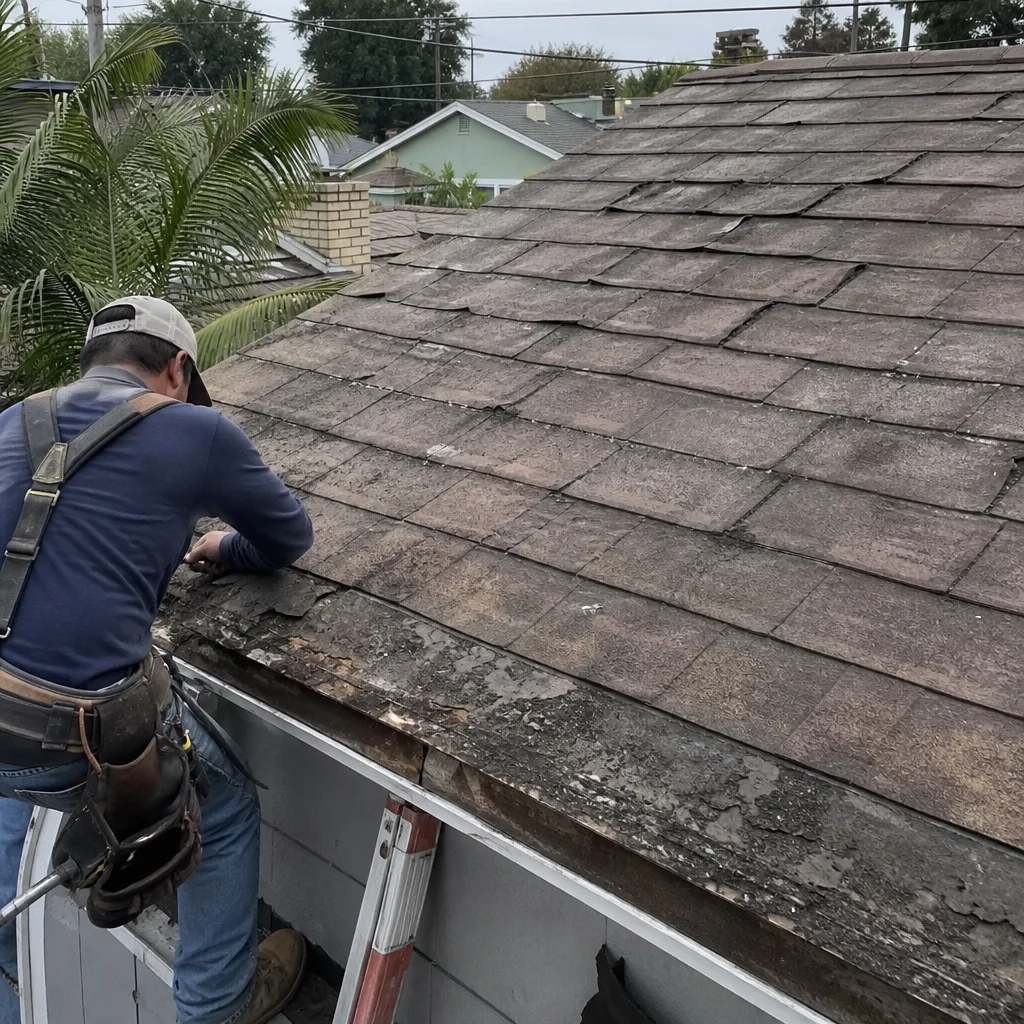
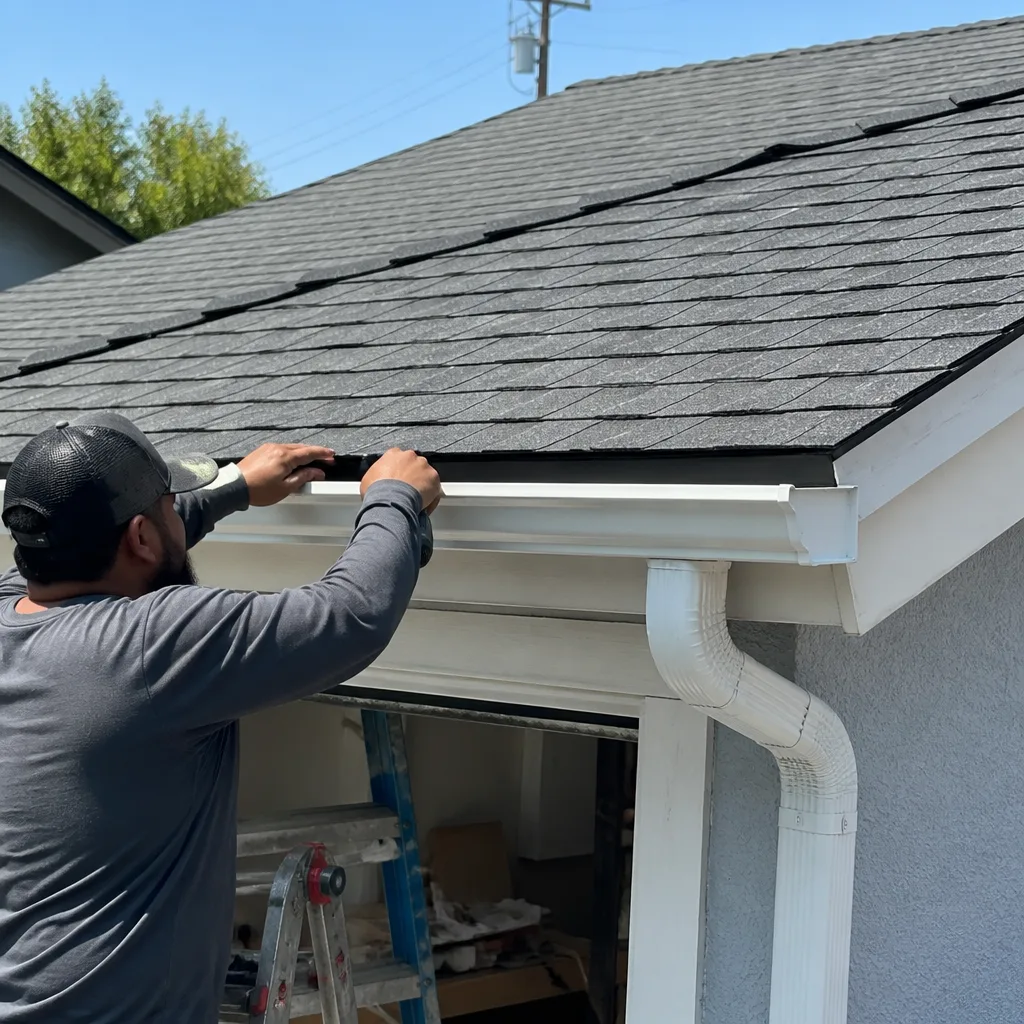
See the difference
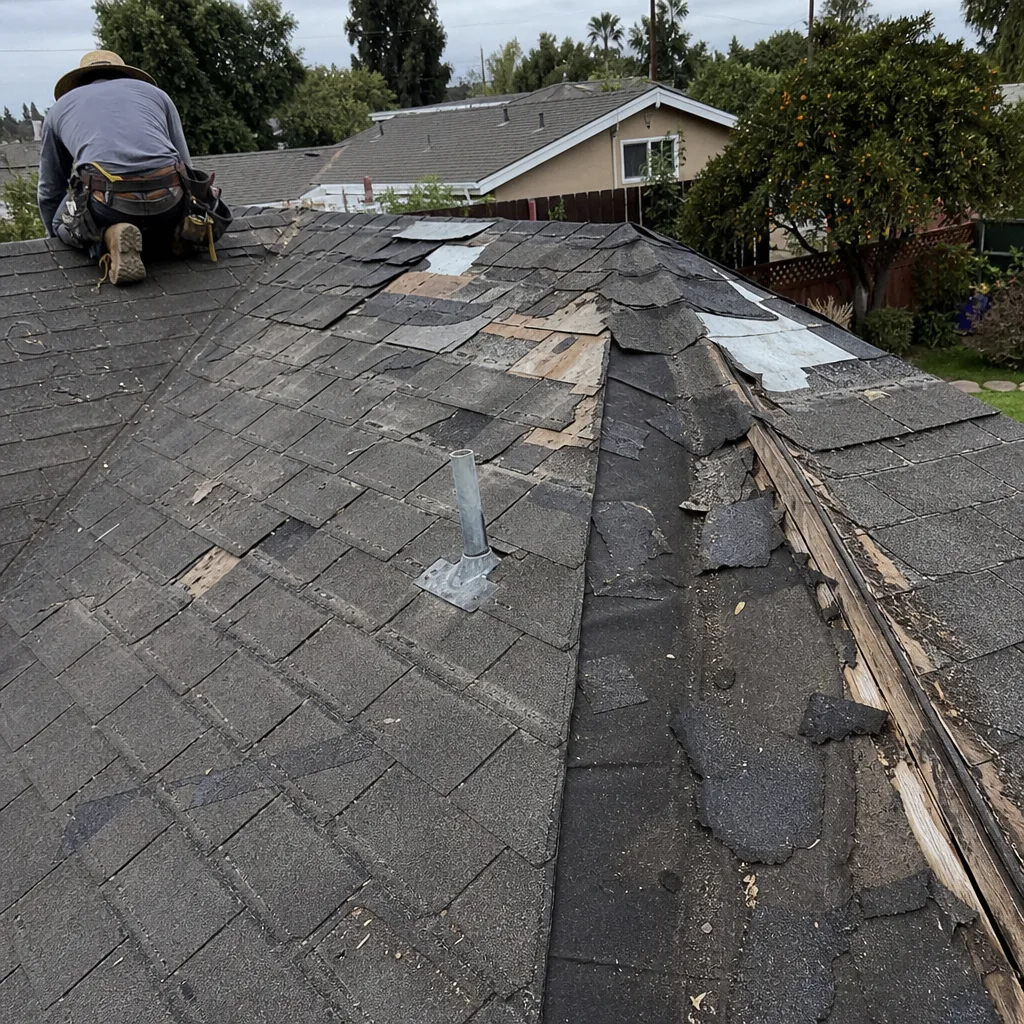 Before
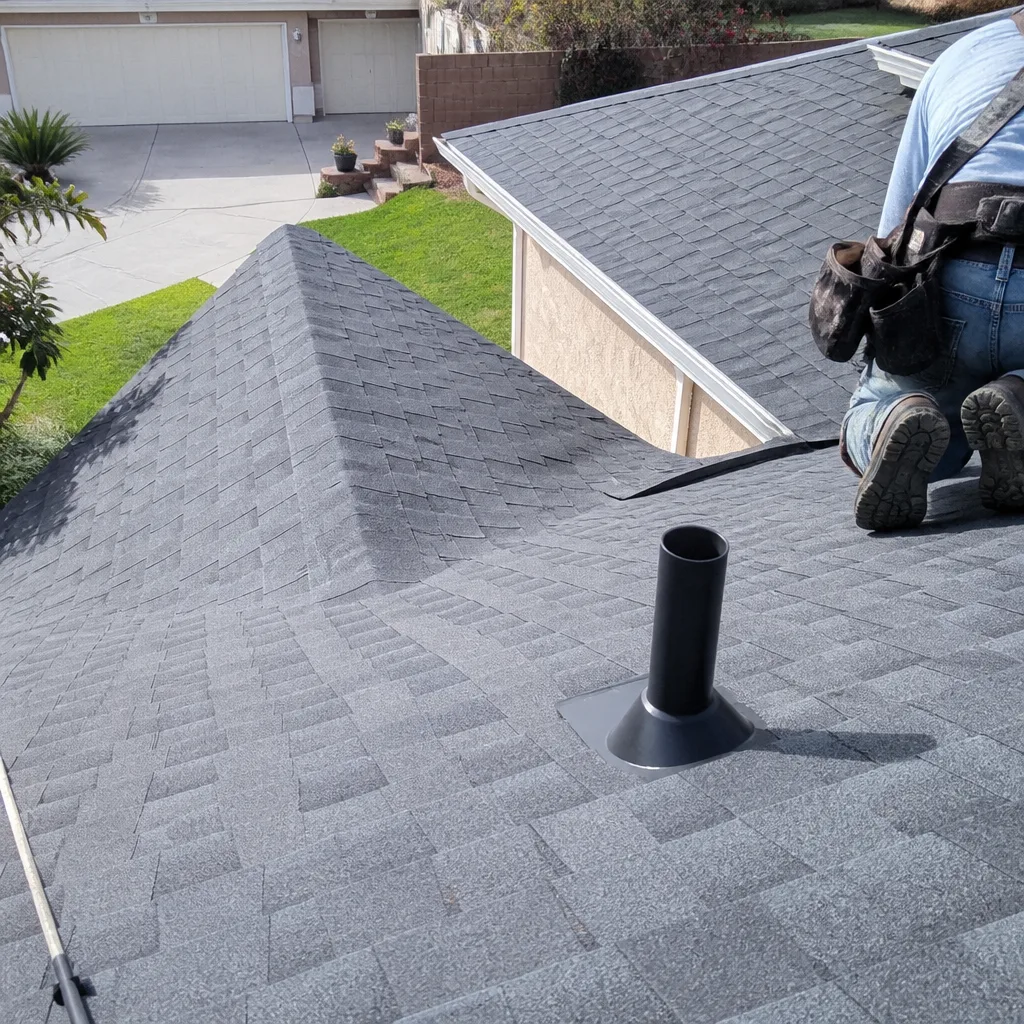 After
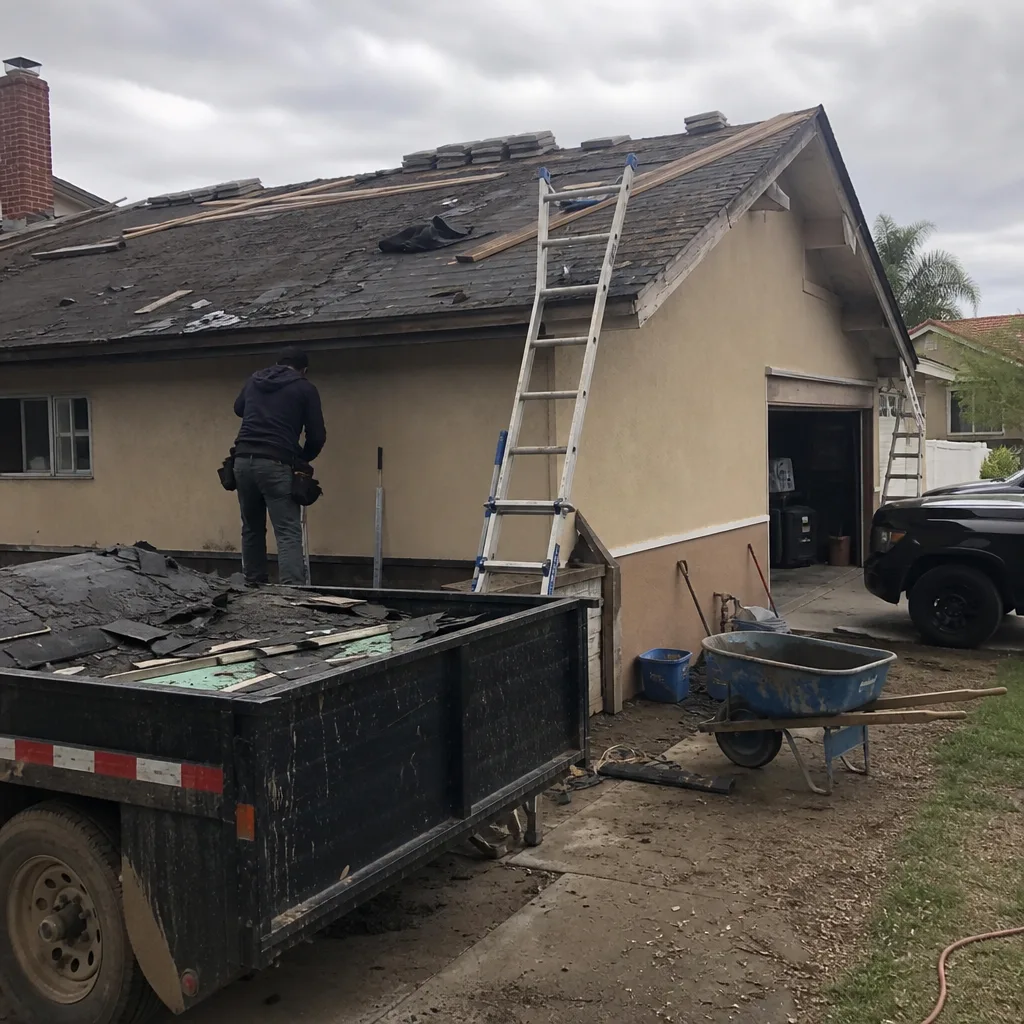 Before
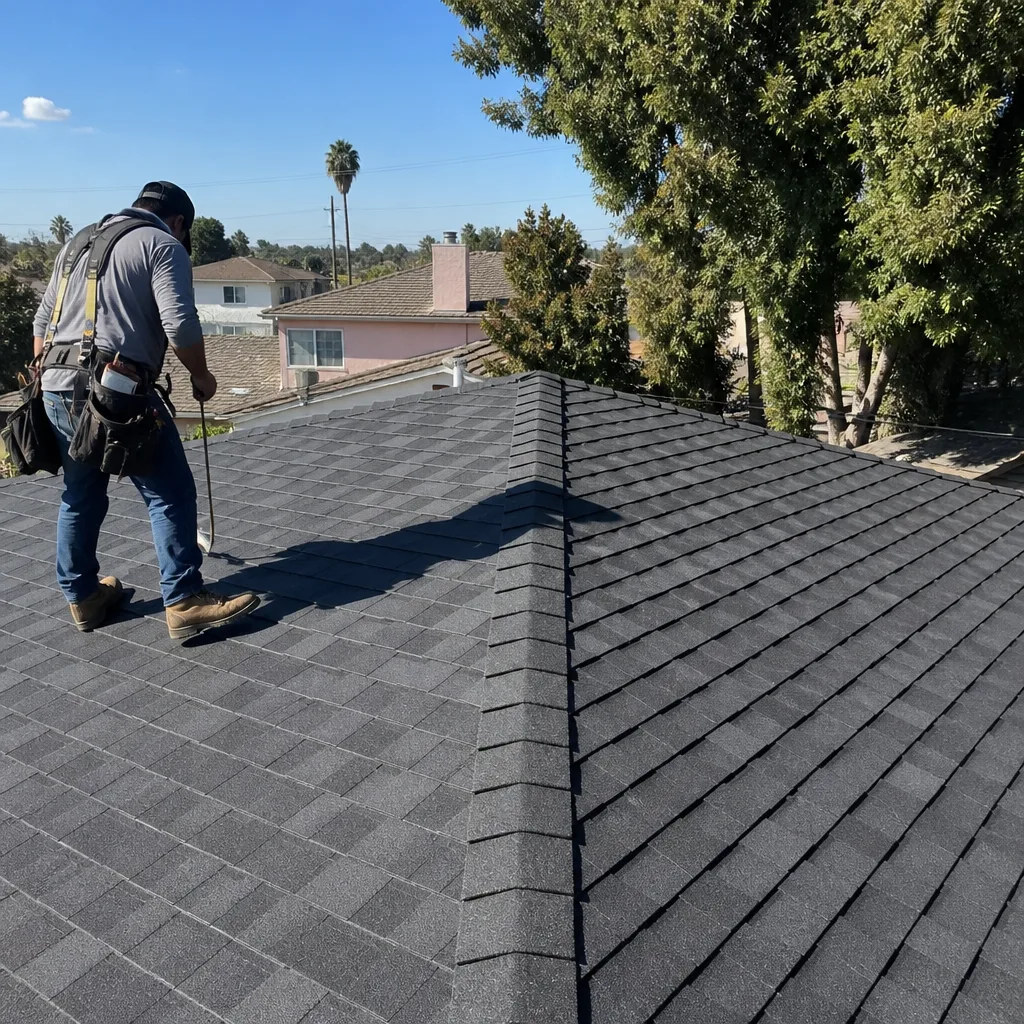 After
 Before
 After