
Last updated October 30, 2026
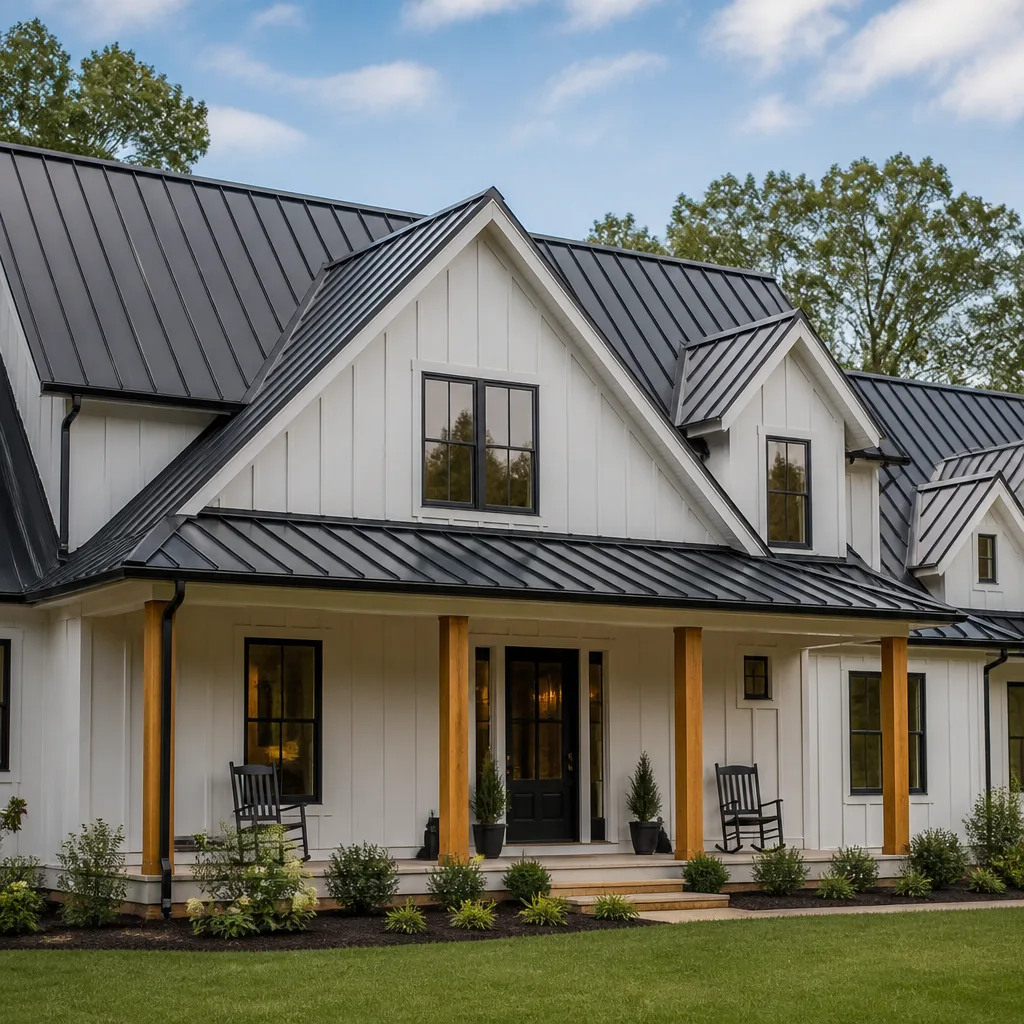 Metal roofing
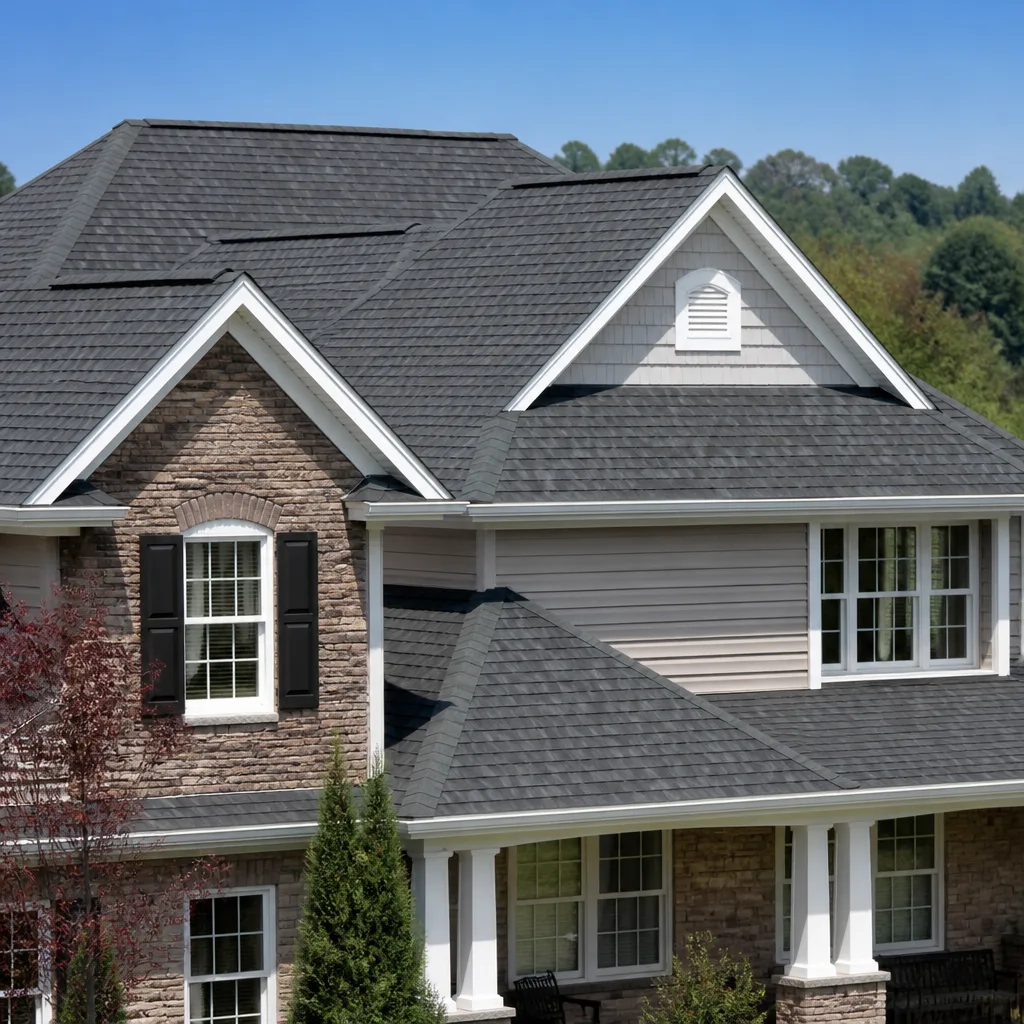 Architectural shingles
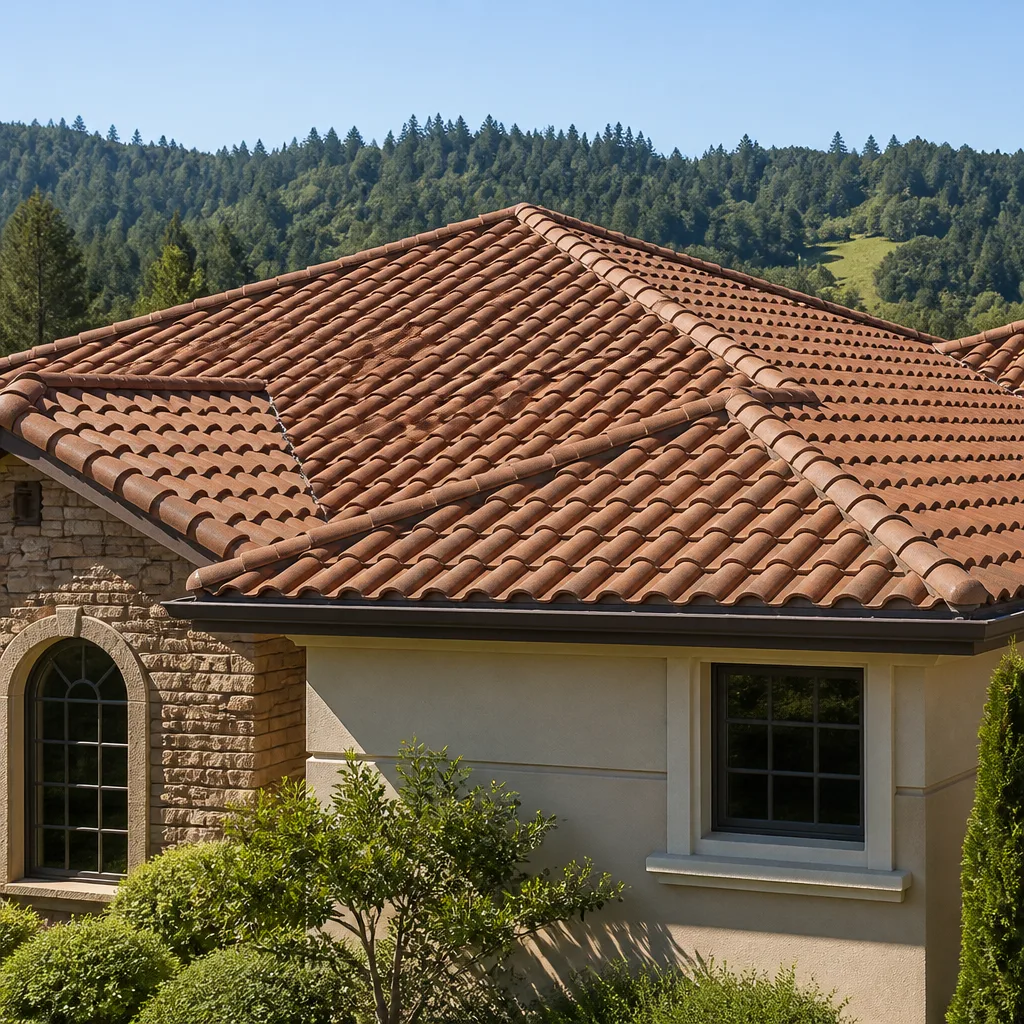 Tile roofing
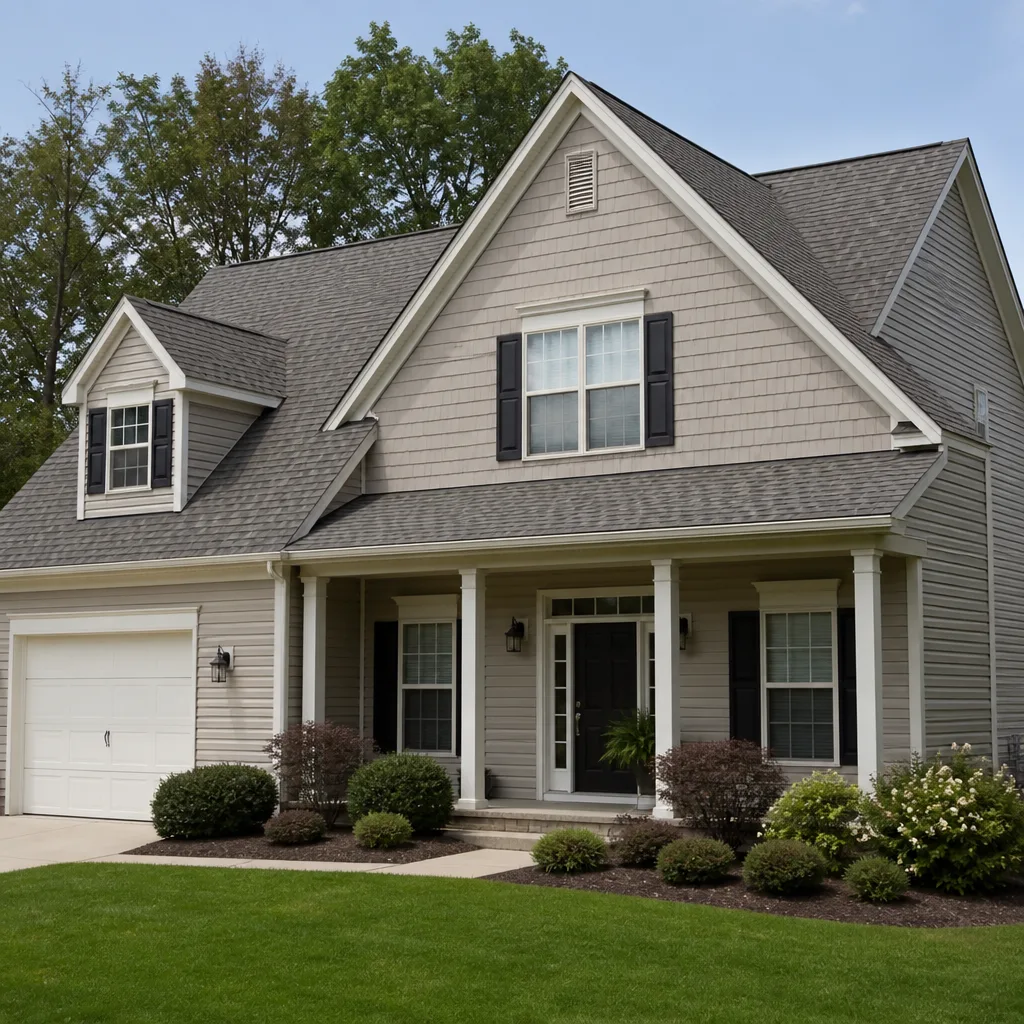 GAF
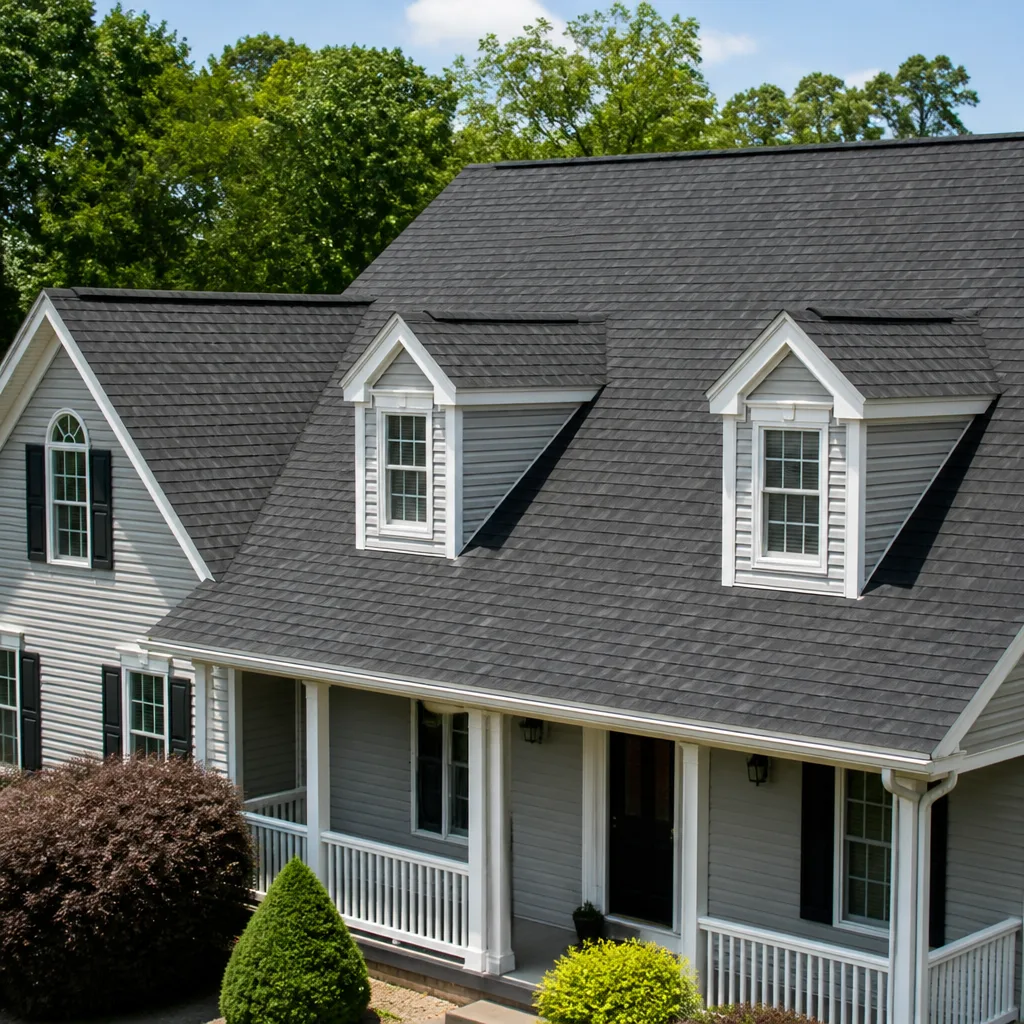 Owens Corning
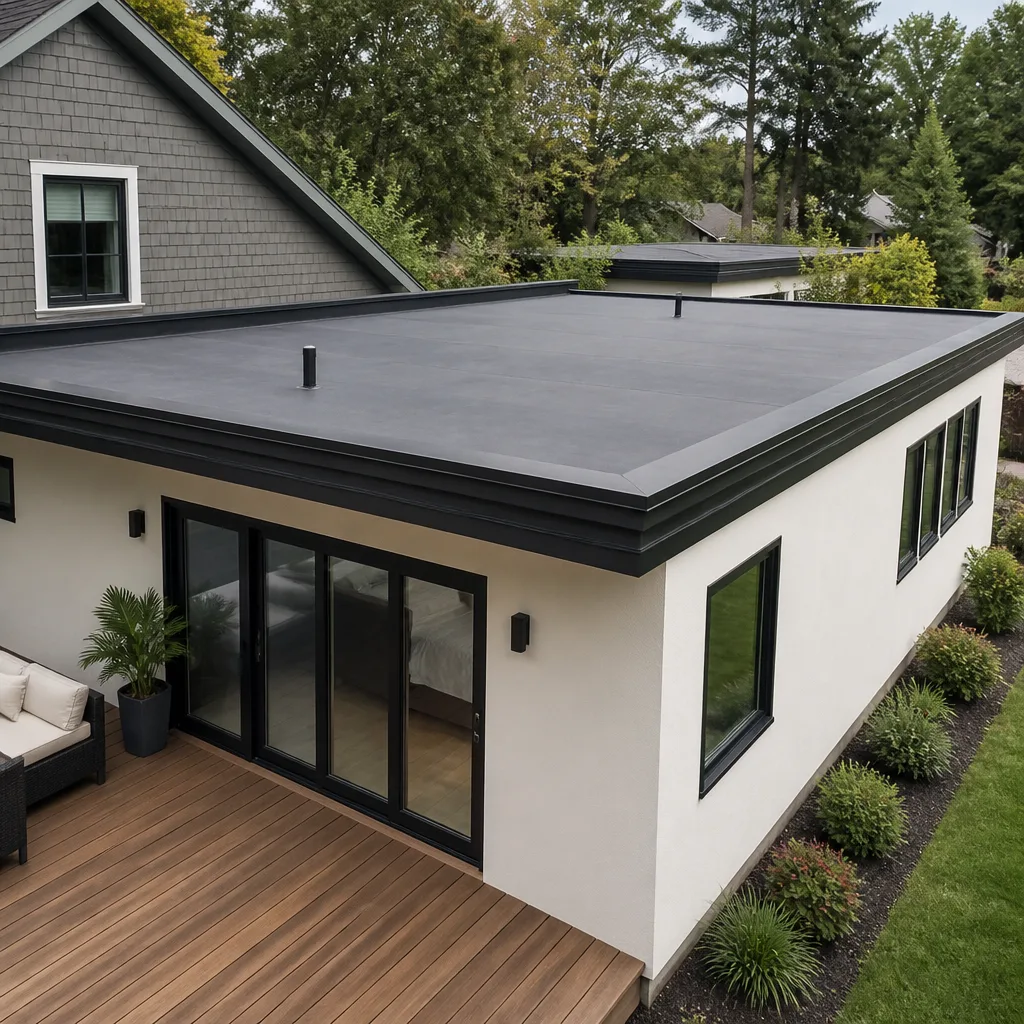 Flat & low-slope
Free roof inspection with deck photos before we talk money - GAF and Owens Corning certified installation
The Complete Guide to Roofing in Anaheim
Anaheim sits in a climate corridor where a shingle rated for 30 years in Minnesota can fail in 18. The combination of prolonged UV exposure, thermal cycling from Santa Ana winds, and marine-edge humidity creates degradation conditions most warranty language quietly excludes. This guide maps every roofing decision in Anaheim to that local reality rather than recycling national guidelines. You’ll learn what actually fails on Anaheim roofs, what repairs cost, when replacement makes financial sense, and how to choose materials that won’t fight SoCal’s climate.
Quick Answer
Roofing in Anaheim is a three-part decision: inspection first, repair when the damage is isolated, replacement only when the roof has reached the end of its serviceable life. Anaheim’s climate, especially UV exposure and Santa Ana thermal cycling, demands specific material choices like architectural asphalt shingles, concrete tile, TPO, or standing seam metal. Working with a contractor who will tell you what your roof actually needs, repair, replacement, or nothing yet, saves Anaheim homeowners thousands over replacement-first contractors.
Styles & brands we work with
Table of Contents
- How Anaheim’s Climate Actually Breaks Down Roofs
- Title 24 and Cool Roof Requirements in California
- Repair vs. Replacement: The Threshold Criteria
- HOA Covenants in Anaheim Hills vs. Flatland Neighborhoods
- Full-Lifecycle Cost Comparison: Four Dominant Anaheim Materials
- What a Roof Inspection in Anaheim Actually Covers
- Santa Ana Wind Damage and What It Does to Fasteners
- Common Mistakes to Avoid
- When to Call a Professional
- Frequently Asked Questions
How Anaheim’s Climate Actually Breaks Down Roofs
Anaheim doesn’t have a single climate. It has three that trade shifts throughout the year, and each attacks your roof differently. Understanding the specific degradation mechanism matters because it determines which materials survive and which fail early.
First, the UV load. Anaheim averages around 280 sunny days per year, and the inland position means less morning marine layer than coastal cities like Huntington Beach or Newport Beach. That translates to brutal, consistent UV exposure on asphalt shingles. UV breaks down the asphalt’s volatile oils, which causes granule loss. Granules aren’t decorative. They protect the asphalt from direct UV, and once they shed, the shingle bakes, curls, and cracks. In our experience, we regularly see granule loss on 12-year-old 3-tab shingles in Anaheim that would take 20 years to develop in the Pacific Northwest.
Second, thermal cycling from Santa Ana winds. Santa Anas don’t just blow hot. They oscillate. Daytime temperatures can swing 40 degrees between mid-morning and late afternoon during a Santa Ana event. Roofing materials expand and contract with every cycle. Asphalt shingles get brittle. Concrete tile holds up to thermal cycling better, but the underlayment beneath it degrades faster in sustained heat. Metal expands and contracts at a predictable rate, which is why standing seam systems use floating clips rather than direct fasteners. The wrong metal roof installed with rigid fasteners will develop oil-canning and eventual fastener fatigue in Anaheim’s specific thermal profile.
Third, coastal humidity from the west. Anaheim’s marine layer doesn’t linger like it does in Long Beach, but it’s a factor. Morning humidity of 70-80% followed by 30% afternoon dryness creates a wet-dry cycle that accelerates adhesive failure on shingle seal strips. The seal strips are what keep shingles from lifting in wind. When they fail, you get blow-off events during Santa Ana gusts. This is why we evaluate seal strip integrity on every roof inspection in Anaheim even when the shingles look visually fine from the curb.
- Primary failure mode in Anaheim: UV-driven granule loss and seal strip adhesive failure on asphalt shingles.
- Secondary failure mode: Thermal fatigue on fasteners and underlayment from Santa Ana temperature swings.
- Tertiary failure mode: Moisture-driven corrosion on exposed flashing where morning marine humidity meets metal.
What this means practically: a roof that “looks fine” from the street can have compromised seal strips that will fail in the next Santa Ana event. Anaheim homeowners should schedule an inspection after any wind event over 40 mph, even if no shingles are visibly missing.
Title 24 and Cool Roof Requirements in California
Title 24 is California’s energy code, and it’s not optional. When you do a full roof replacement in Anaheim, the new roof must meet Title 24 cool roof standards unless you qualify for an exception. This requirement actually reshapes your material shortlist before you ever talk to a contractor.
The code requires that low-slope roofs (under 2:12 pitch) use a cool roof surface with a minimum solar reflectance and thermal emittance. For steep-slope roofs (over 2:12), the requirement depends on the material and the building’s climate zone. Anaheim is in Climate Zone 8, which has some of the highest cooling degree days in California.
Here’s what that means for the four dominant Anaheim materials:
- Asphalt architectural shingles: Must be rated by the Cool Roof Rating Council (CRRC). Most major manufacturers, including Owens Corning and CertainTeed, produce Title 24-compliant shingles with reflective granules. Not all shingle colors qualify. Darker colors often fail the reflectance threshold.
- Concrete tile: Natural concrete tile has moderate reflectance. Most tile manufacturers offer cool roof coatings or pre-coated tile that meets Title 24. Clay tile, a different product, has similar requirements.
- Flat TPO: White TPO membrane is inherently cool roof compliant. Its reflectance typically exceeds the threshold without additional coating. This is one reason TPO has become the default for flat roofs in Anaheim’s commercial and residential flat sections.
- Metal standing seam: Cool roof rated metal uses specialized paint coatings like Kynar 500. Standard painted metal may not meet reflectance thresholds. Verify CRRC ratings before choosing a color.
The catch Anaheim homeowners hit: you may love the look of a dark charcoal architectural shingle, but if it doesn’t meet Title 24 reflectance for Climate Zone 8, it’s not available for a code-compliant replacement. That’s not the contractor being difficult. That’s California law. We source from seven major manufacturers including IKO, Atlas, and Tamko, so when a color choice fails Title 24, we have alternatives from other lines that meet code without compromising the look.
Repair vs. Replacement: The Threshold Criteria
The most expensive sentence in roofing is “you need a full replacement” when the roof actually needed a $600 repair. Here are the specific criteria we use to distinguish repair-eligible roofs from replacement-necessary ones, broken down by material type. This is not a vague rule of thumb. These are the thresholds that actually matter.
Asphalt shingle roofs:
- Repair-eligible: Isolated granule loss on fewer than 15% of shingles, fewer than 10 shingles missing or damaged, local seal strip failure in one or two roof planes, minor flashing gaps around a pipe or vent. The roof deck beneath is sound and the shingles are under 15 years old.
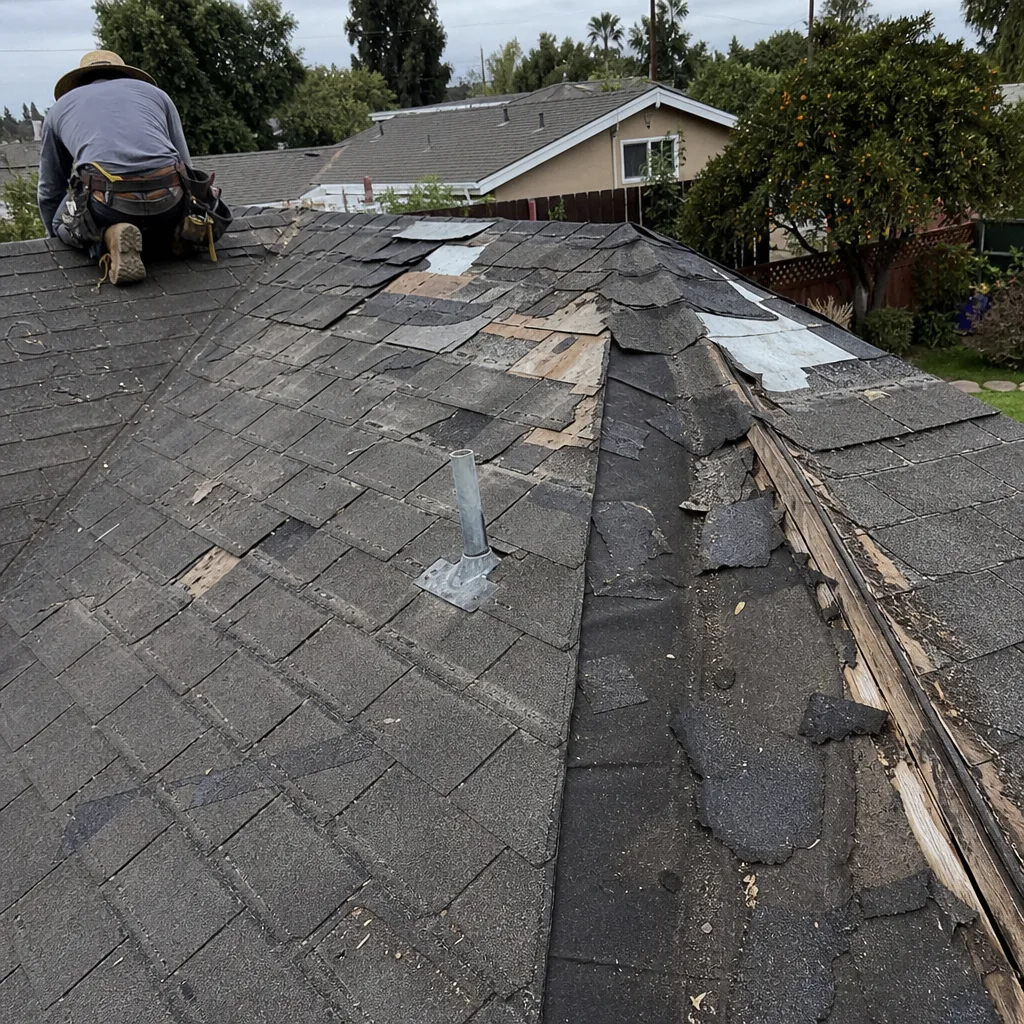
- Replacement-necessary: Granule loss on over 40% of the roof, shingles cracking or curling across multiple planes, seal strip failure pervasive enough that shingles shift under hand pressure, roof age over 18 years with visible brittleness, or deck rot discovered during repair.
- The gray zone (15-40% granule loss, age 12-18 years): This is where an honest contractor matters. Some roofs in this zone will last another 5-7 years with targeted repairs. Others are one Santa Ana event away from systemic failure. We evaluate the seal strips, the deck condition, and the shingle flexibility before giving a recommendation. Repair-first philosophy means we’ll tell you if the gray zone roof can wait.
Concrete tile roofs:
- Repair-eligible: Cracked or slipped individual tiles, localized underlayment failure around a vent or penetration, minor mortar failure on hip or ridge. The underlayment is generally intact and tiles are under 30 years old.
- Replacement-necessary: Underlayment failure that’s pervasive (the tile itself can last 50+ years, but the underlayment beneath it has a 25-35 year life in Anaheim’s heat), widespread tile breakage from foot traffic or impact, or structural issues with the batten system.
- Key insight: Tile outlives underlayment. A 40-year-old tile roof may look fine from the street while the waterproofing layer beneath has turned to something resembling dried paper. Anaheim homeowners with older tile roofs should understand that tile condition and roof waterproofing condition are two different things.
Flat TPO roofs:
- Repair-eligible: Punctures, small seam failures under 2 feet, localized ponding around a drain, minor flashing separation. TPO is weldable, so repairs involve heat-welding patch material to the existing membrane.
- Replacement-necessary: Membrane thickness has worn below functional levels, seam failures across multiple areas, ponding that covers over 25% of the roof surface for over 48 hours, or widespread membrane shrinkage.
- Key insight: TPO installation quality matters more than any other Anaheim material. A poorly welded seam can fail in 3 years, while a properly installed TPO roof lasts 20+. The installer matters more than the membrane brand.
Metal standing seam:
- Repair-eligible: Isolated fastener back-out, a single dented or creased panel, minor flashing gap at a penetration, local sealant deterioration.
- Replacement-necessary: Surface rust on galvanized steel in Anaheim’s marine-adjacent humidity, fastener fatigue across multiple panels, panel oil-canning that indicates thermal movement problems, or major storm damage.
- Key insight: Metal roofs in Anaheim fail primarily at seams and penetrations, not in the field of the panel. A metal roof with good panels but failing penetration flashings is usually repairable, not replacement-necessary.
Our roof repair in Anaheim process follows the same threshold criteria regardless of material. We don’t replace what can be fixed. And when replacement is necessary, we’ll show you exactly why with photos and measurements, not sales pressure.
HOA Covenants in Anaheim Hills vs. Flatland Neighborhoods
Before you choose a roof material, color, or even a contractor, check your HOA documents. Anaheim has two distinct roofing environments: the hillside communities of Anaheim Hills with their HOAs and view ordinances, and the flatland neighborhoods, many of which predate HOA governance entirely.
Anaheim Hills: This is HOA territory. Many Anaheim Hills communities have architectural review committees that must approve roof material, color, and sometimes even the contractor before work begins. Common restrictions we’ve seen working in Anaheim Hills:
- Concrete tile required in certain tracts to maintain visual consistency, even where asphalt would be cheaper.
- Specific color palettes approved by the architectural committee; a homeowner wanting black asphalt shingles in a tile-mandated community will get a denial letter.
- Reflectivity requirements that go beyond Title 24, usually to maintain a uniform cool roof aesthetic across the community.
- Contractor licensing and insurance documentation requirements before work can start.
The practical takeaway: if you live in Anaheim Hills and are considering roof replacement in Anaheim, start with your HOA architectural application. Most committees review monthly, so getting the application in early avoids a 4-6 week delay in your replacement timeline.
Flatland neighborhoods: Older tracts in central and west Anaheim often have no HOA. That means no architectural restrictions, but also no community-enforced maintenance standards. We see older 3-tab asphalt roofs in flatland Anaheim neighborhoods that are 20+ years old and far past their serviceable life, mostly because no HOA required replacement and homeowners deferred until leaks appeared. The freedom to choose any material comes with the responsibility to actually replace a failing roof before water damage spreads into the structure.
One nuance worth knowing: some flatland Anaheim homes in designated historic districts face additional review requirements from the city of Anaheim’s planning department, even without an HOA. If your home is over 50 years old and in a designated historic overlay, check with the city before finalizing material choices.
Full-Lifecycle Cost Comparison: Four Dominant Anaheim Materials
Cost per square foot is the wrong way to compare roofing materials. The right way is full-lifecycle cost: installation cost divided by expected service life, plus maintenance, plus the cost of being wrong about either. Here’s the comparison for the four dominant Anaheim materials as of current market conditions.
| Material | Installed Cost (per sq ft) | Expected Life in Anaheim | 8-Year Maintenance | Full-Lifecycle Cost |
|---|---|---|---|---|
| Asphalt Architectural | $3.80 – $5.50 | 22-28 years | Minimal, mainly fastener checks | Lowest initial, moderate lifecycle |
| Concrete Tile | $8.50 – $12.00 | 40-50 years (underlayment 25-35) | Underlayment replacement at 30-year mark | High initial, low annualized, but underlayment cost is a second major expense |
| Flat TPO | $5.50 – $8.00 | 18-25 years | Seam inspections every 3-5 years | Moderate initial, predictable lifecycle |
| Metal Standing Seam | $12.00 – $18.00 | 35-60 years | Fastener and penetration checks | Highest initial, lowest annualized over 50 years |
Numbers tell one story. Anaheim’s climate tells another. Here’s what the table doesn’t show:
Asphalt architectural shingles dominate the Anaheim market for a reason. They’re the most affordable, they install quickly, and the architectural grade holds up to UV and thermal cycling far better than 3-tab. Brands including Owens Corning and IKO offer architectural lines with reflective granules that meet Title 24. If you’re on a budget and plan to be in the home 20 years or less, architectural asphalt is almost always the right call in Anaheim.
Concrete tile carries a hidden cost in its underlayment. The tile itself may last 50 years, but the waterproofing layer beneath degrades in Anaheim’s heat after 25-35 years. A full tile roof replacement means replacing both, so the lifecycle math includes a major expense at the 30-year mark even if the tile looks pristine. The benefit: tile handles Santa Ana thermal cycling without the brittleness asphalt develops, and it’s naturally fire-resistant, which matters in wildfire-adjacent areas of Anaheim Hills.
Flat TPO is the standard for Anaheim’s flat-roof residential sections, particularly mid-century properties in central Anaheim. White TPO’s reflectivity is a genuine advantage in a climate with 280 sunny days. The weak point is installation quality. TPO seams are heat-welded, and a bad weld can separate in 3 years. Choose a contractor who does TPO regularly, not one who mostly does shingle roofs and occasionally attempts a flat roof.
Metal standing seam is the buy-once option. Atlas and Tamko produce metal roofing lines alongside their asphalt offerings, and the material’s 50+ year life in Anaheim’s climate makes it the cheapest roof per year of service despite the highest initial cost. The catch is upfront cash. If you’ll be in your Anaheim home for 30+ years and can afford the initial outlay, metal is the economically rational choice. If you’ll move in 10 years, you’re paying for durability you’ll never use.
What a Roof Inspection in Anaheim Actually Covers
A roof inspection is not a guy with a ladder glancing at your shingles from the curb. A proper Anaheim inspection addresses the three climate vectors described at the top of this guide: UV damage, thermal cycling, and moisture intrusion. Here’s what a thorough inspection evaluates:
- Granule loss assessment: Granules in gutters, bare patches on shingle edges, and the overall granule retention of the shingle field. This tells us how much UV damage the roof has absorbed.
- Seal strip integrity: Shingles are gently lifted to test the adhesive bond. Failed seal strips are the primary cause of Santa Ana blow-off damage, and they’re invisible from the ground.
- Flashing condition around penetrations: Pipe boots, vent stacks, chimney flashing, and skylights. In Anaheim’s marine-adjacent humidity, flashing corrodes and separates from the roof surface. This is the most common source of slow, persistent leaks that rot decking over years.
- Deck inspection from the attic: Water stains, dark discoloration, soft wood, and daylight visible through cracks. The underside of the deck tells a story the surface hides.
- Ventilation assessment: Anaheim attics bake in the summer. Poor ventilation accelerates asphalt shingle aging and can void manufacturer warranties. We check intake and exhaust ventilation balance.
- Drainage evaluation: Valley debris, clogged gutters, and any area where water pools or flows incorrectly. In flat TPO roofs, ponding is measured and logged.
- Penetration count and condition: Every pipe, vent, and mount on the roof is a potential leak point. We count them, photograph them, and evaluate each.
At Bedrock Roof Repair, we believe every roof should be inspected before it’s repaired or replaced, and our roof inspection in Anaheim provides the same evaluation whether you’re looking at a leak, a quote, or just want a status check. Repair when possible, replace when necessary, inspect before either.
Santa Ana Wind Damage and What It Does to Fasteners
Santa Ana winds don’t just blow shingles off. They exploit existing weaknesses that were already there. A roof with intact seal strips, tight fasteners, and proper flashing will survive 60-70 mph gusts. A roof with marginal seal strips will start losing shingles at 45 mph. The wind isn’t the root cause. The wind is the reveal.
Here’s what Santa Ana events do to different roof systems in Anaheim:
- Asphalt shingles: Wind gets under shingle edges where seal strips have failed, lifts the shingle, and either tears it off or creases it so it can’t reseal. After a Santa Ana event, walk the perimeter and look for shingles that are lifted, creased, or missing.
- Concrete tile: Tile is heavy and rarely blows off, but mechanical fasteners (nails or screws) can loosen with repeated thermal cycling. Santa Ana events accelerate the loosening. A loose tile slides, exposing the underlayment beneath, which then degrades under UV.
- TPO: The membrane itself can billow slightly in high wind if not fully adhered, straining seams. After a Santa Ana event, check seams for separation and check for debris punctures from blown branches.
- Metal standing seam: Properly installed metal handles wind well, but exposed fasteners on older metal systems can back out under vibration. Santa Ana winds create rhythmic vibration that works fasteners loose over time.
After any Anaheim wind event over 40 mph, do a quick visual assessment: any new granule patches in gutters, any lifted or missing shingles, any shifted tile, any debris on the roof. If you see any of these, call for an inspection before the next storm. Wind damage that’s ignored becomes water damage in the next rain, and water damage is always more expensive than the fastener or sealant fix it started as.
Common Mistakes to Avoid
- Choosing a contractor before choosing a material. Contractors who are locked into one manufacturer will recommend that manufacturer’s product regardless of whether it fits your Anaheim roof and budget. We source from seven major brands including GAF, CertainTeed, Owens Corning, IKO, Atlas, Tamko, and Boral, so the recommendation follows the job, not supplier incentives.
- Assuming a 30-year warranty means a 30-year roof. Warranty language excludes the exact degradation mechanisms Anaheim’s climate accelerates: UV granule loss, thermal cycling fatigue, and seal strip failure. A “lifetime” shingle warranty can be a 10-year practical roof in Anaheim’s conditions.
- Ignoring Title 24 until after the material is chosen. We’ve seen Anaheim homeowners fall in love with a dark shingle color only to find it doesn’t meet Title 24 reflectance requirements. Check compliance before you get attached to a color.
- Replacing a roof that only needed repair. This is the most expensive mistake in roofing. A roof with isolated damage and years of serviceable life doesn’t need replacement. A contractor who immediately quotes replacement without evaluating repair options is selling you something you don’t need.
- Ignoring underlayment on tile roofs. Tile roofs look permanent from the ground. The waterproofing layer beneath has a 25-35 year life in Anaheim’s heat. Ignoring underlayment means water intrusion through a material that looks perfectly fine.
- Deferring inspection after Santa Ana events. Wind damage compounds. A lifted shingle reseals in warm weather but the seal is weaker than before. Eventually it blows off entirely. Post-wind inspections catch the problem while it’s a $300 repair instead of a $3,000 replacement.
- Choosing the cheapest quote without comparing scope. Two Anaheim roofing quotes at different prices usually reflect different scopes: cheaper quotes may skip underlayment replacement, use different materials than specified, or omit permit costs. Compare line items, not bottom lines.
When to Call a Professional
Some roofing situations are safe to evaluate yourself from the ground. Others require a trained professional, and the distinction matters for both your safety and your roof’s condition.
Call a professional if you see water stains on your ceiling, especially if they’re expanding. Call after any Santa Ana event over 40 mph, even if you don’t see visible damage. Call if your roof is over 15 years old and has never had a professional inspection. Call if you’re buying or selling a home in Anaheim and need an objective roof condition assessment. Call if granules are accumulating in your gutters, which signals UV degradation is underway. Call if you suspect you need roof replacement in Anaheim and want an honest evaluation of whether repair is still viable.
Bedrock Roof Repair offers free estimates in Anaheim. Call (833) 589-7850 to schedule an inspection. We’ll tell you what your roof actually needs, repair, replacement, or nothing yet.
Frequently Asked Questions
A new architectural asphalt shingle roof in Anaheim typically runs $9,000 to $16,000 for an average 2,000 square foot home, while concrete tile runs $18,000 to $28,000 and standing seam metal runs $26,000 to $40,000. The exact price depends on roof complexity, access, and material choices. Call (833) 589-7850 for a free estimate with a written line-item quote.
Anaheim’s UV exposure and Santa Ana thermal cycling mean most materials last 15-20% less than manufacturer-stated lifespans. Architectural asphalt shingles typically last 22-28 years, concrete tile 40-50 years (with underlayment replacement at 25-35 years), TPO 18-25 years, and standing seam metal 35-60 years. The single biggest variable is ventilation and installation quality.
Yes, the city of Anaheim requires permits for roof replacement and most roof repairs beyond minor maintenance. A proper contractor pulls the permit and schedules inspections. We handle all permitting and ensure the work passes city inspection before final payment.
Often, yes. If the damage is isolated, the roof deck is sound, and the shingles or tile are under 15-20 years old, targeted repair is usually the right call. We evaluate repair before replacement on every job. Seven leading brands, one honest recommendation.
For most Anaheim homeowners in flatland neighborhoods, architectural asphalt shingles with Title 24-compliant reflective granules offer the best balance of cost, durability, and climate performance. For Anaheim Hills homes with HOA requirements, concrete tile is often mandated and handles thermal cycling well. For buy-once homeowners, standing seam metal provides the lowest cost per year of service.
Look for lifted or missing shingles, new granule accumulation in gutters, shifted tile, or new debris on the roof surface. Seal strip failure is the most common wind damage culprit and it’s invisible from the ground. After any Santa Ana event over 40 mph, call (833) 589-7850 for a post-wind inspection.
The Bottom Line
Roofing in Anaheim isn’t about picking the best material in the abstract. It’s about matching material and approach to a specific climate: UV load that destroys granules, Santa Ana thermal cycling that fatigues fasteners, and marine humidity that corrodes flashing. The right process is always inspection first, repair when the damage is isolated, replacement only when the roof has truly reached the end of its serviceable life. Whether you’re dealing with a leak, a wind event, or just an aging roof, one contractor who handles inspection, repair, and replacement with access to seven major material brands gives you honest options instead of a pushed recommendation. Bedrock Roof Repair serves Anaheim with that exact approach.
Written by the team at Bedrock Roof Repair, serving Anaheim since 2018.
See the difference
 Before
 After
 Before
 After
 Before
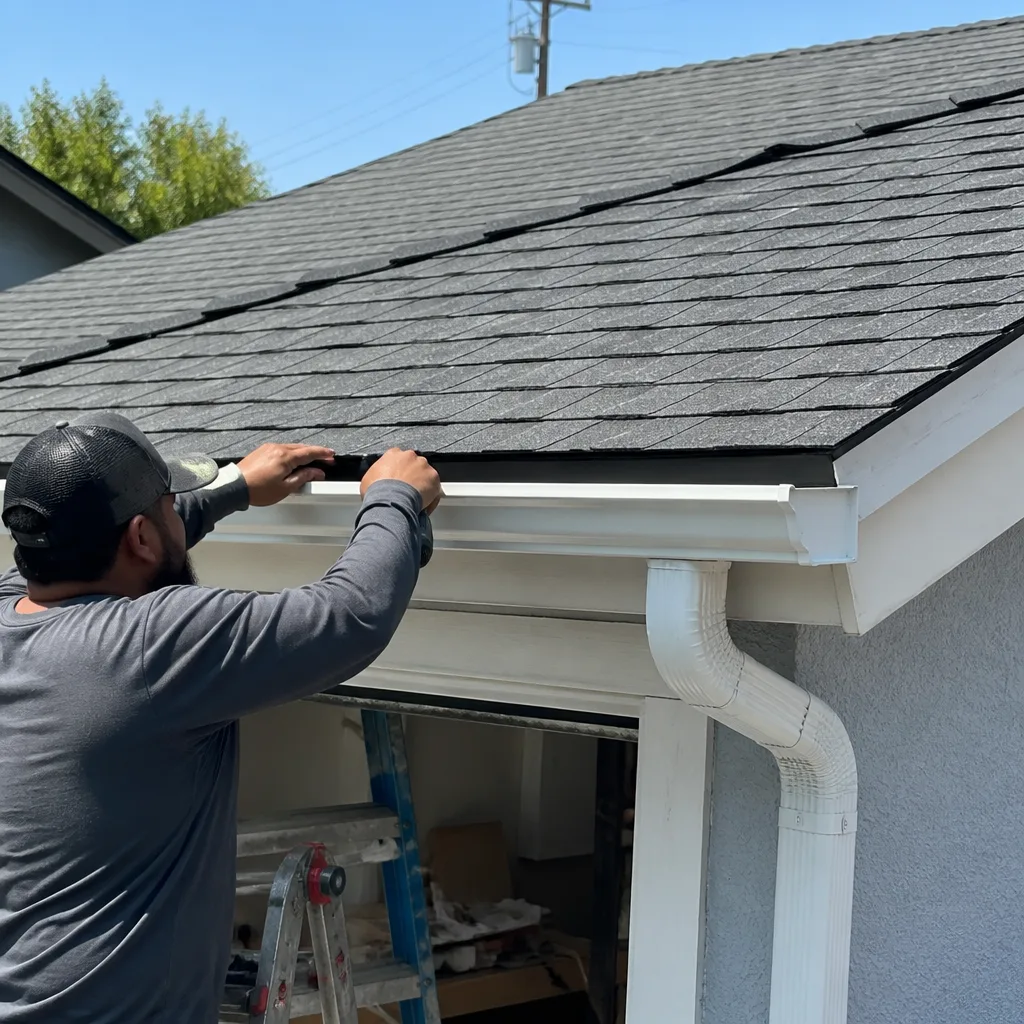 After