

Last updated October 30, 2026
 Metal roofing
 Architectural shingles
 Tile roofing
 GAF
 Owens Corning
 Flat & low-slope
Free roof inspection with deck photos before we talk money - GAF and Owens Corning certified installation
Roofing Warning Signs: A Anaheim Homeowner’s Reference Guide
A ceiling water stain means the roof has already failed at the deck level. The warning sign you should have caught was in your attic six months earlier, where daylight through a cracked ridge or dark staining on the sheathing told the same story without the drywall damage. Most Anaheim homeowners only look up after water is inside the house. This guide teaches you to read the earlier signals, the ones visible in the attic, at the gutter line, and along the tile edges, before they become a five-figure replacement. We’ll walk through warning signs by roof type, because a clay tile roof in Anaheim fails differently than a TPO flat roof in Anaheim, and knowing which material you’re dealing with changes what you should be looking for.
Quick Answer
The earliest roof warning signs for Anaheim homeowners are almost never the ceiling stain. They are attic-based signals: daylight penetration at ridge lines, dark staining on sheathing, insulation compression near eaves, and rust on fastener heads. Exterior signals vary by material, but hairline cracking on clay tile noses, mortar deterioration at hips, membrane bubbling on flat roofs, and granule loss on composition shingles are the most common precursors to failure in Anaheim’s sun-heavy, low-rain climate.
Styles & brands we work with
Table of Contents
- Attic Warning Signs That Precede Exterior Failure
- Clay and Concrete Tile Warning Signs Specific to Anaheim
- Flat Roof Warning Signs for TPO and Built-Up Roofs
- Composition Shingle Warning Signs
- Interior Warning Signs Beyond Ceiling Stains
- Repair vs. Replacement: Reading the Severity
- A Seasonal Inspection Routine for Anaheim Homeowners
Attic Warning Signs That Precede Exterior Failure
If you only inspect your roof from the outside, you’re working with about half the information. The attic tells the story earlier, and in Anaheim’s climate, that story is often about heat and UV exposure accelerating material breakdown before water ever gets involved. Here’s what to look for, and what each signal means.
Daylight Penetration Points
On a sunny day, turn off the attic light and look up. If you see daylight coming through the ridge line, around pipe boots, or at the eaves, the roof’s water barrier is already compromised. This is the single most reliable early warning sign because it’s unambiguous. A pinprick of light at a nail hole might be cosmetic. A visible gap or crack that lets you see sky through the decking is not. By roof type, here’s where daylight most commonly appears:
- Clay and concrete tile roofs: At the ridge and hip lines where mortar has fallen away, and at the underlayment seams where tiles have shifted.
- Composition shingle roofs: At the ridge cap, around plumbing vent pipe boots, and anywhere flashing meets a vertical wall.
- Flat roofs: At the perimeter edge where the membrane terminates, and around any penetration like an HVAC curb or a drain.
Sheathing Staining Patterns
Anaheim’s low rainfall means sheathing stains develop slowly, which is both good and bad. Good, because you have more time to catch them. Bad, because homeowners assume a small stain isn’t urgent. Look for these patterns:
- Dark gray or black streaks radiating from a single point. This is active water intrusion at a penetration. The streak pattern tells you the water’s path, which points back to the source.
- Uniform darkening across a large area. This is condensation, not a roof leak. It means the attic isn’t ventilating properly, which in Anaheim’s summer heat accelerates shingle and underlayment breakdown from below.
- White or chalky residue on the sheathing. This is efflorescence, mineral deposits left behind as water evaporates. It means water has been present repeatedly, even if the roof is dry right now.
Insulation Compression Near Eaves
When water runs down the underside of the roof deck and reaches the eaves, it saturates the insulation at the attic’s edge. Wet insulation compresses and loses its loft. If the insulation at the eaves looks flattened, darker, or matted compared to the insulation in the center of the attic, water has been pooling there. This is a particularly useful signal in Anaheim because many homes have blown-in or batt insulation that was installed decades ago, and the contrast between dry and water-damaged insulation is easy to spot once you know to look.
Fastener Head Rust
Roofing nails and staples are galvanized, but in a humid attic environment or in repeated contact with moisture, that zinc coating fails. When you see rust staining around nail heads protruding through the sheathing, it indicates the nail has been wet repeatedly. On tile roofs in Anaheim, this is often accompanied by a more serious issue: the fastener has begun to corrode, which means the tile it’s securing may be loose.
If you’re seeing any of these attic signals but aren’t sure what they mean, a Roof Inspection in Anaheim will map every penetration and document the condition of the sheathing before you spend a dollar on repairs.
Clay and Concrete Tile Warning Signs Specific to Anaheim
Anaheim has more tile roofs than any other roof type in many of its older neighborhoods, especially in areas with Spanish and Mediterranean architectural influence. Tile roofs can last 50 years or more, but the tiles themselves are not the waterproof barrier. The underlayment beneath the tile does the waterproofing, and in Anaheim, that underlayment degrades faster than the tile. Here’s how to read a tile roof’s condition from ground level.
Hairline Cracking at the Tile Nose
The nose of a tile is the exposed lower edge that overhangs the tile below it. In Anaheim’s afternoon sun, clay tiles expand at a different rate than concrete tiles, but both develop hairline cracks at the nose from thermal cycling. A hairline crack in a single tile is cosmetic. Hairline cracks across a row of tiles, especially on the south- and west-facing slopes, indicate the tiles are losing structural integrity. When water gets into a hairline crack and the temperature drops at night, the water contracts and expands at a different rate than the tile, widening the crack over seasons. Cracked tiles meant the underlayment becomes the only barrier left, and underlayment in Anaheim typically lasts 20 to 30 years before it needs replacement.
Mortar Deterioration at Ridges and Hips
Walk to the curb and look at the ridge line. The mortar that fills the gaps between ridge tiles should be uniform and intact. If it looks crumbly, if you can see gaps where mortar used to be, or if there are pieces of mortar in the gutter or at the downspout openings, the roof’s first line of defense at its highest point is failing. This matters more in Anaheim than in other climates because Santa Ana winds are strong enough to lift a ridge tile once the mortar no longer anchors it. A loose ridge tile becomes a projectile, and it also exposes the underlayment seam directly beneath it.
Spalling on Concrete Tiles
Concrete tiles lose surface material over time in a process called spalling. It looks like the tile’s surface is flaking or peeling away, exposing the lighter aggregate underneath. This is different from the patina that clay tiles develop. Spalling is structural degradation. In Anaheim, spalling is common on concrete tile roofs installed in the 1980s and 1990s, because those tiles were manufactured with a face coat that delaminates once water penetrates the surface. Once spalling begins, the tile’s ability to shed water diminishes, and the underlayment takes on more water load than it was designed for.
Broken Tiles at Valley Lines
The valley lines on a tile roof are the channels where two roof planes meet and water concentrates. Any broken tile at a valley is a higher priority than a broken tile on a flat field. When you see broken tile pieces in the valley channel, the water flow has been disrupted, and a high volume of water is now running directly onto the underlayment at that point. Check valley lines from the ground with binoculars if you can. Broken tiles there are a repair-now situation.
Tile roofs are one of the signature roof types in Anaheim, and many of the signals above are specific to them. If you’re seeing any of these conditions, the next step is a repair evaluation before the underlayment takes more water. We’ll tell you what your roof actually needs, repair, replacement, or nothing yet. That’s the whole point of the Bedrock Roof Repair home philosophy.
Flat Roof Warning Signs for TPO and Built-Up Roofs
Anaheim has a significant stock of flat and low-slope roofs on mid-century homes, additions, patio covers, and commercial-style residential buildings. Flat roofs fail differently than pitched roofs, and the warning signs are slower to become obvious from the ground because you typically can’t see the membrane from the street. Here’s what to look for.
Ponding Water Thresholds
After it rains in Anaheim, go look at your flat roof. If water is still standing 48 hours after the rain stopped, the roof has a ponding problem. A small amount of water that evaporates within a day is normal on an older flat roof. Water that persists beyond 48 hours is not. Persistent ponding accelerates membrane degradation in two ways. First, the standing water reflects UV light, which concentrates heat on the membrane surface and causes premature cracking. Second, the constant water weight stretches the membrane at the ponding point, which eventually creates a tear. Look specifically at areas around roof drains and scuppers. Ponding there means the drain is clogged or the roof’s slope has settled.
Membrane Bubbling
Bubbles or blisters on a flat roof membrane mean moisture has become trapped between the membrane and the substrate beneath it. On a TPO roof, this happens when water vapor rises from the building’s interior and gets trapped under the membrane, or when water has penetrated a seam and then the surface heat seals the area again. The bubble is a pocket of pressure. When a bubble is stepped on or when it gets hot enough, it ruptures. A ruptured bubble is an open wound in the waterproof layer. In Anaheim, where summer surface temperatures on a flat roof can exceed 150 degrees, membrane bubbles rupture faster than they do in cooler climates.
Seam Separation
TPO membranes are installed in sheets and welded together at the seams using heat. Over time, especially on south-facing Anaheim roofs, the welded seams can delaminate. From the ground, this looks like a line where the membrane has slightly lifted or wrinkled. From the roof surface, you can slide a putty knife under a failed seam with almost no resistance. Seam separation is the most common source of flat roof leaks in Anaheim, and it’s repairable if caught early. The repair involves re-welding the seam, which is a targeted fix, not a roof replacement.
Perimeter Flashing Gaps
Look at the edge of your flat roof where the membrane meets the parapet wall or the fascia. If you can see daylight under the metal edge flashing, or if the membrane has pulled away from the wall, water has a direct path into the roof structure. This is the flat roof equivalent of missing kick-out flashing on a shingle roof. It’s easy to spot from ground level if you know what to look for, and it’s a straightforward repair.
Composition Shingle Warning Signs
Composition shingle roofs are common in Anaheim’s post-1970 housing stock, and they have their own failure profile. Shingles in Anaheim fail primarily from UV degradation, not from storm damage. That’s a key distinction because it changes what you’re looking for.
Granule Loss and Balding
Shingles are coated with ceramic granules that protect the asphalt beneath from UV light. When those granules come off, the asphalt is exposed and begins to crack. In Anaheim’s sun, granule loss happens faster than in coastal or northern climates. Look at your gutters. If there’s a consistent accumulation of granules in the gutter trough, especially after the Santa Ana winds, the shingles are shedding. Look at the roof surface. If you see patches where shingles look smooth, darker, or shiny compared to surrounding areas, the granules are gone and the shingle is balding. A balding patch is not repairable. Once a section of shingles has lost its granules, that section needs replacement.
Curling at the Corners
Shingle corners start to curl upward as the asphalt oxidizes and loses its flexibility. Curling on one or two shingles indicates a manufacturing inconsistency or a localized heat reflection issue. Curling across an entire slope indicates systemic age-related failure. In Anaheim, south-facing slopes curl faster than north-facing slopes on the same roof, which is a useful diagnostic. If you see curling on the south slope but not the north, the roof is in the early stages of its end-of-life curve, but it may have a few years left with targeted repair. If curling is uniform on all slopes, the shingles are done.
Splitting and Cracking
A split shingle is different from a curled shingle. A split runs through the body of the shingle, and once it happens, the shingle is no longer shedding water. Splits are most common on older three-tab shingles, which are thinner and more brittle than architectural shingles. They often occur at the nail line, because that’s where the shingle is most stressed. If you see splits on more than 10 percent of the shingles on a slope, the roof needs replacement on that slope at minimum.
Shingle roof repair is often a matter of responding to these signals early. The Roof Repair in Anaheim page explains how we approach repair scope, and the sequence is always the same: identify what’s failing, determine whether the surrounding material has life left, and recommend accordingly.
Interior Warning Signs Beyond Ceiling Stains
Ceiling stains are the obvious interior signal, but they’re a late one. By the time a stain appears on the drywall, water has worked through the roof covering, the underlayment or membrane, the sheathing, and the insulation. There are earlier interior signals that most homeowners miss entirely.
Efflorescence on Exterior Walls Below the Roofline
Efflorescence is the white, chalky substance that appears on painted stucco or concrete walls. It’s caused by water carrying soluble minerals to the surface and then evaporating, leaving the minerals behind. When efflorescence appears in a vertical line below a roof penetration or along an exterior wall below a valley, it means water is running down the wall cavity or behind the stucco. This is a roof leak that hasn’t reached the ceiling yet.
Attic Humidity Readings
A properly ventilated attic in Anaheim should have humidity levels that track closely with outdoor humidity. If you place a hygrometer in the attic and it reads consistently above 60 percent when the outdoor humidity is below 40 percent, that moisture is coming from somewhere inside the roof assembly. Suspect a slow leak, or more commonly in Anaheim, a ventilation problem that’s trapping moisture from the living space below.
HVAC Performance Changes
When roof insulation gets wet, it loses its R-value. A roof leak that saturates the insulation above a bedroom or living room will cause that room to run hotter in summer and colder in winter. If one room in your Anaheim home is noticeably harder to cool than it used to be, and the neighboring rooms are unaffected, check the attic above that room before you call an HVAC contractor. You may have a roof problem masquerading as an HVAC problem.
Musty Odor in Specific Areas
A persistent musty smell that’s localized to one room or one side of the house, and that doesn’t respond to cleaning, is a moisture signal. In Anaheim, where homes don’t have basements, that moisture most commonly comes from the roof or the plumbing. If the smell is strongest near the ceiling, near a closet ceiling, or in the attic access, the roof is the likely source.
Repair vs. Replacement: Reading the Severity
The single most important question Anaheim homeowners ask us is whether a warning sign means a repair or a replacement. The honest answer is that it depends on three factors: the type of roof, the age of the roof, and whether the signal is localized or systemic. Here’s how we read severity by material.
When a Tile Roof Warning Sign Means Repair
Most tile roof warning signs are repairable because the tiles themselves are the sacrificial layer. Underlayment does the waterproofing, and the tiles protect the underlayment from UV and physical impact. A cracked tile, a displaced tile, or even a section of deteriorated mortar at a hip can be repaired by replacing the damaged tiles and repacking the mortar. The key question is whether the underlayment has been exposed. If the tiles have been damaged for less than a year and the underlayment hasn’t been compromised, a repair is almost always the right call.
When a Tile Roof Warning Sign Means Replacement
If the underlayment has failed, which typically happens at the 20 to 30 year mark in Anaheim regardless of tile condition, the roof needs replacement. This is called a re-roof, and it involves removing the tile, inspecting and replacing the sheathing as needed, installing new underlayment, and reinstalling the tile. The tile can often be reused if it’s in good condition. If the underlayment has failed and the tiles are also spalling or cracked extensively, the replacement includes new tile as well.
- Localized damage on a young roof: Repair. One cracked tile on a 10-year-old roof is a repair.
- Localized damage on an old roof: Depends on underlayment condition. If underlayment is intact, repair. If it’s failed, the repair becomes a re-roof.
- Systemic damage on any roof: Replacement. Hairline cracks across an entire slope, uniform spalling across all fields, or mortar failure at every hip signal that the system has reached end of life.
When a Flat Roof Warning Sign Means Repair
Most flat roof warning signs in Anaheim are repairable, especially on TPO roofs. A seam separation can be re-welded. A membrane bubble can be cut, dried, and patched. A ponding area can be addressed with a tapered insulation system or drain adjustment. The key is catching these conditions before water reaches the decking. TPO membranes, depending on the brand, can be repaired effectively without replacing the entire roof.
When a Flat Roof Warning Sign Means Replacement
If the membrane has multiple seam failures, widespread bubbling, or cracking across a large portion of the surface, patching each one individually becomes a losing proposition. At that point, the roof needs a new membrane. The good news is that a flat roof replacement is often faster and less expensive than a pitched roof replacement, especially on a simple rectangular footprint.
When a Shingle Roof Warning Sign Means Repair
Individual missing shingles, small areas of granule loss, and isolated curling can be repaired. If the damage is confined to one slope or one section, and the rest of the roof is in acceptable condition, a repair is the right financial decision.
When a Shingle Roof Warning Sign Means Replacement
Uniform granule loss, curling across all slopes, or splits in more than 10 percent of the shingles are replacement signals. On an architectural shingle roof, the typical lifespan in Anaheim is 20 to 30 years depending on the brand and installation. Shingles from manufacturers like IKO, Atlas, and Tamko have different performance characteristics, but all of them eventually reach the point where spot repair is throwing money at a roof that’s already failed. When we evaluate a shingle roof, we assess the whole surface, not just the damaged area.
The Roof Replacement in Anaheim page walks through what a replacement involves, and the material selection process. We work with seven material brands, including GAF, CertainTeed, Owens Corning, IKO, Atlas, Tamko, and Boral, so the recommendation follows the roof, not a supplier contract.
A Seasonal Inspection Routine for Anaheim Homeowners
Anaheim’s climate doesn’t have the dramatic seasonal shifts that other regions do, but it does have two predictable stress periods: the summer heat and the winter rain season. A simple inspection routine timed to these periods catches most warning signs before they become failures.
Spring Inspection: After the Santa Ana Season
- Clear the gutters. Santa Ana winds deposit leaves, branches, and debris. A clogged gutter backs water up under the roof edge during the next rain.
- Walk the roof perimeter from the ground. Look for lifted tiles, missing shingles, and shifted ridge caps. Binoculars help.
- Check the attic. Look for daylight penetration points and any new staining that appeared over the winter.
- Inspect flat roof surfaces. If you can safely access the flat roof, check for ponding areas, new bubbles, and seam separation.
- Clear roof drains and scuppers. On flat roofs, any blockage will create ponding during the next rain.
Fall Inspection: Before the Rain Season
- Re-clear gutters and downspouts. Even if you cleared them in spring, six months of Anaheim dust and tree debris will have accumulated.
- Check flashing at chimneys and walls. The summer heat has expanded and contracted the metal. Look for gaps at the joint between flashing and the roof surface.
- Inspect attic insulation. Feel for dampness at the eaves. If insulation near the edge of the attic feels cold or damp compared to the center, water is getting in.
- Schedule a professional inspection if anything looks off. If you see a condition you can’t identify, that’s what a Roof Inspection in Anaheim is for. The cost of an inspection is always less than the cost of ignoring a warning sign for one more season.
Common Mistakes to Avoid
- Ignoring the attic because it’s uncomfortable. The attic is where the earliest warning signs live. A ten-minute attic check twice a year catches more problems than any ground-level visual inspection.
- Assuming a crack in one tile is no big deal. In Anaheim’s heat, a hairline crack widens through thermal cycling. A crack that’s cosmetic today can become a broken tile next summer.
- Painting over a ceiling stain without finding the source. Paint seals the stain but not the leak. The water will find a new path and the damage will be larger when it does.
- Waiting until the heavy rain to check for leaks. Anaheim’s rain is concentrated in a few months. By the time a leak shows up during a storm, the roof has been compromised for months.
- Replacing shingles without addressing the underlayment. If water has already reached the decking, new shingles over old damage will fail prematurely.
- Deciding on repair vs. replacement from the ground. You can’t see underlayment condition from the ground, and that’s the deciding factor on most tile roofs.
- Ignoring granule buildup in gutters. Granules in the gutter are the canary in the coal mine for a shingle roof. They tell you the shingles are degrading even if the roof surface looks fine from the street.
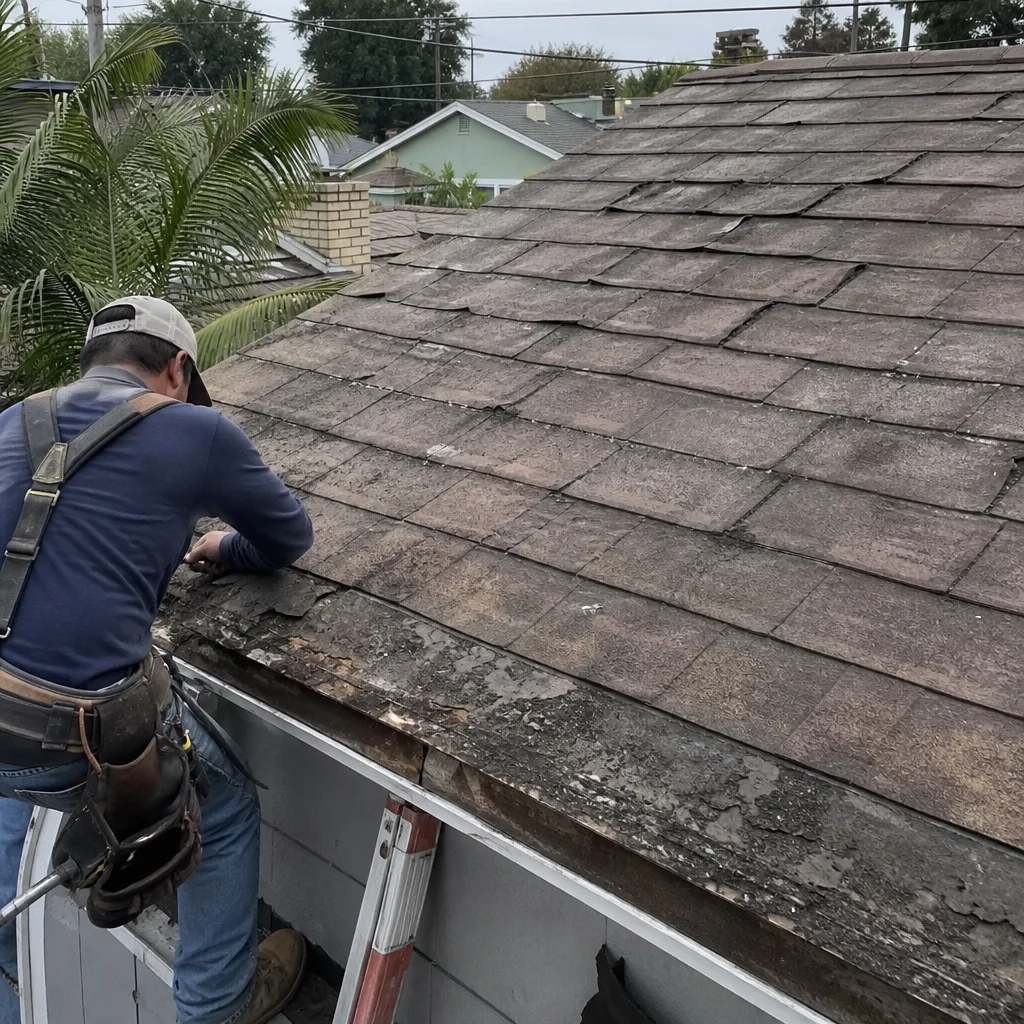
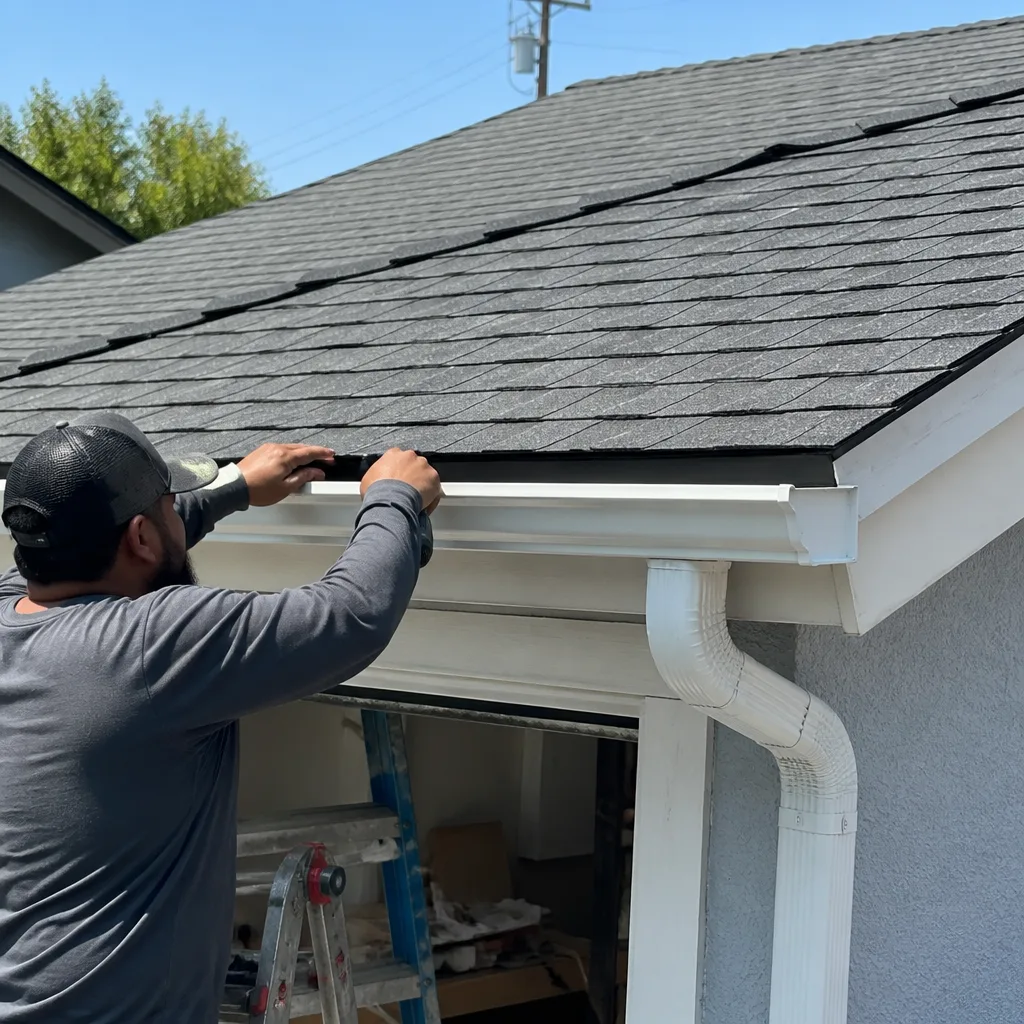
See the difference
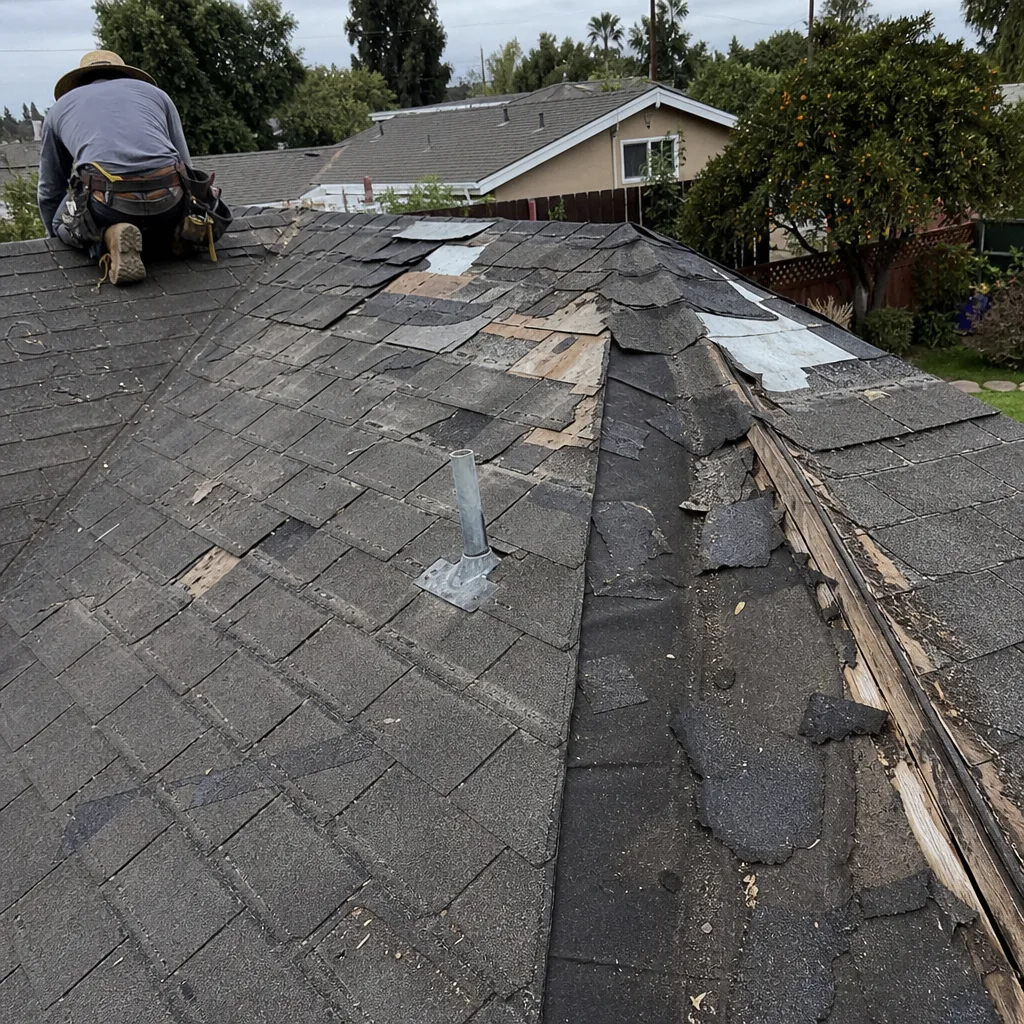 Before
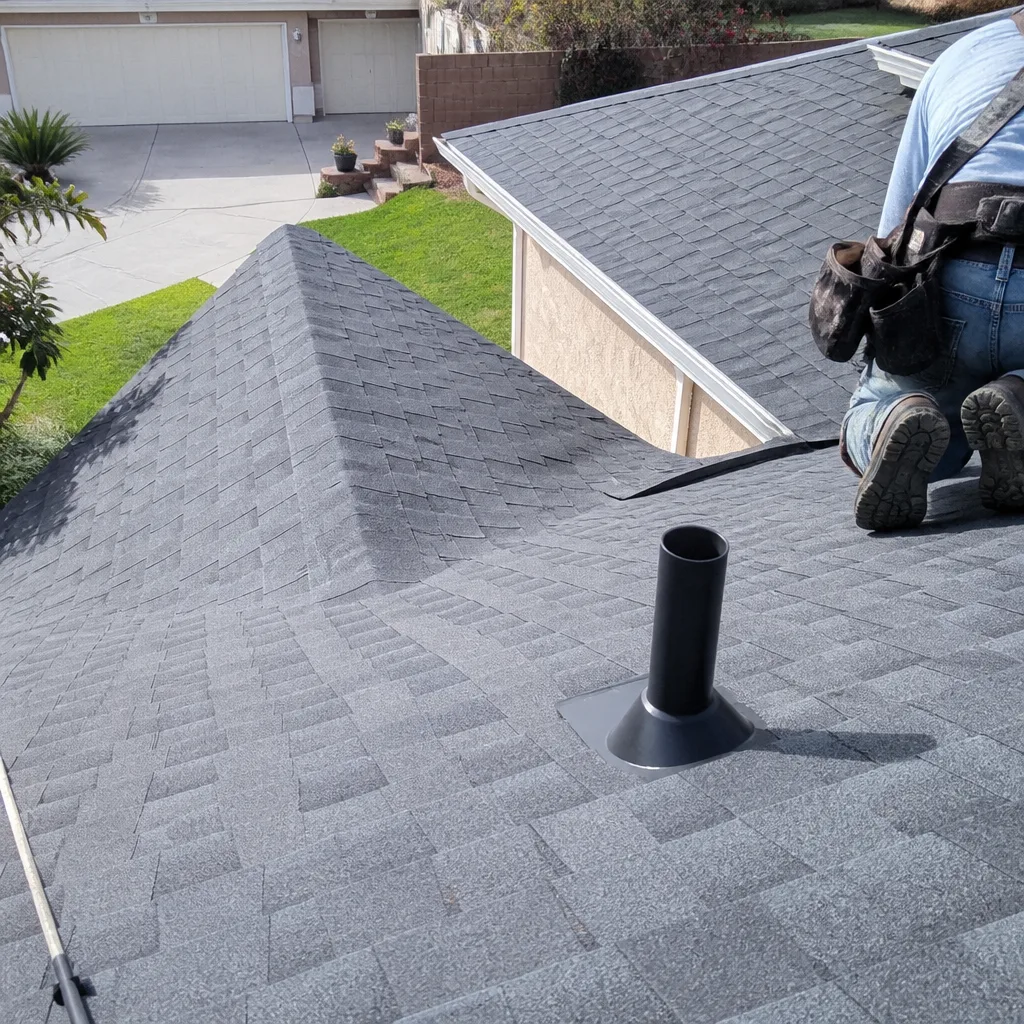 After
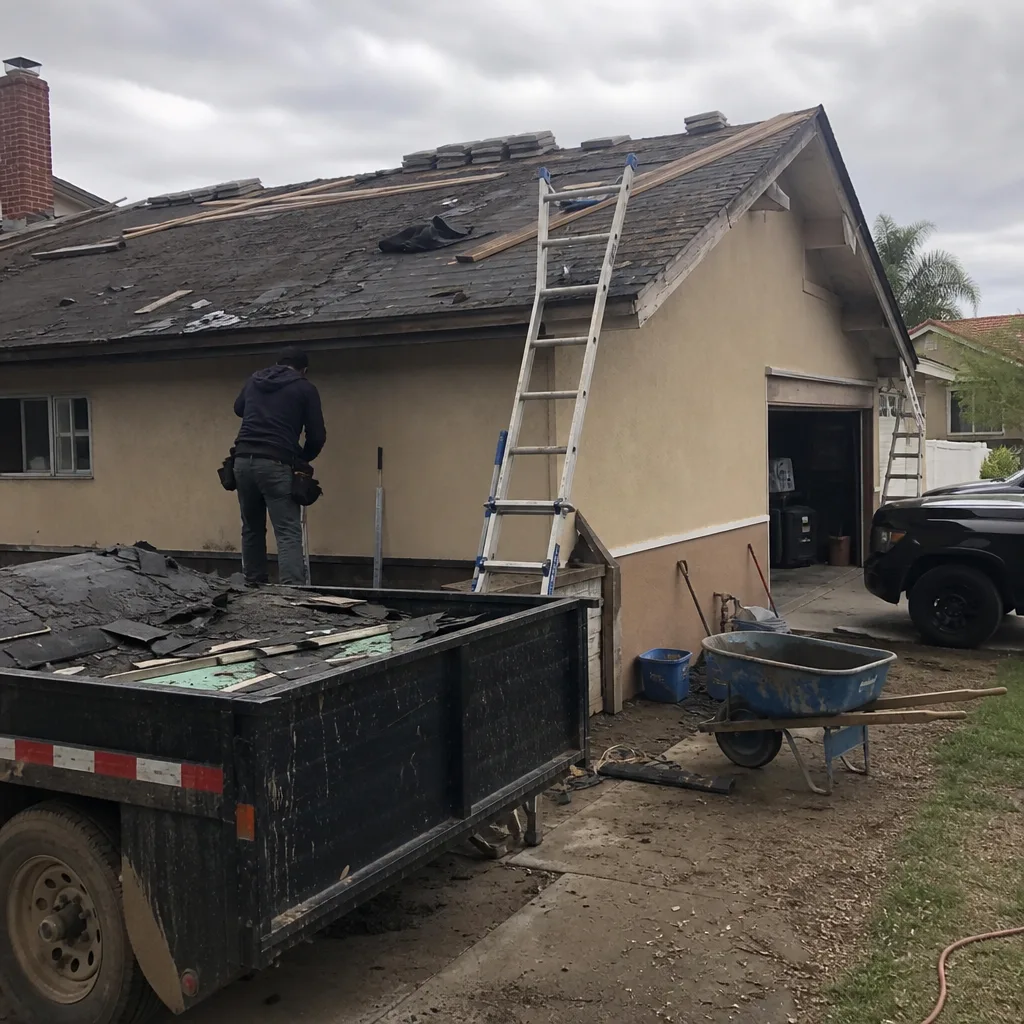 Before
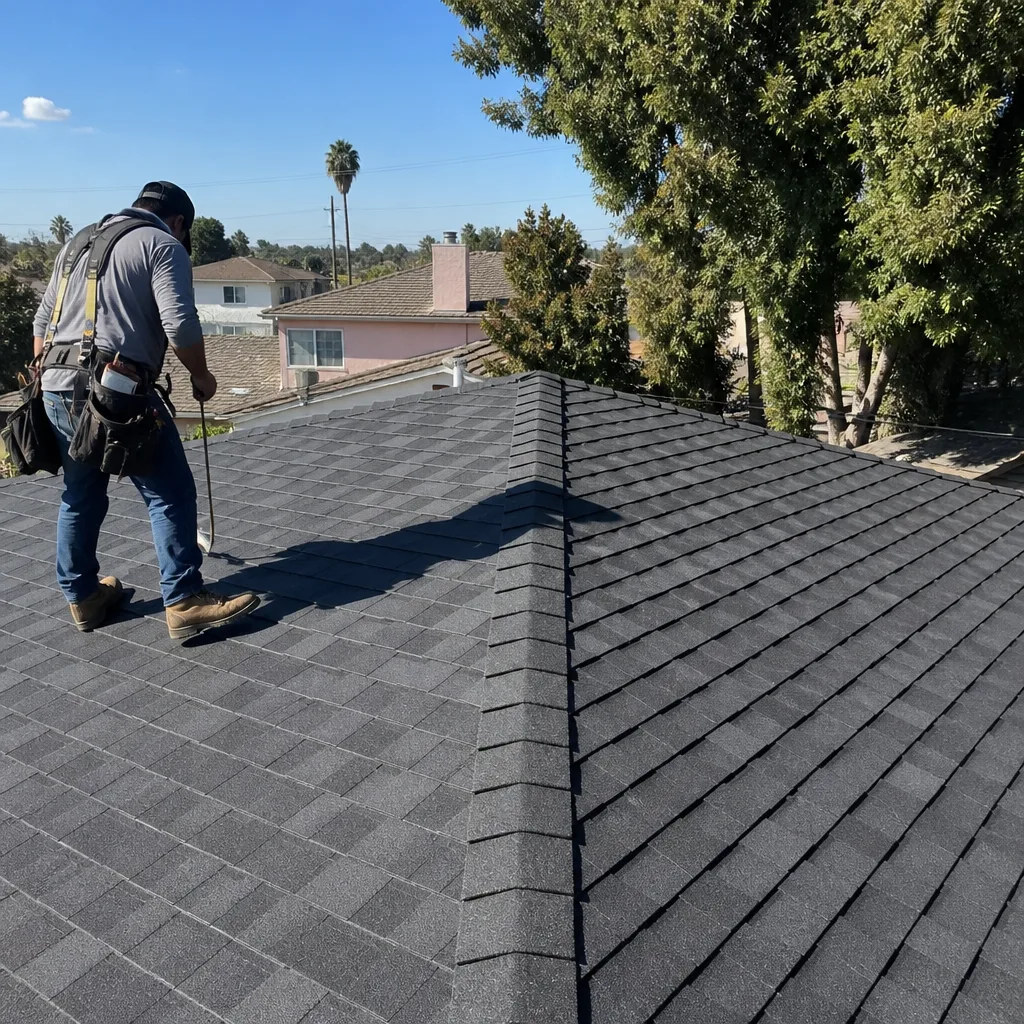 After
 Before
 After
When to Call a Professional
If you’ve identified any of the warning signs in this guide, or if you’re unsure whether what you’re seeing is normal or problematic, call a professional before the next rain season. Specifically, call if you see daylight in the attic, efflorescence on exterior walls, separation at TPO seams, or granule loss across a shingle slope. These are conditions that will not improve on their own, and every season they remain unaddressed is a season of accelerated degradation. Bedrock Roof Repair offers free estimates in Anaheim. Call (833) 589-7850 and we’ll inspect the roof, document what we find, and tell you plainly what the roof needs. Repair when possible. Replace when necessary. Inspect before either.
Frequently Asked Questions
The earliest signs are in the attic: daylight visible through the ridge line or at penetrations, dark staining on the underside of the sheathing, compressed insulation at the eaves, and rust on fastener heads. In Anaheim, homeowners often miss these because they don’t go into the attic until a ceiling stain forces the issue. By that point, the roof has been leaking for months.
The determining factor is the condition of the underlayment beneath the tile, not the tile itself. In Anaheim, tile underlayment typically lasts 20 to 30 years. If the underlayment is intact, a cracked or displaced tile is a repair. If the underlayment has failed, the roof needs a re-roof, which involves removing the tile, replacing the underlayment, and reinstalling the tile. We can often reuse the existing tile if it’s in sound condition.
A leak in the attic looks like a dark gray or black stain on the sheathing, often in a streak pattern radiating from a single point. It can also look like compressed or darkened insulation near the eaves, or white chalky residue left behind after water evaporates. In Anaheim’s dry climate, these stains can develop slowly over multiple rain seasons before any water reaches the drywall.
Ponding water that evaporates within 48 hours after a rain is generally acceptable on an older flat roof. Ponding that persists beyond 48 hours is a problem. Persistent ponding accelerates membrane degradation and eventually causes a tear. In Anaheim, the combination of standing water and summer heat creates a concentrated UV reflection pattern that degrades TPO membranes faster than surrounding areas.
Twice a year is sufficient for most Anaheim homes: once in spring after the Santa Ana wind season, and once in fall before the rain season. The inspection should include clearing gutters and drains, checking the attic for daylight penetration points and new staining, and examining the roof surface for tile cracks, shingle curling, granule loss, or membrane separation. If anything looks unusual, schedule a Roof Inspection in Anaheim for a professional assessment.
For flat roofs, shingle roofs, and tile roofs, we don’t recommend DIY repairs. The risk of worsening a problem or injuring yourself on a roof is real, and on a tile roof in particular, walking on tiles incorrectly can crack more tiles than you’re trying to fix. Most warning signs in this guide are diagnostic tools, not repair instructions. If you see something, we’ll tell you what it means and what it needs. Call (833) 589-7850 for an assessment.
The Bottom Line
Roof warning signs are readable if you know what to look for, and in Anaheim, the earliest signals are almost always in the attic, not on the roof surface. Daylight through the ridge, staining on the sheathing, compressed insulation at the eaves, and rust on fasteners all precede the ceiling stain that most homeowners first notice. Tile roofs fail through hairline cracking, mortar loss, and spalling. Flat roofs fail through seam separation, membrane bubbling, and persistent ponding. Shingle roofs fail through granule loss and curling. The decision between repair and replacement comes down to one question: is the damage localized or systemic? We’ve built our entire approach around answering that question honestly. Seven leading brands. One honest recommendation.
Written by the team at Bedrock Roof Repair, serving Anaheim since 2018.