
Last updated October 30, 2026
 Metal roofing
 Architectural shingles
 Tile roofing
 GAF
 Owens Corning
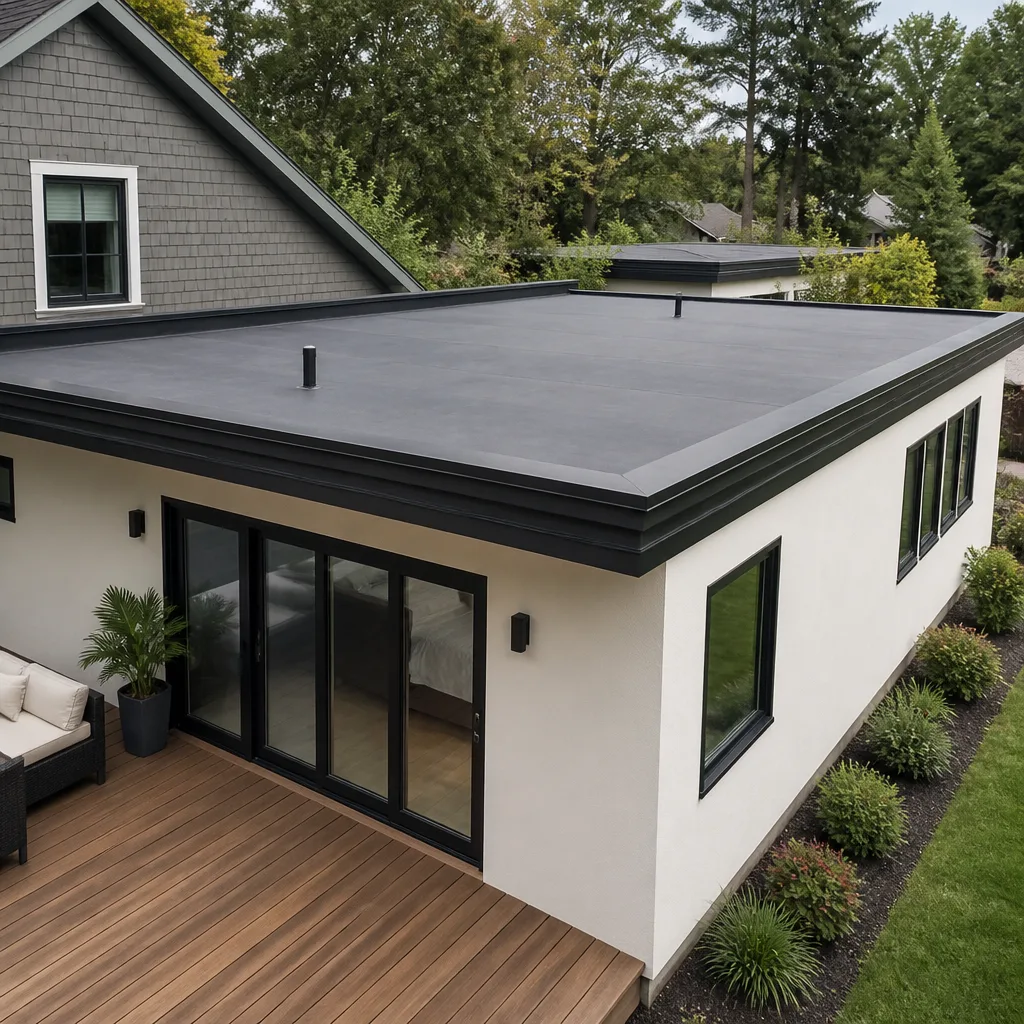 Flat & low-slope
Free roof inspection with deck photos before we talk money - GAF and Owens Corning certified installation
Roofing Emergency Preparedness Guide for Anaheim Homes
The worst time to find out your roof has a three-week repair backlog during Santa Ana season is at 11pm with a tarp from Home Depot and water coming in. Contractors are overwhelmed after wind events, and homeowners without pre-established relationships and documented roof conditions start the queue at zero. This guide is a pre-event planning document, not a post-damage response manual. You’ll learn how to document your roof before trouble hits, which Anaheim-specific failures actually happen, what temporary fixes work, how to handle the insurance sequence in California, and how to position yourself so you’re not last in line when the next windstorm tears through. We’ve been repairing roofs in Anaheim long enough to know that the homeowners who fare best aren’t lucky. They’re prepared.
Quick Answer
Roofing emergency preparedness in Anaheim means three things: documenting your roof’s condition before any damage occurs, knowing which failure modes (Santa Ana wind tile displacement, ember intrusion, flat roof ponding) apply to your specific roof, and having a pre-established contractor relationship so you’re not competing with thousands of neighbors after a widespread wind event. Homeowners who maintain a current roof baseline with photos and material records get insurance claims processed faster and repairs scheduled weeks sooner than those starting from zero. The time to prepare is now, not when water is already coming through the ceiling.
Styles & brands we work with
Table of Contents
- Creating a Roof Condition Baseline Before Emergencies
- Anaheim-Specific Emergency Scenarios and Response Requirements
- Temporary Weatherproofing: What Works and What Fails
- The California Insurance Claim Sequence for Roof Damage
- Establishing a Pre-Emergency Contractor Relationship
- Material Choices That Affect Emergency Vulnerability
- Roof Inspections as a Preparedness Tool
- Common Mistakes to Avoid
- When to Call a Professional
- Frequently Asked Questions
Creating a Roof Condition Baseline Before Emergencies
A roof condition baseline is the single most valuable document you can have when something goes wrong. It’s a record of what your roof looked like and how it was performing before any damage occurred. Without it, insurance adjusters have to guess what was pre-existing wear versus storm-caused damage, and that guessing usually doesn’t favor the homeowner. Roof Inspection in Anaheim services produce exactly this kind of documentation, but you can start building your own baseline with a smartphone and an hour of time.
Start by photographing every roof plane from at least two angles. Get close-up shots of ridge lines, valleys, flashing around vents and chimneys, and any areas where two roof sections meet. Anaheim homes with tile roofs should document individual tile condition since Santa Ana winds tend to crack and displace specific tiles rather than cause uniform damage. If you have a flat roof, photograph the surface from above if possible, noting any areas where water ponds after rain. These ponding spots are where failures begin.
Record the basics: roof material type, approximate age, last known repair dates, and the contractor who did the work. If you don’t know the age, check your home purchase documents or look for permit records with the City of Anaheim. Write down what you observe: cracked tiles, lifted shingle edges, rusted flashing, clogged gutters, moss or debris accumulation. This matters because after a storm, you need to distinguish between what was already there and what the storm actually did. Insurance covers the latter, not the former.
Update your baseline at least twice a year. Anaheim’s dry summers and wet winters create different stress patterns, and a September baseline before Santa Ana season is particularly useful. For a complete maintenance calendar, see our Seasonal Roofing Care for Anaheim: Year-Round Homeowner’s Guide. Store the photos and notes in a cloud folder that isn’t on a computer in your house. If a fire or flood damages the home itself, you don’t want your documentation destroyed along with it. This step costs nothing and takes under an hour. It’s the difference between a claim that takes weeks and one that takes months.
Anaheim-Specific Emergency Scenarios and Response Requirements
Anaheim doesn’t have one type of roofing emergency. We have three distinct patterns, and each requires a different response. Understanding which one applies to your home changes how you prepare and what you do in the first hours after damage occurs.
Santa Ana Wind Tile Displacement
Santa Ana winds blow from the northeast, dry and gusting, typically between September and March. They routinely hit 40 to 60 mph in Anaheim, with gusts that peel concrete and clay tiles right off the batten strips holding them. The damage pattern is specific: tiles at roof edges and ridges go first, then wind gets under neighboring tiles and starts a cascade. You’ll find broken tile pieces in your yard, on walkways, and sometimes embedded in the roof surface itself.
Response requirements for this scenario: photograph everything before touching anything. Document the displaced and broken tiles, the exposed underlayment, and any damage to nearby structures or vehicles. Cover exposed areas with a tarp anchored properly for tile (see the temporary weatherproofing section below). File an insurance claim promptly, but don’t authorize permanent repairs until an adjuster has documented the damage. Santa Ana wind events hit entire Anaheim neighborhoods simultaneously, so expect contractor scheduling delays of one to three weeks depending on severity.
Ember Intrusion During Fire Events
Anaheim sits in an urban-wildland interface zone. When fires burn in the hills or canyons, embers travel a mile or more ahead of the flame front. Those embers land on roofs and find their way into any opening: ridge vents, gable vents, gaps in roofing materials, dried debris in gutters. Ember intrusion doesn’t always mean fire damage. In many cases, embers smolder in attic spaces or clog vents, creating smoke intrusion and a cleanup problem that insurance may or may not cover depending on policy language.
Response requirements: after any nearby fire event, inspect your attic and roof vents for ember entry points. Document what you find. Ember damage is often subtle: singed insulation, smoke smell, small burn marks on wood framing. These need to be documented quickly because they degrade and become harder to prove to an adjuster over time. Anaheim building code requires ember-resistant vent covers on new construction, but older homes often lack them. If your home predates these requirements, upgrading your vents is one of the highest-value preparedness steps you can take.
Sudden Flat Roof Ponding Failure
Flat roofs fail differently than pitched roofs. They don’t blow off in the wind; they develop leaks at ponding areas where water collects and sits. Anaheim’s long dry season can mask developing problems because the roof surface dries out and cracks seal temporarily. Then the first hard rain arrives, the water ponds in the same low spots, and the accumulated damage suddenly becomes a full penetration leak. This is why we see a surge of flat roof emergency calls in Anaheim every November and December when the rainy season starts.
Response requirements: if water is actively coming through a flat roof, locate the interior penetration point and place a bucket. The exterior ponding area is usually not directly above the interior leak because water travels along the roof deck before finding a seam or penetration. Document the interior damage and the ponding area if visible. Flat roof emergency repairs often require more than a tarp because standing water defeats most temporary patches. The realistic goal is to keep water out until a permanent repair can be scheduled, which requires understanding how flat roof systems actually fail.
Temporary Weatherproofing: What Works and What Fails
Temporary weatherproofing is about buying time. Done right, it prevents secondary damage and gives you room to work through insurance and scheduling. Done wrong, it makes the damage worse and can void coverage for secondary losses. The right approach depends on your roof type.
For Tile Roofs
Tarps on tile roofs require a specific anchoring sequence. You need to remove loose tiles in the damaged area first, then place the tarp over the exposed underlayment. Anchor it with wood strips nailed into the underlying structure, not into the tile battens. Hardware store grommets and bungee cords fail on tile because the surface is uneven and wind gets underneath. A properly anchored tarp on a tile roof requires screws with washers driven through wood strips into solid framing, with the tarp edges folded under the strips. Anything less will tear loose in the same winds that caused the original damage.
For Shingle Roofs
Shingle roofs are more forgiving because the surface is flatter. A tarp can be laid over the damaged area and anchored along all edges. The key is overlap: the tarp must extend at least four feet above the damaged area and two feet below it. Water runs downhill, and if the tarp starts below the damaged section, water simply runs under it. Anchor every two to three feet along the edges. One common mistake is folding tarp edges under shingles. Don’t do that. You’ll damage the shingles and create entry points for wind.
Why Hardware Store Tarps Are a 48-Hour Solution
Blue polyethylene tarps from big-box stores are designed for covering equipment, not securing roofs. The material degrades under UV exposure and tears at grommet points under wind load. In our experience in Anaheim, a hardware store tarp on a roof lasts two to three days in good conditions, less during Santa Ana events. If your repair is scheduled within 48 hours, a standard tarp works. If you’re looking at a longer wait, you need a reinforced tarp or a professional temporary weatherproofing service. Bedrock Roof Repair and other Anaheim roofing contractors can install temporary weather protection that will hold through a full repair cycle, which matters when adjusting and permitting timelines stretch into weeks. For details on permits, read Roofing Permits, Codes & Inspections in CA: What You Need to Know.
The California Insurance Claim Sequence for Roof Damage
California insurance claims for roofing damage follow a specific sequence, and homeowners who skip steps or do things out of order routinely lose money. Here’s the sequence that works, based on how Anaheim adjusters actually process claims.
- Document before any cleanup. Photograph all damage thoroughly. Wide shots showing the full roof plane, close-ups of specific damage points, and interior photos of any water intrusion. Video walkthroughs help too. This documentation is your evidence, and you’ll never get a second chance to take first-day photos.
- Mitigate secondary damage only. A tarp over the damaged area prevents additional interior damage. Move valuables and furniture away from leaks. This is the only repair work you should do before the adjuster arrives. Adding tarping is mitigation. Removing damaged materials is not.
- File the claim immediately. Most California policies require prompt notification. Waiting days or weeks while rain continues inside your home can reduce your payout because the insurer will argue some damage was preventable.
- Get a contractor’s repair estimate. Have a licensed Anaheim roofing contractor assess the damage and write a repair estimate. This gives you a specific number to compare against the adjuster’s evaluation. Adjusters tend to write for patch repairs; contractors tend to write for code-compliant permanent repairs. The gap between those numbers is where negotiation happens.
- Meet the adjuster on-site. If possible, have your contractor present during the adjuster visit. A contractor can explain why the proposed repair scope needs to meet current building code, not just restore the roof to its pre-damage state. California code requirements have changed over the years, and bringing a roof up to code during repair is often required and insurable.
- Review the adjuster’s report before authorizing permanent work. Common mistakes include the adjuster omitting damaged underlayment, missing replacement tile quantities, or undervaluing labor rates for Anaheim’s market. Once you authorize permanent repairs, negotiating up is much harder.
- Complete repairs and retain all documentation. Final invoices, permit records, inspection approvals, and before-and-after photos go in your permanent file. This documentation becomes part of your roof condition baseline for the next event.
The most expensive mistake we see in Anaheim is authorizing permanent repairs before the adjuster visit. Homeowners panic, call a contractor, get the roof fixed in three days, and then discover the insurance company needs to inspect the original damage before paying. The claim gets denied, delayed, or reduced because the evidence was destroyed. Tarp and wait. It feels wrong when you’re living with a damaged roof, but it’s the correct sequence.
Establishing a Pre-Emergency Contractor Relationship
Every significant wind event in Anaheim produces the same pattern: thousands of homes with roof damage, a handful of licensed local contractors, and a scheduling queue measured in weeks. Who gets served first? Existing clients with documented roofs and established relationships. Not because contractors play favorites arbitrarily, but because serving those clients is faster and more efficient. The contractor already knows the roof’s age, material, condition, and peculiarities. The estimate is often a modification of an existing baseline rather than a from-scratch assessment.
Here’s what to have on file with a contractor before an emergency:
- A current Roof Inspection in Anaheim report with photos and noted deficiencies
- Your roof’s material type and approximate installation date
- Records of any previous repairs with dates and scope
- Your insurance carrier and policy number (for reference, not because they’ll bill insurance directly)
- Confirmation that the contractor is licensed in California and carries appropriate insurance
Emergency service agreements vary by contractor. Some offer priority scheduling for clients who have completed an inspection within the previous 12 months. Others maintain priority lists for repeat customers. The common thread is that a pre-existing relationship changes your response time from weeks to days. At Bedrock Roof Repair, we evaluate every Roof Repair in Anaheim request through this lens: known roof, known client, faster path to a correct diagnosis. It’s not about preferential treatment. It’s about efficiency.
You don’t need an emergency service agreement to improve your position. Even having a current inspection on file with a local contractor puts you ahead of the thousands of homeowners who have never had their roof professionally evaluated. When you call after a storm, you’re not a new inquiry. You’re an existing client with a documented roof, and that changes the conversation.
Material Choices That Affect Emergency Vulnerability
Emergency preparedness starts with the materials already on your roof, because different materials fail differently under the same Anaheim conditions. Understanding how your roof type responds to wind, fire, and water tells you what to watch for and how to plan.
Concrete and clay tile, the dominant materials in Anaheim’s older neighborhoods, perform well in fire conditions but poorly in high wind. The tiles themselves resist ignition, but the installation system (battens, underlayment, attachment points) determines wind performance. Loose or aging tile installations become projectiles during Santa Ana events. Homes built before current tile attachment standards went into effect are particularly vulnerable. We work with tile products from Boral and Atlas, among others, on homes where tile damage is a recurring issue. Both manufacturers offer tile options engineered for improved wind performance, but the installation method matters as much as the product.
Asphalt shingles, common in Anaheim’s newer developments and townhome communities, handle wind well when properly installed but are more vulnerable to ember intrusion. Shingle roofs with ridge vents need ember-resistant vent covers, a retrofit that costs a few hundred dollars and can prevent a catastrophic fire entry point. CertainTeed and Owens Corning both manufacture shingle products with improved fire ratings, and IKO offers comparable lines. The distinction matters less than the installation quality and the condition of associated components like vent covers and flashing.
Flat roof systems (modified bitumen, TPO, built-up roofs) are common on Anaheim’s mid-century homes and commercial-residential mixed buildings. Their vulnerability is water ponding, as discussed earlier. Flat roof emergency preparedness means maintaining clean drainage, addressing ponding areas before the rainy season, and understanding that flat roofs need more frequent inspection than pitched roofs. A small crack in a flat roof membrane becomes a leak pathway under standing water pressure in ways that a small crack on a pitched roof never does.
Roof Inspections as a Preparedness Tool
Most Anaheim homeowners think of roof inspections as something you do before buying a home or after noticing a problem. That misses the point. For more guides & resources on proactive roof care, explore our blog. A professional inspection is the foundation of emergency preparedness because it converts your roof from an unknown into a known. It’s the difference between discovering a problem during a storm and discovering it before the storm arrives.
A proper inspection documents your roof’s current condition, identifies vulnerabilities, and creates the baseline we discussed earlier. It tells you which Anaheim-specific failure modes apply to your roof. Santa Ana wind exposure? An inspector checking tile attachment will see it. Ember entry points? Ridge vent and gable vent inspection reveals it. Ponding risk? A flat roof inspection maps it. When you know your roof’s specific vulnerabilities, you can address them before they become emergencies, which is always cheaper than emergency response.
At Bedrock Roof Repair, every inspection starts with the same question: what does this roof actually need? Sometimes the answer is nothing. Sometimes it’s targeted repairs. Sometimes it’s replacement planning. Our name is a commitment to that sequence: Bedrock Roof Repair home services begin with evaluation, not assumption. We’re not in the business of telling every homeowner with an aging roof that they need a full replacement. We’re in the business of telling you the truth about what your roof requires and letting you decide with complete information.
Schedule an inspection before the emergency. After the emergency, you’ll be a name in a queue you can’t control. Before it, you’re a homeowner making a rational decision with full information.
Common Mistakes to Avoid
- Using a tarp as a permanent solution. Tarps are temporary by definition. Anaheim homeowners sometimes leave tarps in place for months while insurance disputes drag on, and the tarp fails, allowing the exact water damage the insurance was supposed to cover. If your claim timeline extends beyond a month, get professional temporary weatherproofing installed.
- Authorizing permanent repairs before the adjuster visit. This destroys evidence and gives the insurance company grounds to reduce or deny the claim. Mitigate with a tarp, document thoroughly, and wait for the adjuster.
- Hiring an out-of-area contractor for emergency work. After major Anaheim wind events, out-of-town contractors show up offering immediate service. Some are legitimate; many are not. They may not be licensed in California, may not pull required permits, and may be gone before problems show up. Verify California licensing before any work begins.
- Ignoring the roof because it’s not leaking. Many Anaheim roofs are in failure states long before water penetrates the interior. By the time you see a stain on the ceiling, the damage has been developing for months or years. Regular inspections catch problems before they become emergencies.
- Assuming insurance covers everything. Most California policies have exclusions, deductibles, and coverage limits specific to roofing. Some policies exclude cosmetic tile damage or wind damage to roofs over a certain age. Knowing your policy before an emergency prevents surprises after one.
- Focusing only on the roof surface. Gutters, downspouts, vent covers, and flashing are part of the roofing system. Emergencies frequently originate in these components, not the roofing material itself. Clogged gutters overflow into eaves. Damaged vent covers admit embers. Rusted flashing leaks at penetrations. The roof is a system, not a surface.
- Deferring maintenance because the rainy season is months away. Anaheim’s dry season creates a false sense of security. Roof problems that develop in summer don’t become visible until winter rain. The time to fix them is when you find them, not when water is coming through.
When to Call a Professional
Some roofing situations are appropriate for homeowner response. A small leak with a bucket under it while you photograph and document is fine. A few displaced tiles that you can photograph without climbing onto the roof is reasonable. But certain scenarios require professional attention, and delaying a professional call makes the problem worse and more expensive.
Call a licensed Anaheim roofing contractor when: you have active water intrusion through the ceiling, significant tile displacement affecting the underlayment, any evidence of ember entry or fire-related damage, ponding water on a flat roof that persists more than 48 hours after rain, structural sagging or visible deck damage, or any situation where the roof requires access from a ladder or the roof surface itself. Roof work is dangerous. Falls from roofs are among the most common causes of serious construction injuries, and a homeowner with a ladder and good intentions is not equipped for emergency roof assessment. Bedrock Roof Repair offers free estimates in Anaheim. Call (833) 589-7850 to schedule your free estimate and get an honest assessment of what your roof actually needs.
Frequently Asked Questions
Document everything with photos and video before cleaning up or making changes. Place a bucket under any active leaks and move valuables away from wet areas. Install a temporary tarp only if it’s safe to do so from a ladder, and call your insurance company to file a claim immediately. Do not authorize permanent repairs until the adjuster has documented the damage. Call (833) 589-7850 for a professional assessment and repair estimate.
Emergency roof repair costs vary significantly based on the damage type and your roof’s specific condition. A displaced tile repair might cost a few hundred dollars, while flat roof ponding failure during heavy rain can run into the thousands. Rather than providing a number that would be a guess, we recommend a professional inspection to give you an exact quote. Estimates are free, and you’ll know what the repair actually requires before spending money.
Position buckets under active leaks and move furniture and electronics away from the affected area. Cover the exterior damaged area with a properly anchored tarp, extending at least four feet above the damage point. If the leak is at a roof penetration like a vent or chimney, tarp from above that point. For persistent or severe leaks, professional temporary weatherproofing may be necessary. We can assess your situation and install temporary protection that holds until permanent repairs are scheduled.
Most California homeowners policies cover wind damage, but policy language varies significantly. Some policies exclude cosmetic tile damage or impose higher deductibles for wind events. Your policy documents specify coverage limits and exclusions. Document the damage thoroughly before filing, and consider having a licensed contractor present during the adjuster visit to explain the technical scope of required repairs. Call your insurance agent or carrier directly for policy-specific answers.
A standard hardware store tarp is designed to last 48 to 72 hours under good conditions. Santa Ana winds or direct sun can reduce that lifespan. Professional temporary weatherproofing materials can hold for weeks or months if properly installed. If your insurance claim or contractor scheduling will take longer than a few days, don’t rely on a blue tarp. Get professional temporary weather protection installed.
Yes. An inspection before Santa Ana season identifies loose tiles, deteriorated underlayment, damaged flashing, and other vulnerabilities before the winds find them. Anaheim’s high-wind season runs from September through March, and homes in exposed locations (foothill areas, east-facing slopes, canyon-adjacent neighborhoods) are particularly vulnerable. A pre-season inspection costs a few hundred dollars and can prevent thousands in emergency repairs. Bedrock Roof Repair provides thorough Roof Inspection in Anaheim services with honest findings and no pressure toward unnecessary work.
The Bottom Line
Roofing emergencies in Anaheim are predictable in their causes and patterns. Santa Ana winds displace tile. Fire events push embers into unprotected vents. Winter rains expose flat roof ponding failures. The homeowners who handle these events well are not the ones who respond fastest when damage occurs. They’re the ones who prepared before the emergency existed. Document your roof’s baseline condition. Understand which failure mode applies to your roof. Establish a relationship with a licensed local contractor before you need one. Know your insurance policy and the California claim sequence. If your roof hasn’t been inspected recently, schedule that inspection now. At Bedrock Roof Repair, we’ll tell you what your roof actually needs: repair, replacement, or nothing yet. Call (833) 589-7850 for a free estimate in Anaheim, and put the preparation in place before the next Santa Ana wind tears through.
Written by the team at Bedrock Roof Repair, serving Anaheim since 2018.
See the difference
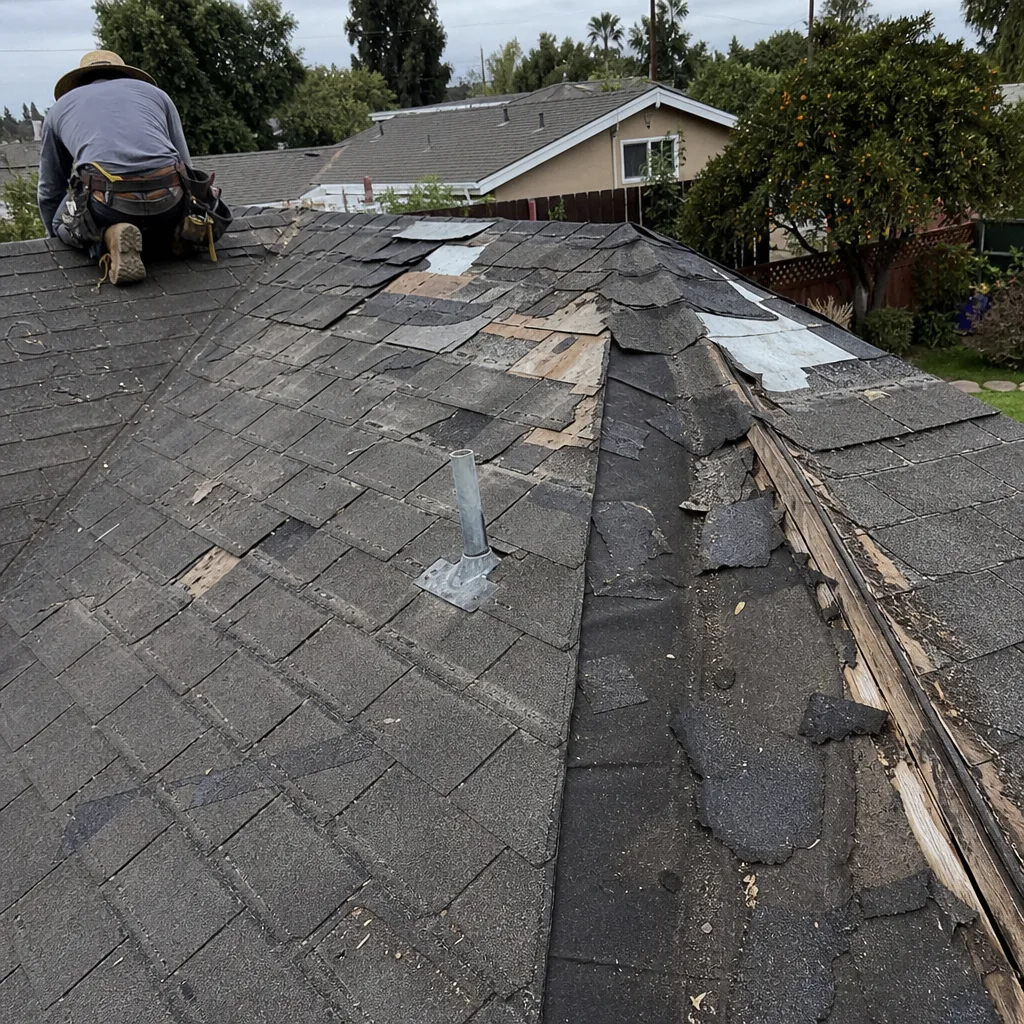 Before
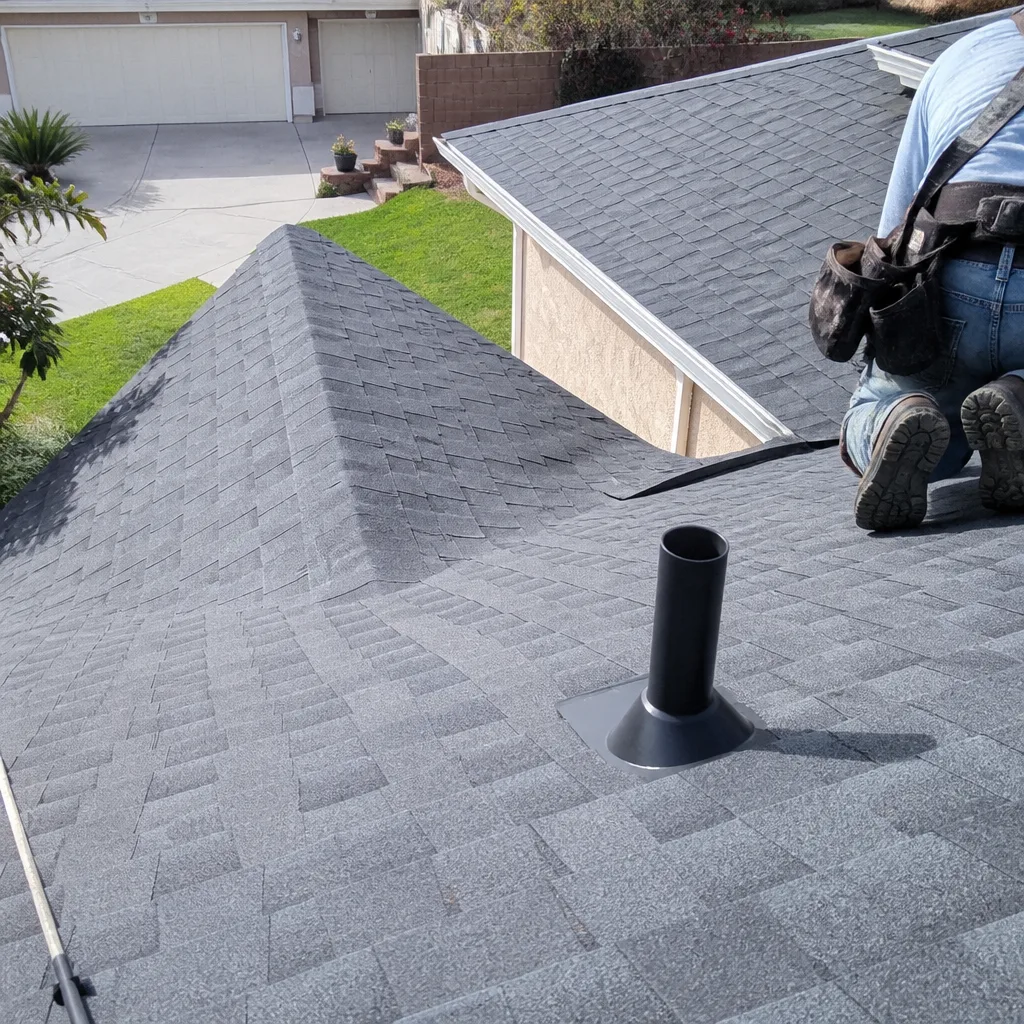 After
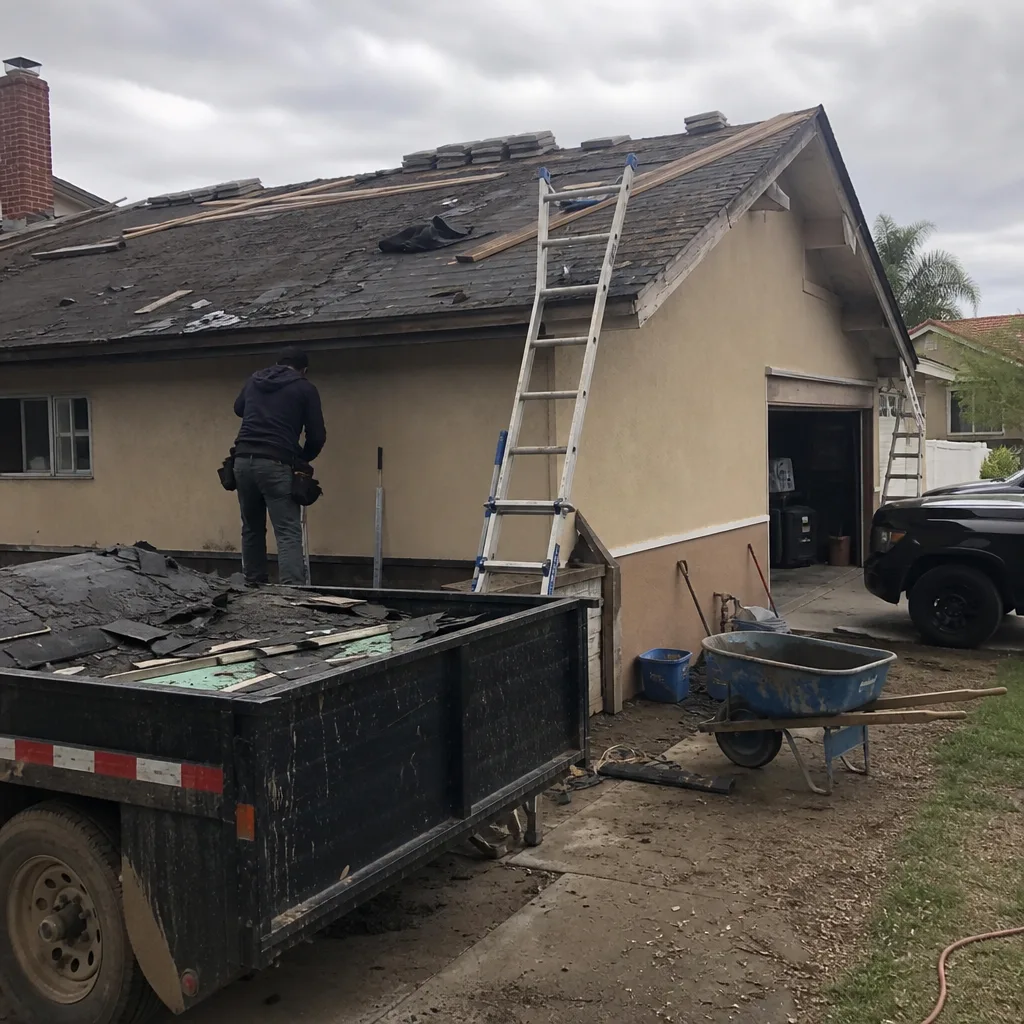 Before
 After
 Before
 After